
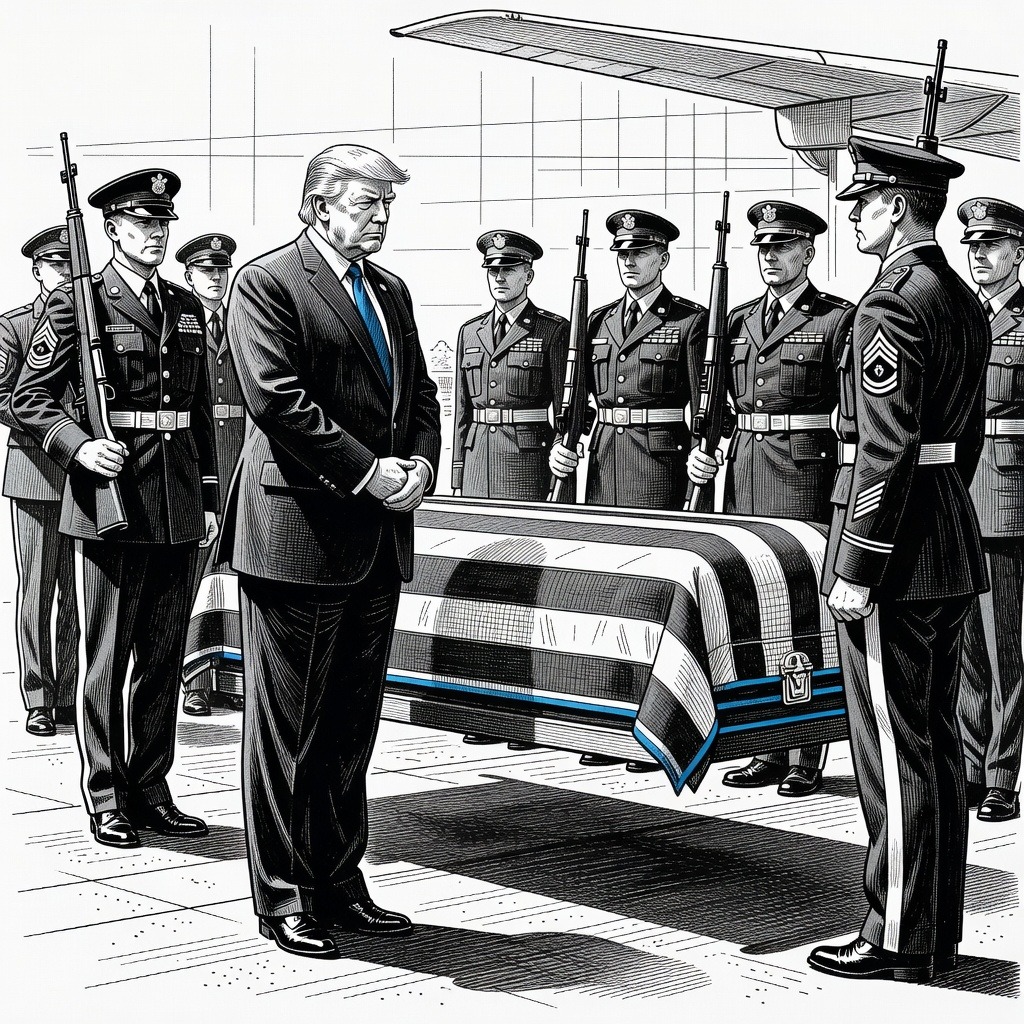
• Diluting the Human Toll Prioritizing human life and transparent reporting requires clear accountability for the human cost of military actions. Reclassifying four deceased service members—Feehan, Rampersad, Gonzales, and Swinton—and reducing the wounded count from 482 to 417 obscures the true scale of the conflict. By shifting these casualties to a generalized "Overseas Operations" category, the administration artificially lowers the perceived cost of active hostilities, potentially weakening public and congressional oversight.
• Shielding Administrative Policy Failures Democratic accountability relies on absolute integrity in tracking state-sanctioned violence and its consequences. Attributing the reduction in official casualties to "technical errors" and "temporary data disruptions" serves to deflect from the underlying reality of ongoing regional friction. This administrative pivot minimizes the domestic political fallout of sustained military engagement, making it easier to maintain an aggressive posture without facing the democratic pressure that arises from a rising, transparent death toll.
• Exposing the Fatal Escalation The ultimate measure of foreign policy must be its success in preventing loss of life through diplomatic means rather than perpetual military operations. The tragic death of Sgt. Swinton during a controlled demolition of an Iranian drone illustrates how easily defensive or tactical actions escalate into lethal outcomes. For those prioritizing humanitarian de-escalation, posthumous honors like the Bronze Star and Purple Heart, while deeply deserved, highlight a tragic cycle where strategic operations continuously demand human sacrifice in unresolved regional standoffs.
How it may affect me
As a U.S. reader:
• You will see a lower official casualty count for the conflict with Iran in public databases, with the recorded death toll dropping from 18 to 14 and the listed wounded dropping from 482 to 417.
• This adjustment may affect how you and congressional lawmakers monitor the human cost of the conflict, potentially influencing public support and oversight regarding ongoing military actions.
• You may experience differing levels of trust in military record-keeping, viewing the changes either as a routine administrative correction to secure database accuracy or as a shift that obscures the scale of regional hostilities.
• Families and communities of the affected service members will see their relatives' records officially attributed to general overseas operations, alongside the public receipt of posthumous military honors and promotions.