
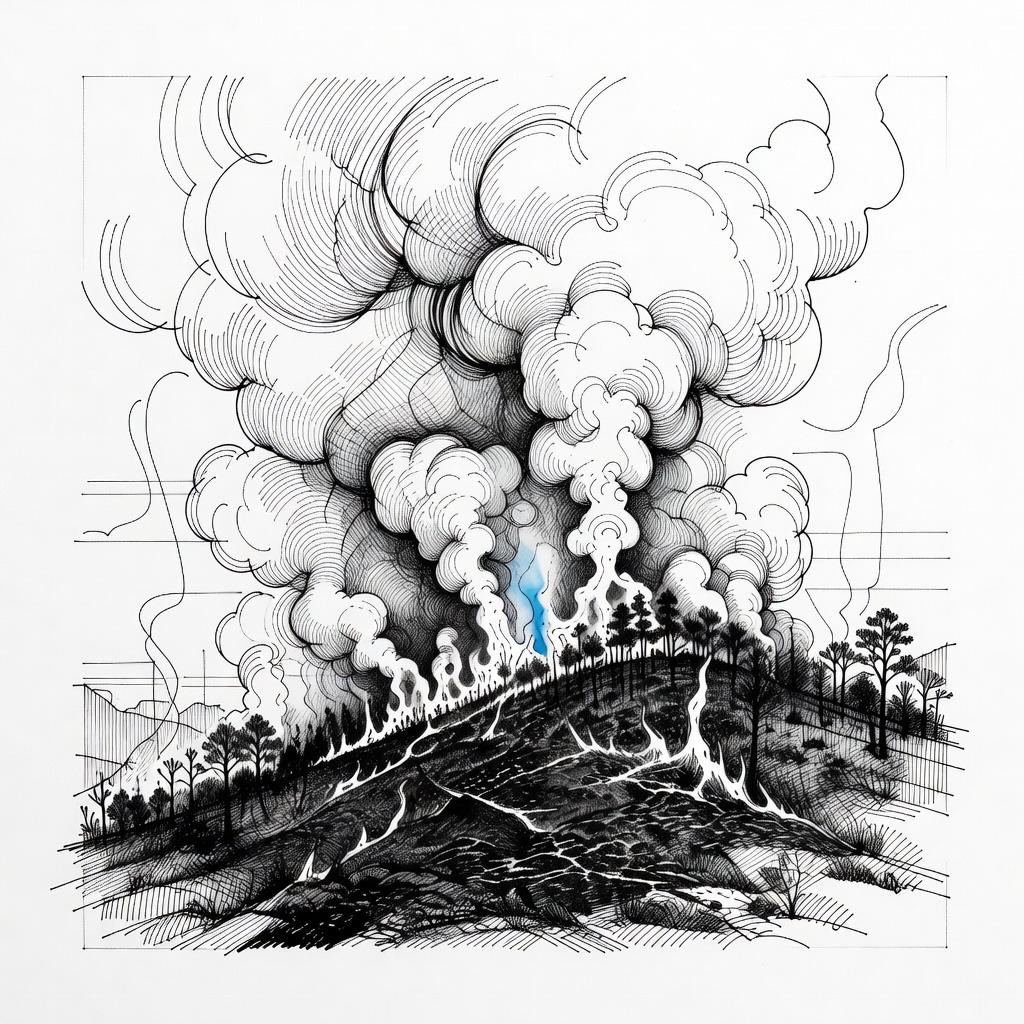
Wildfires in France and Spain Displace Over 300,000 People Ahead of Forecast Heat Waves

Illustration for: Wildfires in France and Spain Displace Over 300,000 People Ahead of Forecast Heat Waves
AI-generated illustration. Visual interpretation does not represent real individuals or scenes.

THE BARE STORY

Massive wildfires burning across parts of France and Spain have forced more than 300,000 people to evacuate their homes. Emergency crews in both nations are working to contain the blazes before forecasted heat waves are expected to raise temperatures and worsen conditions later in the week.

In southwestern France, a major fire in the Gironde region has burned over 100,000 acres and prompted the evacuation of more than 220,000 residents. French officials reported that the fire's growth stabilized overnight into Monday, July 27, 2026, but Interior Minister Laurent Nuñez warned that the situation requires continued concentration. According to government statements, nearly 250,000 acres have burned nationwide since the start of the year. In response, French President Emmanuel Macron held a crisis meeting on Monday to coordinate emergency efforts and pledged long-term reconstruction support.

In Spain, wildfires have burned approximately 190,000 acres across regions including Madrid, Ávila, and Toledo, forcing tens of thousands of residents to flee and confining others to their homes. While Spanish authorities stated that some blazes near Madrid and Ávila were previously brought under control, strong wind gusts on Monday complicated containment efforts. Spanish Prime Minister Pedro Sánchez, who scheduled visits to affected areas, attributed the exceptional scale of the fires to a climate emergency, noting that wildfires have consumed over 300,000 acres in Spain this year.

Firefighters and emergency officials reported that the intense heat has generated a pyrocumulonimbus fire cloud, an uncommon and dangerous weather phenomenon. According to firefighting personnel, this type of cloud produces its own strong winds and lightning, creating erratic fire behavior that makes the blazes exceptionally difficult to manage.

Same Facts. Different Perspectives.

Two AI models. Two viewpoints. One factual foundation.

• Expose Systemic Environmental Inaction Prioritizing systemic reform means recognizing that the 300,000 displaced people and the massive acreage burned across France and Spain are not mere natural accidents, but symptoms of a failure to address the "climate emergency" cited by Spanish Prime Minister Pedro Sánchez. The emergence of rare and dangerous phenomena like pyrocumulonimbus fire clouds signals that traditional containment methods are no longer sufficient against escalating climate realities. Governments must move beyond temporary crisis management and pledge aggressive, long-term policy transformations to protect citizens from systemic ecological collapse.

• Shield Vulnerable Displaced Communities Protecting human welfare demands that state responses focus immediately on the massive humanitarian impact of evacuating over 220,000 residents in the Gironde region and tens of thousands more in Spain. President Macron's pledge of long-term reconstruction support must be held to strict accountability standards to ensure resources directly aid displaced populations rather than just rebuilding physical infrastructure. Success should not be measured merely by "stabilized" fire growth, but by the security, civil liberties, and rapid recovery of those forced to flee their homes.

• Dismantle React-And-Rebuild Governance This side fears that treating these massive fires as isolated, seasonal emergencies creates a dangerous cycle of complacency. When leaders like Macron hold crisis meetings only after 250,000 acres have already burned nationwide, they perpetuate a reactive governance model that fails to challenge the institutional status quo. Without shifting resources toward proactive climate adaptation and community-led resilience, states will remain perpetually unprepared for forecasted heat waves and increasingly erratic fire behavior.

How it may affect me

As a U.S. reader:

• No significant direct impact on the general public in the United States is expected, as the wildfires, evacuations, and governmental policy debates are entirely localized within France and Spain.

Read the story at

Note: All TheBareNews content is AI-generated. For additional context, reporting, and updates, you are invited to explore the news outlets linked above.