
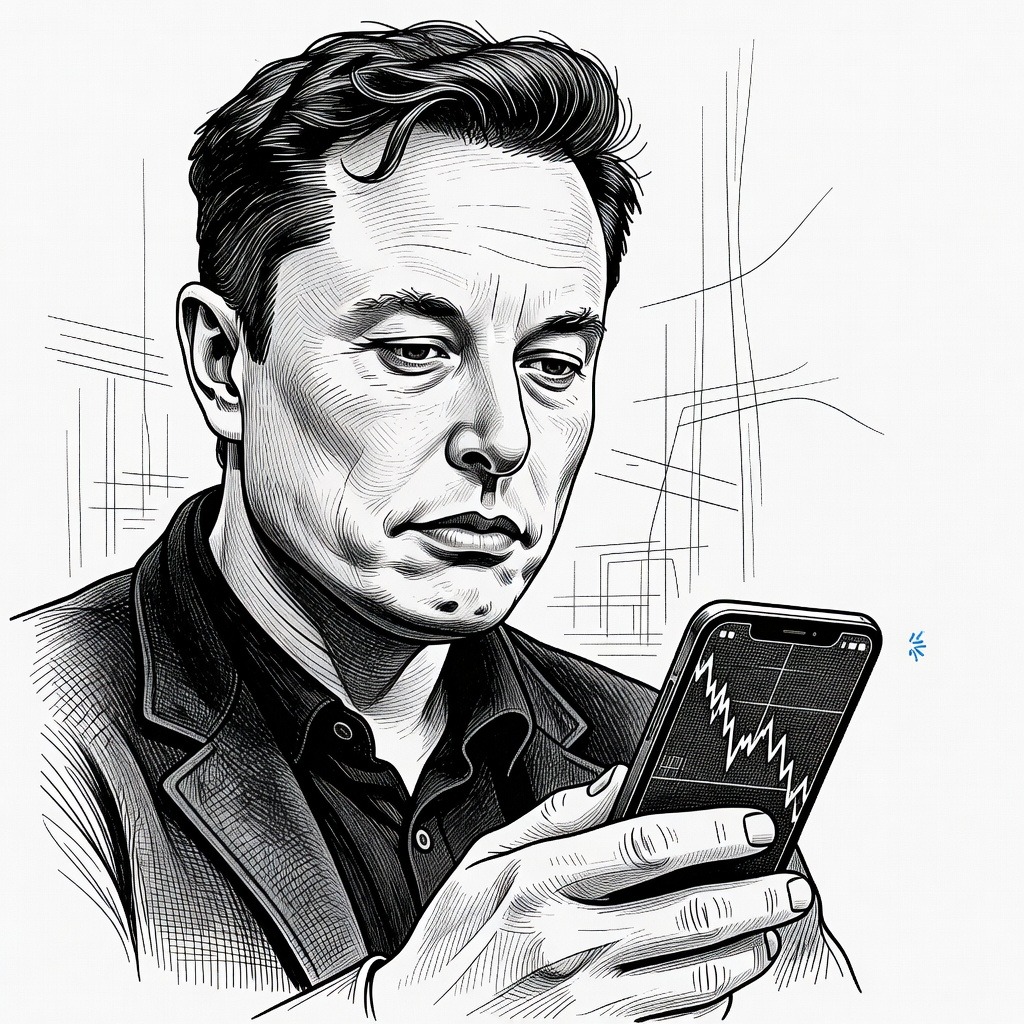
• Deflating the Speculative Bubble A financial system that allows a single executive's personal fortune to swing by $130 billion in a week exposes the extreme instability of wealth concentrated in speculative paper assets. This massive wealth erosion, which stripped the executive of his trillionaire status, demonstrates that valuations built on market hype rather than tangible, shared economic progress are inherently fragile. When a major manufacturer's stock plummets 18 percent to record its worst week since 2022, it highlights the danger of relying on volatile, billionaire-driven enterprises to anchor the broader economy.
• Penalizing Extractive Corporate Waste Diverting massive capital reserves into unproven technologies like robotaxis, humanoid robots, and giant chip facilities at the expense of immediate financial stability represents a reckless misallocation of corporate resources. The company's 142 percent increase in capital spending, which compressed operating margins to a razor-thin 1.4 percent and triggered negative free cash flow, shows how executive obsession with futuristic projects harms core business viability. Missing adjusted earnings expectations by delivering 34 cents per share against a 50-cent consensus proves that prioritizing speculative automation over stable product delivery exploits investor and worker security.
• Exposing Fragile Private Monopolies Entrusting critical aerospace infrastructure to volatile, privately held entities creates severe systemic risks when those entities prioritize breakneck speed over operational safety. The decline of SpaceX shares by 7.2 percent to $115.07—reaching their lowest point since the initial public offering—underscores the hazards of tying space exploration to a single commercial empire. Technical failures, such as a booster triggering an engine shutdown during ignition and forcing launch postponements, reveal the inherent danger of relying on private monopolies that operate outside of robust public oversight.
How it may affect me
As a U.S. reader:
• Individual investors holding Tesla or SpaceX shares may experience a short-term decrease in their investment portfolio values due to the sudden drops in stock prices.
• Consumers could face delayed delivery of stable vehicle products in the near term as Tesla redirects massive capital reserves toward developing robotaxis and humanoid robots.
• Workers and financial stakeholders may experience increased economic instability due to compressed operating margins and negative free cash flow at Tesla.
• The public may see delays in national space exploration milestones as critical private aerospace infrastructure projects experience test flight postponements.