
Heightened Security Set for Rescheduled White House Correspondents' Dinner

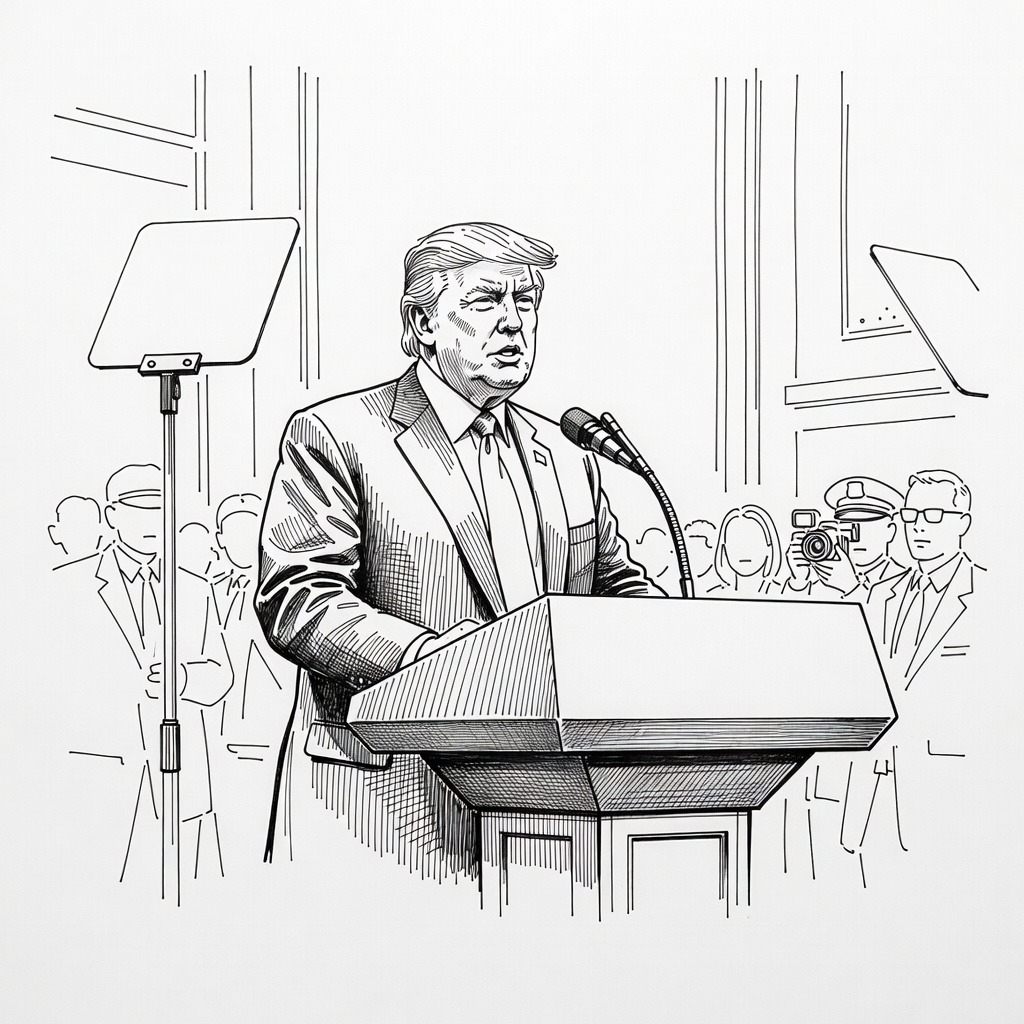
Illustration for: Heightened Security Set for Rescheduled White House Correspondents' Dinner
AI-generated illustration. Visual interpretation does not represent real individuals or scenes.

THE BARE STORY

The White House Correspondents' Dinner is scheduled to take place on Friday, July 24, 2026, at the Waldorf Astoria hotel in Washington, D.C. The event serves as a makeup for the original April 25 dinner, which ended abruptly when a shooting occurred at the Washington Hilton hotel. President Donald Trump is expected to attend the rescheduled dinner, which will feature a smaller crowd but a program similar to the original event.

The original April gathering was disrupted when an armed assailant allegedly breached a security checkpoint and opened fire inside the hotel. Secret Service Officer Victor Gonzales was struck in his protective vest during the incident, and Secret Service personnel shot the gunman. White House Press Secretary Karoline Leavitt described the shooting as a despicable assassination attempt. A suspect, Cole Allen, pleaded not guilty in May to federal charges including the attempted assassination of the president, assaulting a federal officer, and firearm offenses.

For the Friday dinner, organizers collaborated with the Secret Service and a private security firm to establish enhanced security protocols, according to Weijia Jiang, the association's most recent past president. Guests must provide a unique QR code and a government-issued photo ID to pass through multiple security layers. The association plans to present exceptional service awards to Officer Gonzales and the Washington Hilton staff. Secret Service Director Sean Curran stated that agency measures worked in April and that teams have thoroughly prepared the new Waldorf Astoria venue.

Press Secretary Leavitt stated that President Trump's speech at the dinner would be both unifying and vicious. Vice President JD Vance is not expected to attend because he and his wife recently welcomed their fourth child, according to a source. The high-security event comes as Secret Service officials warned that nationwide threats have reached unprecedented levels, with approximately 10,000 protective intelligence cases opened since January.

Same Facts. Different Perspectives.

Two AI models. Two viewpoints. One factual foundation.

• Dismantling Civic Cohesion via Rhetoric Democratic stability relies on political leaders actively de-escalating societal tensions, especially in the wake of political violence. Describing an upcoming presidential address at a major press event as both "unifying and vicious" reveals a cynical manipulation of democratic platforms for partisan aggression. Instead of fostering institutional healing after the traumatizing April shooting, this divisive approach risks polarizing the public and exacerbating the very security threats the administration laments.

• Normalizing the Surveillance State While protecting public officials is necessary, the implementation of highly restrictive digital checkpoints, QR codes, and private security integrations sets a troubling precedent for open societies. When elite political events transform into heavily fortified, exclusive enclaves, it deepens the physical and symbolic divide between the governing class and the public. This technocratic security creep risks normalizing intrusive surveillance measures that slowly erode broader civil liberties under the guise of temporary safety.

• Masking Systemic Failures with Fortification A surge to approximately 10,000 protective intelligence cases since January indicates a deep-seated systemic instability that cannot be solved merely by hardening individual venues like the Waldorf Astoria. Rather than addressing the root socio-political drivers of extremist violence, an over-reliance on tactical defense treats the symptoms of a fractured society while ignoring the disease. True safety relies on addressing systemic inequalities and reducing systemic hostility, not just building taller walls for the political elite.

How it may affect me

As a U.S. reader:

• You may face significantly tighter security measures, such as showing unique QR codes and government-issued identification, when attending major civic or political events.

• In the long term, the increased use of advanced security layers and private security integrations at high-profile events may set a precedent that normalizes more intrusive security checks in daily public life.

• You may experience heightened public tension and security anxieties due to a combination of highly charged political rhetoric and an unprecedented rise in nationwide protective intelligence cases.

• The continued hosting of high-level government events despite active security challenges may help reassure you of the ongoing stability and resilience of national institutions.

Read the story at

Note: All TheBareNews content is AI-generated. For additional context, reporting, and updates, you are invited to explore the news outlets linked above.