
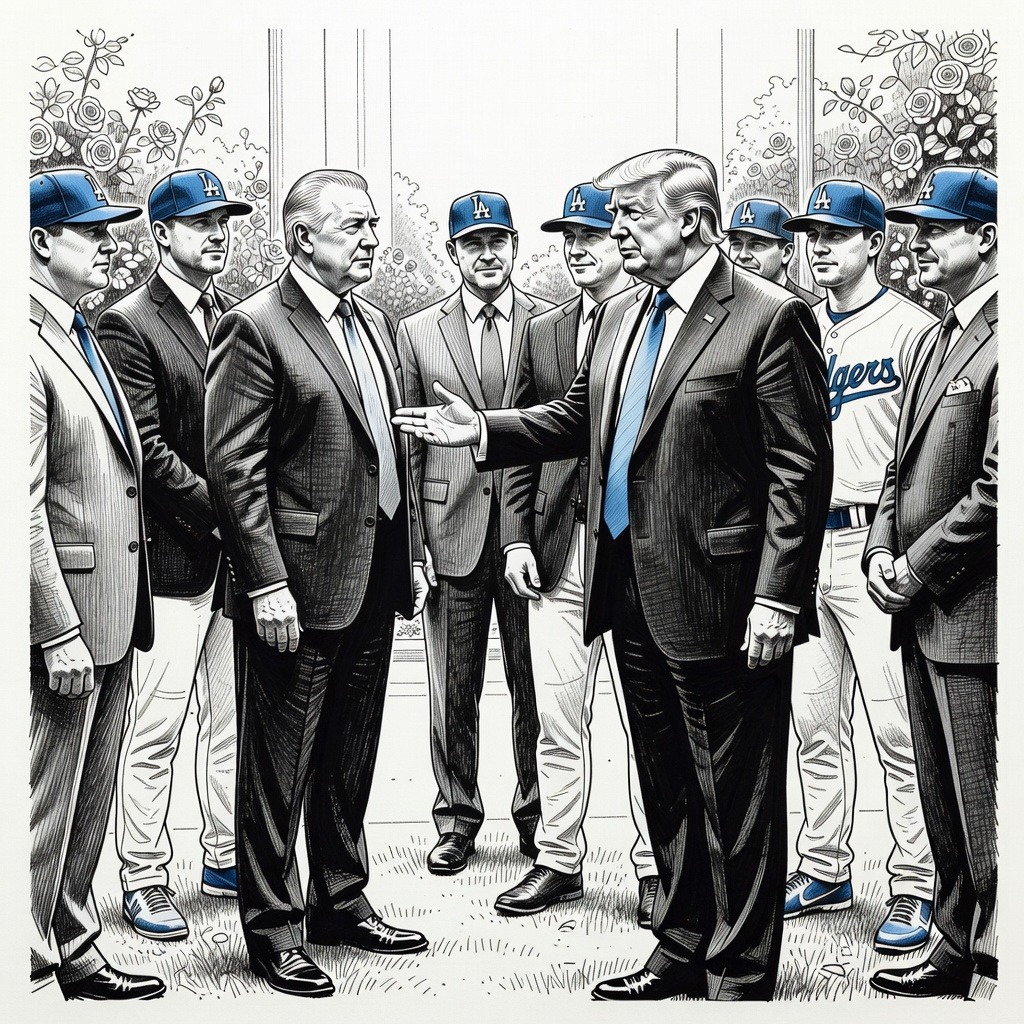
• Dismantling Harmful Cultural Caricatures Promoting social progress requires actively dismantling symbols and practices that marginalize minority groups. By encouraging the Georgia crowd to perform the "Tomahawk Chop" despite established restrictions, the executive office directly undermines efforts to build a more inclusive society. Defending a gesture widely criticized as racist represents a regressive prioritization of outdated traditions over the dignity of marginalized communities.
• Shielding Individual Autonomy From Statecraft Individual civil liberties and personal priorities must always triumph over the pressure to participate in state-sponsored political spectacles. Mookie Betts' decision to bypass the Rose Garden ceremony to prioritize his family represents a legitimate exercise of personal autonomy in a highly politicized environment. Refusing to serve as a political prop shields athletes from being co-opted into institutional public relations campaigns that seek to normalize polarizing leadership.
• Exposing Politicized Economic Distractions Authentic economic and social progress requires addressing systemic policy issues rather than using populist rhetoric to stoke cultural division. Criticizing the high-salaried New York Mets while praising the Atlanta Braves ownership leverages athletic rivalries to distract from substantive discussions on education and fiscal policy. This strategy exploits class-based resentment and sports rivalries to divide the public instead of offering constructive, equitable policy solutions.
How it may affect me
As a U.S. reader:
• Sports fans may experience ongoing public debate over the use of traditional stadium gestures and chants, balancing concerns about cultural insensitivity against the preservation of community rituals.
• Public figures and athletes may face broader expectations or choices regarding whether to participate in traditional White House ceremonies or decline them to prioritize personal autonomy.
• National discussions on economic and fiscal policy may increasingly be framed around sports franchise spending, focusing attention on either local development and fiscal discipline or populist distractions.
• Citizens can anticipate the preservation of traditional, non-partisan White House receptions to honor exceptional national achievements.