
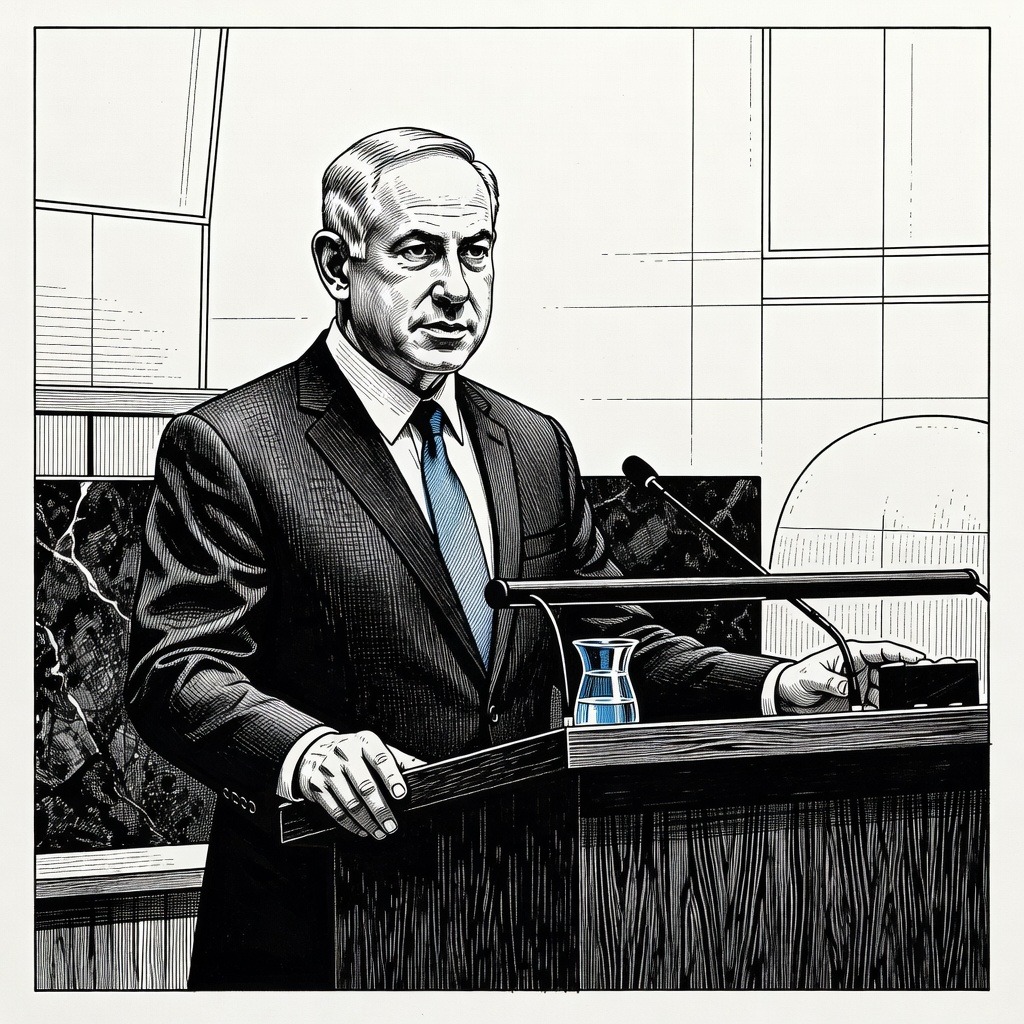
New York City Mayor Concedes City Cannot Enforce ICC Warrant for Netanyahu's Arrest

Illustration for: New York City Mayor Concedes City Cannot Enforce ICC Warrant for Netanyahu's Arrest
AI-generated illustration. Visual interpretation does not represent real individuals or scenes.

THE BARE STORY

New York City Mayor Zohran Mamdani announced on Tuesday that a municipal legal review concluded the city lacks the authority to arrest Israeli Prime Minister Benjamin Netanyahu during his upcoming visit. Mamdani had previously pledged to enforce an International Criminal Court (ICC) arrest warrant against Netanyahu, who is scheduled to address the United Nations General Assembly in New York this September. While acknowledging the city's legal limitations, Mamdani released a video urging the United States federal government to execute the warrant.

In his video, Mamdani accused Netanyahu of war crimes, blocking humanitarian aid, and responsibility for civilian casualties in Gaza. Israeli Ambassador to the United Nations Danny Danon rejected these allegations, calling them baseless lies and "blood libels." Danon asserted that humanitarian aid enters Gaza daily and dismissed the mayor's calls for an arrest as a political stunt, advising Mamdani to focus instead on local municipal issues.

The dispute highlights ongoing jurisdictional disagreements. The United States is not a member of the ICC and does not recognize its authority. Additionally, President Donald Trump posted on social media that Netanyahu would not face arrest in any form while visiting the country. Netanyahu’s office has entirely rejected the ICC’s jurisdiction, calling the court a biased political body.

The ICC warrants against Netanyahu and former Israeli Defense Minister Yoav Gallant were issued in 2024 following an investigation into the October 7, 2023, Hamas-led attack and Israel's subsequent military response. The October 7 attack killed approximately 1,200 people in Israel and resulted in 250 hostages being taken. According to the Hamas-run Gaza Health Ministry, the subsequent conflict has resulted in the deaths of more than 73,000 Palestinians. Israeli officials stated that Netanyahu fully intends to travel to New York for his scheduled address.

Same Facts. Different Perspectives.

Two AI models. Two viewpoints. One factual foundation.

• Defending Constitutional Sovereignty Upholding the rule of law requires strict adherence to established constitutional boundaries and national sovereignty. Since the United States is not a member of the ICC and does not recognize its jurisdiction, any attempt by a local mayor to enforce a foreign warrant constitutes a dangerous breach of legal authority. Preserving domestic institutional hierarchy ensures that foreign policy remains a federal prerogative, protecting the nation from unauthorized local overreach.

• Rejecting Politicized Foreign Tribunals National security and the sovereign right to self-defense must be protected from biased international bodies seeking to delegitimize democratic states. Dismissing the ICC warrants as politically motivated interventions validates the necessity of shielding allies who are responding to existential threats, such as the October 7 attack that killed 1,200 people. Allowing foreign courts to dictate the terms of national defense undermines the stability of sovereign states and disrupts critical strategic alliances.

• Preventing Municipal Diplomatic Chaos Allowing local municipal officials to exploit international conflicts for domestic political signaling threatens to fragment a nation's unified foreign policy. As diplomatic protocols dictate orderly engagement at the United Nations, local grandstanding creates unnecessary diplomatic friction and distracts from pressing municipal governance responsibilities. The primary risk of this behavior is the degradation of domestic governance, where localized ideological crusades erode the predictability and stability required for international diplomacy.

How it may affect me

As a U.S. reader:

• New York City residents may experience increased local political tension and diplomatic friction during the upcoming United Nations General Assembly in September.

• NYC residents could see local government attention and municipal resources diverted from pressing domestic issues to international political disputes.

• U.S. citizens can expect foreign policy and the execution of international warrants to remain strictly under federal authority, preventing municipal legal overreach.

• In the long term, the U.S. stance may preserve strategic foreign alliances but could also fuel ongoing domestic debate regarding the strength of global human rights standards.

Read the story at

Note: All TheBareNews content is AI-generated. For additional context, reporting, and updates, you are invited to explore the news outlets linked above.