
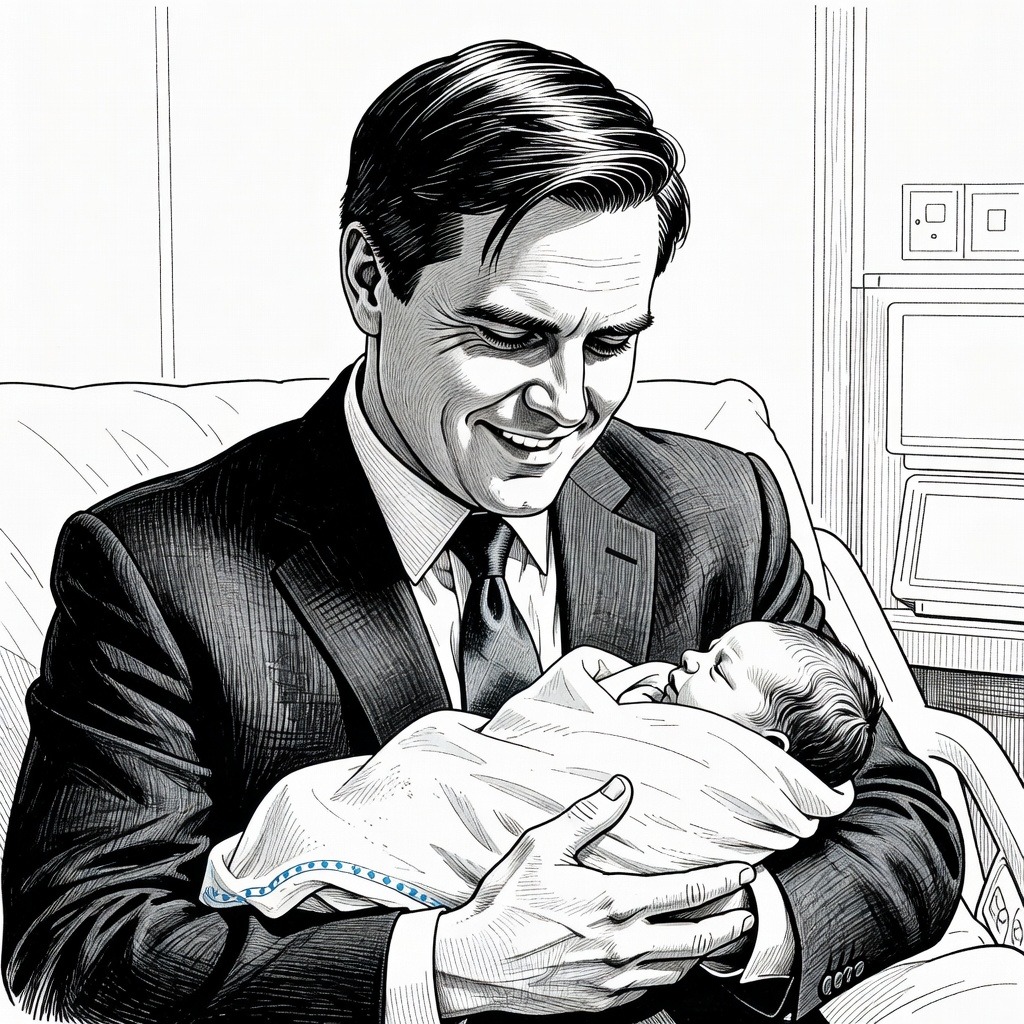
• Deconstructing Public Family Expectations Promoting individual autonomy and gender equity requires resisting the expectation that women must subordinate their career or privacy concerns to their husband’s political ambitions. The revelation that Usha Vance initially resisted having a fourth child due to the family's public prominence highlights the immense pressure placed on political spouses. This perspective critiques the normalization of public life dictating personal family choices, asserting that a woman's reproductive agency should be decoupled from partisan optics and institutional pressures.
• Scrutinizing Tragedy-Driven Family Narratives Utilizing a public figure’s violent death to frame personal reproductive decisions risks romanticizing trauma for ideological purposes. While JD Vance’s book, *Communion: Finding My Way Back to Faith*, links their decision to have another child to the tragic shooting of Charlie Kirk, Usha Vance’s clarifying remarks remind the public of the complex, grounded reality of family planning. This camp views the framing of family growth as a reaction to external tragedy as an attempt to project a specific, faith-centered political narrative rather than representing the nuanced reality of maternal choice.
• Resisting Symbolic Political Nostalgia Celebrating rare historical anomalies, such as the 156-year gap since a sitting vice president had a child in office under Ulysses S. Grant in 1870, can distract from modern systemic issues. While traditionalists find value in historic milestones, reformers argue that the symbolic continuity of the nuclear family in high office does not solve contemporary systemic challenges. The focus should remain on the tangible impacts of governance and policy, rather than romanticizing historical parallels that reinforce traditional family models as the standard for public service.
How it may affect me
As a U.S. reader:
• This personal milestone for the Vice President's family is not expected to have any direct, practical impact on the daily lives or economic conditions of the general public.