
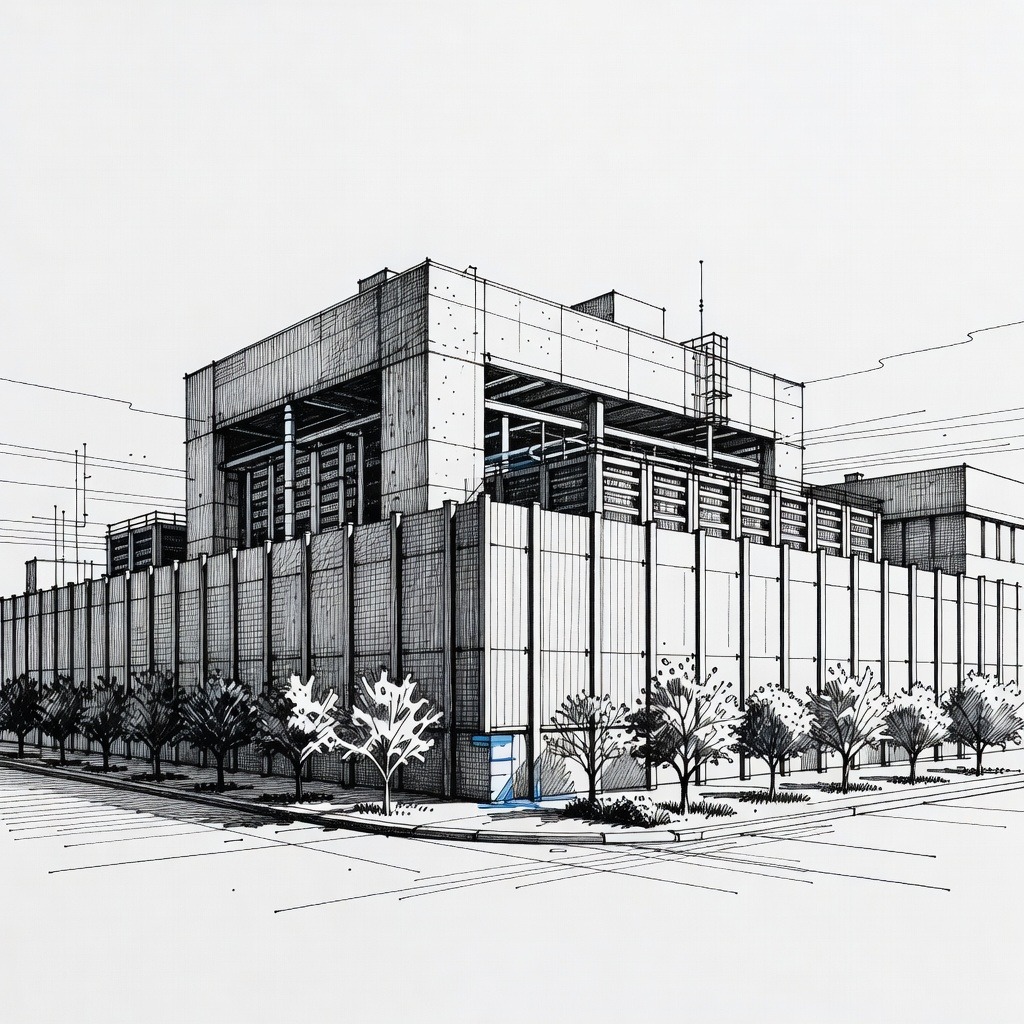
• Shielding Vulnerable Communities First The foundational value of social equity demands that the physical and mental well-being of local residents be prioritized over corporate expansion. When Southaven and Whitehaven residents suffer from migraines, sleep disruption, and anxiety due to near-constant noise and vibrations, the system has failed its most basic duty of protection. The fact that citizens were not consulted prior to development reveals a systemic disregard for democratic accountability and community consent.
• Challenging Corporate Regulatory Bypass True public health and environmental integrity cannot be sacrificed for corporate expediency or high-tech prestige. The unauthorized expansion of gas-burning turbines from 27 to 59 at the Southaven plant represents a direct violation of the Clean Air Act that worsens local pollution. Mitigating these harms requires strict legal accountability, as localized environmental degradation cannot be justified by national security claims or ineffective corporate mitigation measures like sound walls and berms.
• Resisting Community Dispossession Risks The long-term threat of unchecked corporate-state alignment is the displacement and economic exploitation of working-class residents. When a public official suggests a resident sell their home because a multi-billion-dollar enterprise desires the land for employee housing, it exposes how state power can be co-opted to favor capital over citizens. This dynamic risks creating a precedent where rising utility bills and unmitigated nuisances are used to systematically push communities out of their own neighborhoods.
How it may affect me
As a U.S. reader:
• Residents living near large technology and aerospace developments may face immediate quality-of-life disruptions, including migraines, sleep deprivation, anxiety, and rising utility bills due to near-constant noise and vibrations.
• Nearby homeowners could experience pressure to sell their properties to accommodate corporate housing needs as local governments prioritize multi-billion-dollar corporate investments.
• Communities located near rapidly expanding data centers may experience increased exposure to air pollution and environmental health hazards from the unauthorized installation and operation of gas-burning turbines.
• Citizens seeking legal recourse for environmental and noise disruptions may face federal opposition, as the Department of Justice may prioritize high-tech projects by citing national security and military necessity over local environmental regulations.
• On a broader scale, the general public may experience regional economic benefits, such as improved public infrastructure and services funded by tens of millions of dollars in new tax revenues and multi-billion-dollar corporate investments.