
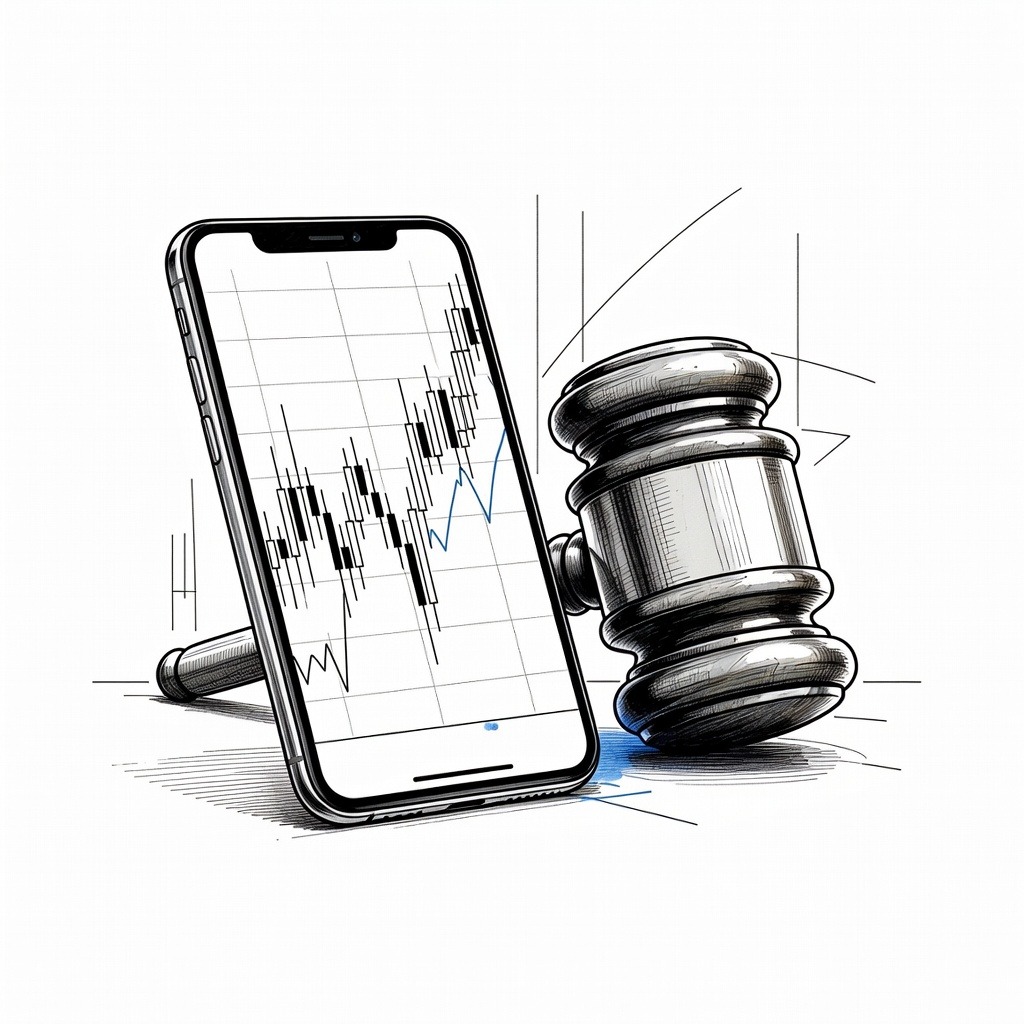
Illustration for: Prediction Markets Face Growing Regulatory Scrutiny and Jurisdictional Debates
AI-generated illustration. Visual interpretation does not represent real individuals or scenes.

Prediction Markets Face Growing Regulatory Scrutiny and Jurisdictional Debates

2026-07-17

The BareStory

The rapid growth of event prediction markets has triggered discussions over regulatory oversight and the legal classification of these platforms. Legal experts expect the Securities and Exchange Commission (SEC) may soon join the Commodity Futures Trading Commission (CFTC) in regulating the expanding market. Last month, the SEC and CFTC issued a joint request for public comment on updating and harmonizing definitions for emerging financial products.

A spokesperson for Polymarket confirmed the company has engaged with both agencies regarding definitional frameworks, while Kalshi declined to comment on the matter. CBOE is also seeking regulatory approval from the SEC to operate binary options contracts tied to key corporate performance indicators. While the CFTC has historically led prediction market regulation, legal experts suggest the SEC could assume a supportive role, though they warn that overlapping compliance requirements could hinder innovation.

Simultaneously, Kalshi is facing scrutiny from the traditional gaming industry over its classification. The platform has recorded over $25 billion in sports wagers since the start of the World Cup, surpassing the $4 billion that analysts expect traditional online sportsbooks to process during the tournament. The American Gaming Association and sportsbook advocates argue that Kalshi operates as an unlicensed sports betting application, utilizing legal avenues to bypass state gaming taxes, lower the betting age to 18, and access states where sports betting is prohibited.

Kalshi has defended its model, with spokeswoman Elisabeth Diana stating that the platform functions as a federally regulated financial product where users wager against each other rather than the house. Diana noted that Kalshi charges transaction fees rather than profiting from user losses, and does not ban consistent winners. While the federal government under the Trump administration has supported Kalshi's legal standing—with the CFTC filing lawsuits against nine states attempting to regulate prediction markets—several states have enacted restrictions. Minnesota has banned prediction markets, Massachusetts and Michigan have prohibited Kalshi sports betting, and Arizona has filed criminal charges against the company.

Left Perspective

  • Enforcing Institutional Accountability First: Protecting vulnerable retail participants from exploitative financial frameworks requires strict, unified oversight from agencies like the SEC and CFTC. When platforms like Kalshi process over $25 billion in sports wagers, they transition from niche hedging instruments into massive consumer-facing arenas. Without synchronized federal guardrails, these platforms risk exploiting regulatory loopholes to bypass state-level protections, such as lower betting age limits of 18 and tax evasion under the guise of financial innovation.
  • Dismantling Regulatory Arbitrage Tactics: Preventing corporate extraction means rejecting the rebranding of speculative gambling as sophisticated financial tooling. The claim by platforms that they are merely "federally regulated financial products" because they charge transaction fees rather than profiting from losses is a semantic shield to evade state gaming taxes. True consumer advocacy requires looking past these structural definitions to address the material reality: these platforms act as unlicensed sports betting applications operating in states where sports gambling is explicitly prohibited.
  • Shielding State-Level Protections: Safeguarding localized democratic processes means defending the rights of individual states to restrict predatory financial and betting practices within their borders. When the federal government files lawsuits against states attempting to regulate prediction markets, it systematically undermines the local authority of states like Minnesota, Massachusetts, Michigan, and Arizona to protect their citizens. Overriding these local bans under the banner of federal preemption threatens the broader framework of public interest and regional consumer safety laws.

Right Perspective

  • Incentivizing Capital and Innovation: Fostering economic dynamism and systemic utility requires protecting highly efficient, peer-to-peer price discovery mechanisms from paralyzing regulatory overreach. Platforms like Kalshi and Polymarket facilitate direct, user-to-user risk management rather than traditional house-dominated wagering systems where winners are routinely banned. Overlapping compliance requirements from a combined SEC and CFTC onslaught threaten to stifle this financial evolution, choking capital deployment with redundant bureaucratic red tape.
  • Defending Superior Market Structures: Maximizing market efficiency means championing transaction-fee models over opaque, extractive legacy gaming systems. By charging simple transaction fees and refusing to profit from user losses, prediction markets align platform incentives with user success, creating a fairer ecosystem than traditional sportsbooks. Regulatory bodies must recognize that these platforms operate as legitimate, federally regulated financial instruments that offer superior risk-mitigation tools for modern market participants.
  • Unifying the Internal Market: Preserving national commerce efficiency requires a singular, coherent federal regulatory framework that prevents a chaotic patchwork of state-level restrictions. State-level bans in Minnesota or criminal charges in Arizona create massive jurisdictional fragmentation, hindering the natural scaling of innovative financial products like CBOE's proposed corporate-performance binary options. Federal defense of these platforms against protectionist state actions is vital to maintaining competitive, nationwide liquidity pools and legal predictability.

How it may affect me

As a U.S. reader:

• In the short term, you may face a confusing patchwork of local laws regarding your ability to access prediction markets like Kalshi, with some states like Minnesota, Massachusetts, Michigan, and Arizona imposing bans, restrictions, or criminal charges, while other states allow them.

• If you are between the ages of 18 and 21, you may currently be able to use prediction markets to place sports wagers in areas where traditional sportsbooks require you to be 21, though future SEC and CFTC regulations could change these age limits.

• In the long term, if the SEC and CFTC implement overlapping regulatory frameworks, you may experience a reduction in available financial products and slower innovation, or conversely, benefit from increased consumer protections and synchronized federal oversight.

• Depending on how regulators classify these platforms, you may see changes in how your winnings are taxed, as states push to apply traditional gaming taxes to platforms that currently operate under federal financial transaction fee models.

Read the story at