
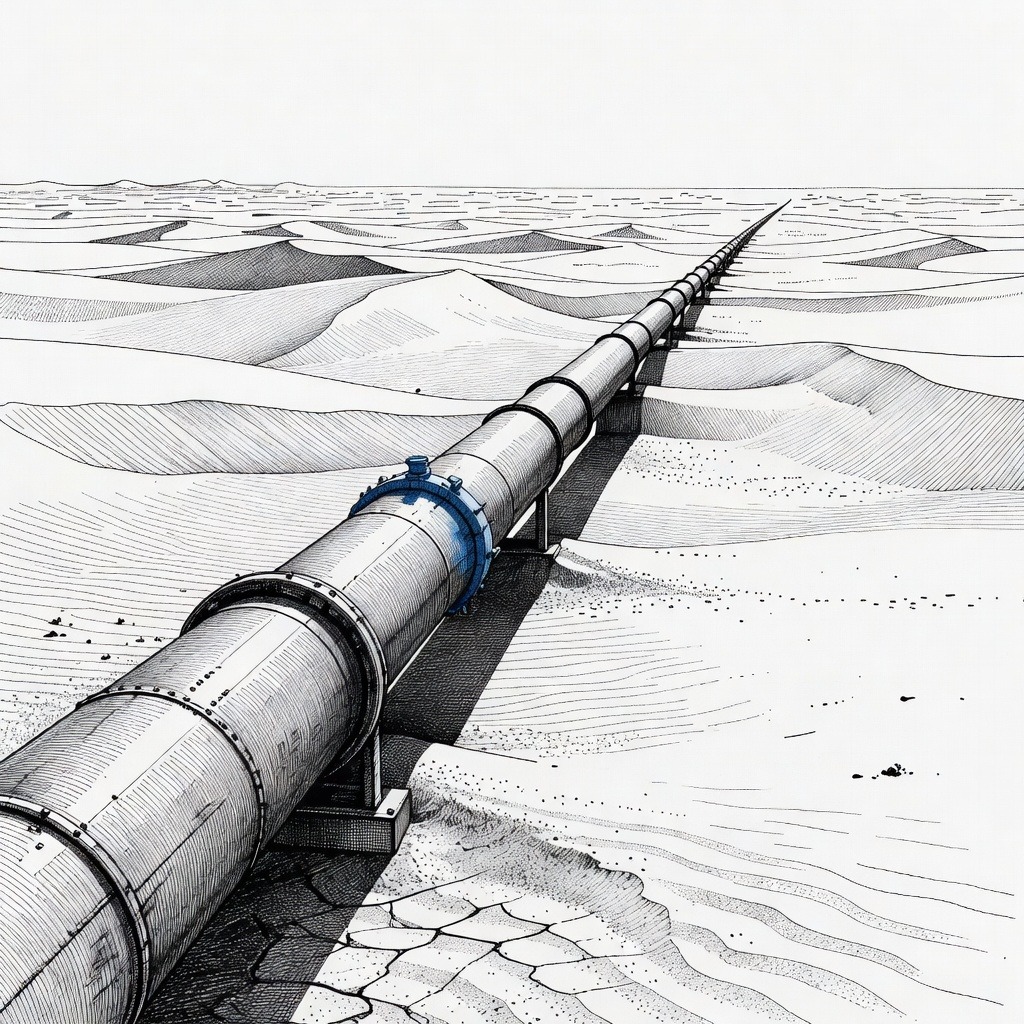
Illustration for: Middle East Producers Expand Pipelines as Iran and Houthis Threaten Key Waterways
AI-generated illustration. Visual interpretation does not represent real individuals or scenes.

Middle East Producers Expand Pipelines as Iran and Houthis Threaten Key Waterways

2026-07-17

The BareStory

Middle East oil producers are constructing and planning seven pipeline projects to bypass the Strait of Hormuz, aiming to decrease reliance on the waterway. The United Arab Emirates plans to double its export capacity outside the strait with a second pipeline to the Port of Fujairah, while Saudi Arabia is considering expanding its Red Sea pipeline capacity by 2 million barrels per day. Additionally, Iraq is working to rebuild a crude oil pipeline from Kirkuk to the Mediterranean Sea through Syria.

According to analysts from Goldman Sachs, Middle East pipeline capacity could expand to more than 14 million barrels per day by the end of 2028. However, analysts from Rystad and Rapidan Energy stated that these pipelines remain vulnerable to asymmetric Iranian attacks targeting infrastructure such as pumping stations and terminals.

The developments come amid reports that Iran has instructed Yemen’s Houthis to prepare to close the Bab el-Mandeb Strait, a critical Red Sea gateway, if the United States attacks Iranian power infrastructure. Sources stated that Tehran made this request to the Houthis, and a Houthi official, Mohammed al-Farah, stated the group is prepared to close the strait in coordination with Iran. A source close to the Houthis claimed that missiles and drones have been deployed near the waterway in anticipation of orders.

The Bab el-Mandeb route currently carries about 7% of the world's energy supplies. Security experts noted that the Houthis would not need physical control of the waterway to disrupt shipping, as repeated attacks or credible threats could force shipping firms to reroute vessels around Africa, raising insurance and freight costs.

Left Perspective

  • Soothe the Symptoms, Ignored Causes: The value of regional stability is achieved through addressing the root causes of conflict, rather than just building physical workarounds. Investing billions in a network of seven pipelines to bypass the Strait of Hormuz is a costly, temporary fix that fails to resolve the underlying political grievances driving Iran and the Houthis. Without diplomatic engagement to de-escalate tensions, these massive infrastructure projects merely shift the geographic target of aggression without reducing the overall threat of conflict.
  • Weaponizing Vulnerability Over Diplomacy: The prioritization of raw economic security over collective diplomatic agreements risks exacerbating regional instability. When Iran directs the Houthis to prepare a closure of the Bab el-Mandeb Strait in response to potential U.S. strikes on Iranian power infrastructure, it demonstrates that militarized posturing invites devastating asymmetric retaliation. Relying on deterrence-focused infrastructure ignores the fact that shipping routes carrying 7% of global energy supplies can be disrupted by low-cost drones and missiles without the Houthis needing physical control of the water.
  • The Escalation Spiral Risk: The long-term danger of this infrastructure pivot is the illusion of safety, which may embolden Western and regional powers to take riskier military actions. If policymakers believe the global economy is insulated by Saudi Arabia's expanded Red Sea capacity or Iraq's rebuilt Kirkuk-to-Mediterranean line, they may be more willing to launch direct strikes on Iran. This hubris ignores the warning from energy analysts that pipelines remain highly vulnerable to asymmetric strikes on pumping stations, potentially triggering a wider, more destructive war that devastates local populations.

Right Perspective

  • Securing the Economic Lifeline: The primary duty of sovereign states is to protect critical economic infrastructure and maintain national security through tangible leverage. Expanding Middle East pipeline capacity to over 14 million barrels per day by 2028 is a vital, proactive measure to strip hostile actors of their geopolitical leverage. By doubling export capacity outside the Strait of Hormuz via the Port of Fujairah, regional producers are systematically weakening Iran’s ability to hold the global economy hostage through maritime blackmail.
  • Neutralizing Asymmetric Chokepoints: Realistic security strategy dictates that relying on the goodwill of hostile non-state actors is a fatal vulnerability. The threat by Houthi official Mohammed al-Farah to close the Bab el-Mandeb Strait using deployed missiles and drones proves that diplomatic agreements are useless against ideologically driven proxies. Developing alternative overland routes is the only reliable way to mitigate the threat of soaring insurance and freight costs caused by shipping firms being forced to reroute vessels around Africa.
  • The Vulnerable Infrastructure Gamble: The critical vulnerability of these new pipelines to targeted attacks on pumping stations and terminals demands an even stronger military deterrence posture. While analysts correctly point out that infrastructure remains exposed to Iranian sabotage, the solution is not diplomatic concession, but the robust defense of these new corridors. Failing to secure these bypass routes risks signaling weakness to Tehran, which would permanently compromise Western strategic credibility and regional energy dominance.

How it may affect me

As a U.S. reader:

• You may face higher prices for consumer goods and energy in the short term if Houthi forces execute threats to close the Bab el-Mandeb Strait, which would force shipping firms to reroute around Africa and drive up freight and insurance costs.

• You could experience improved long-term energy security and more stable global fuel prices by 2028 as Middle East producers add over 14 million barrels per day of pipeline capacity to bypass vulnerable maritime chokepoints like the Strait of Hormuz.

• You remain exposed to indirect economic shocks because the new pipeline infrastructure, including pumping stations and terminals, remains highly vulnerable to targeted Iranian asymmetric attacks that could still disrupt global energy supplies.

• Your tax dollars and military resources could be drawn into securing these new overland pipeline corridors or responding to regional escalation, as experts warn the infrastructure requires strong defense to deter sabotage.

Read the story at