
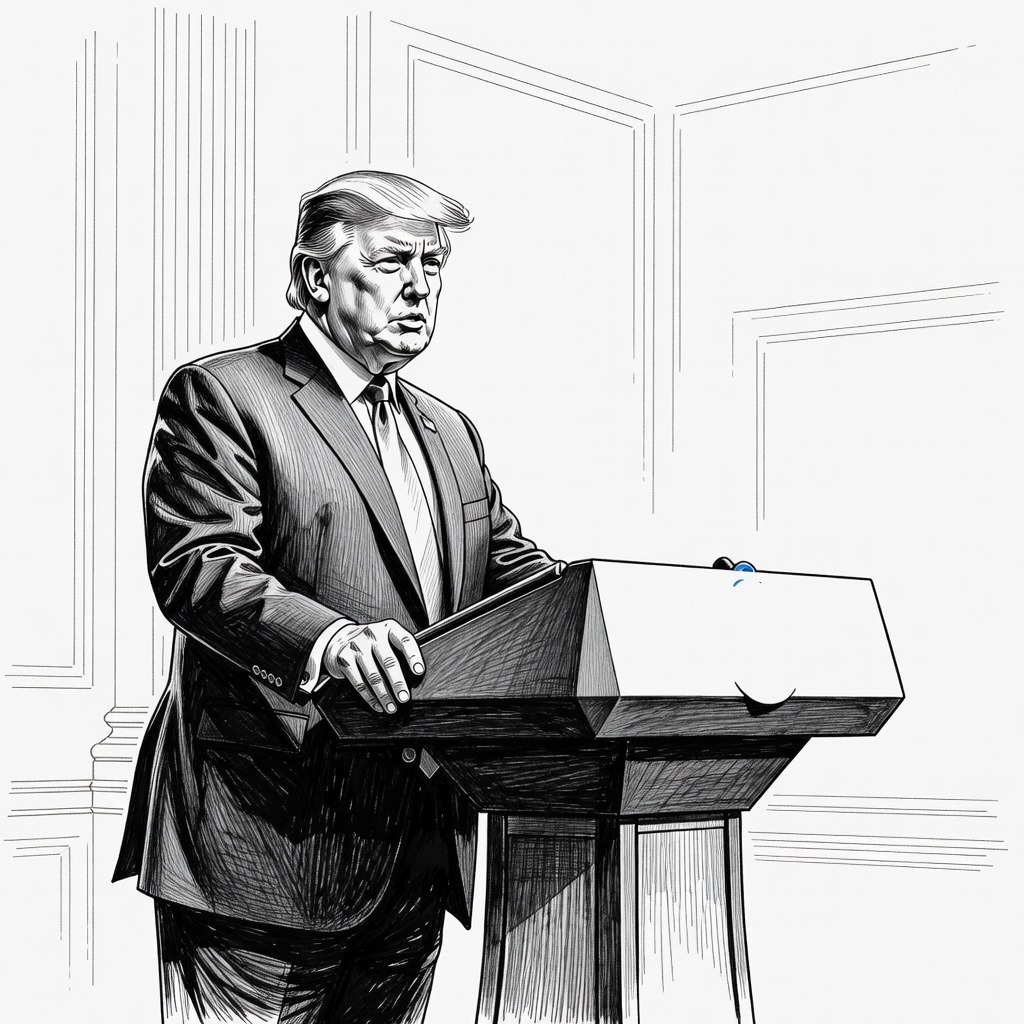
• Protecting the Democratic Franchise Civil liberties and broad voter participation are the foundational pillars of a healthy democracy. The proposed SAVE America Act represents an unnecessary hurdle designed to disenfranchise millions of eligible, low-income voters and people of color who may lack immediate access to in-person proof of citizenship. Because federal law already strictly prohibits noncitizens from voting, this legislative push is viewed not as a security measure, but as a systematic effort to restrict access to the ballot box for marginalized communities.
• Challenging Institutional Erosion A primetime address must respect established truth and institutional consensus rather than serving as a platform for debunked grievances. Repeating claims of a stolen 2020 election directly undermines public trust in democratic institutions, especially when intelligence agencies, the Justice Department, and the Department of Homeland Security have already verified that no widespread fraud occurred. Promoting unverified allegations of foreign ballot tampering actively damages the credibility of the electoral system for short-term political gain.
• Resisting Ideological Overreach Legislation concerning fundamental constitutional rights should remain focused, deliberate, and free from unrelated culture-war agendas. Attempting to attach bans on mail-in voting and restrictions on transgender athletes to an election security bill exposes a strategy of partisan distraction rather than genuine policy reform. This packaging of divisive social issues threatens to further polarize the electorate and stall constructive legislative progress on actual civil rights protections.
How it may affect me
As a U.S. reader:
• If the proposed SAVE America Act becomes law, you may face new requirements to present in-person proof of citizenship to register to vote and show photo identification to cast a ballot.
• Depending on your perspective, the speech and proposed legislation may either increase your confidence in the security of future elections or raise concerns about potential disenfranchisement, particularly if you are a low-income voter or a person of color.
• If you utilize mail-in voting, you could face restrictions on this voting method in future elections if the proposed legislative priorities are enacted.
• The outcome of the proposed legislation could affect the participation of transgender athletes in sports due to proposed restrictions attached to the election security bill.