
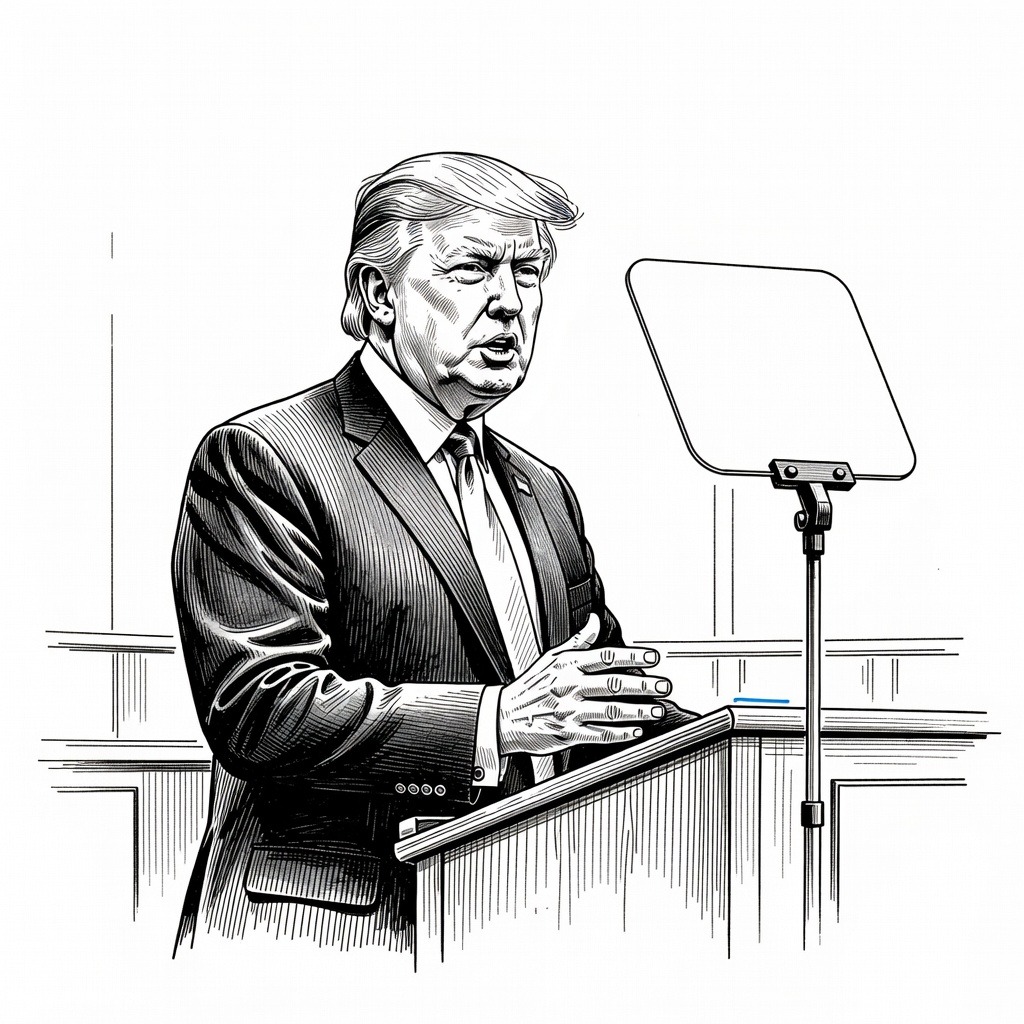
Illustration for: White House Teleprompter Operator Under Investigation for Prediction Market Bets on Trump Speeches
AI-generated illustration. Visual interpretation does not represent real individuals or scenes.

White House Teleprompter Operator Under Investigation for Prediction Market Bets on Trump Speeches

2026-07-17

The BareStory

A White House teleprompter operator, Gabriel Perez, is under investigation by the Commodity Futures Trading Commission (CFTC) for allegedly using inside knowledge of prepared speeches to win money on a prediction market platform, according to sources familiar with the matter. Perez reportedly made more than $100,000 in profits by betting on the platform Kalshi, which allows users to wager on whether specific words or phrases will be mentioned during public addresses.

According to sources and company officials, Kalshi's surveillance systems flagged unusual trading patterns and referred the case to the CFTC. Robert DeNault, Kalshi's head of enforcement, stated that the company is cooperating with regulators and has frozen Perez's account, locking in more than $90,000 of the profits. Investigators reportedly found that bets were placed over a three-month period on more than a dozen of President Donald Trump's speeches, including the State of the Union address, a December primetime address, and a January speech at the World Economic Forum.

White House Press Secretary Karoline Leavitt announced that Perez has been suspended and placed on administrative leave at the direction of the president, who Leavitt said views the situation as deeply unfortunate. While one spokesperson stated the leave is unpaid, another report indicated it is paid. White House spokesperson Davis Ingle said the administration maintains strict ethics guidelines and that Perez is cooperating fully with the CFTC. A CFTC spokesperson declined to comment on the matter.

Perez, who has operated Trump's teleprompter since 2016 and also works as a technical adviser, is reportedly in talks with the CFTC regarding a potential settlement that would require him to return his profits. The investigation follows a White House Management Office directive issued in March instructing staff members not to use nonpublic information to place bets on prediction markets.

Left Perspective

  • Shielding the Vulnerable Public: The core value of public service demands that government officials operate solely in the public interest, rather than leveraging their proximity to power for personal enrichment. From this perspective, the allegation that Gabriel Perez used nonpublic presidential speeches to extract over $100,000 from prediction markets is a systemic failure of ethical safeguards. When public employees exploit insider information, they tilt the playing field against ordinary citizens, eroding trust in the fairness of both financial markets and democratic institutions.
  • Exposing Corporate Platform Risks: The rapid growth of prediction markets like Kalshi introduces dangerous incentives that commodify governance and policy decisions. While Kalshi's surveillance systems ultimately flagged the unusual trading patterns, the fact that a staffer could successfully wager on more than a dozen speeches—including the State of the Union—over a three-month period highlights a critical regulatory gap. This camp views the incident as proof that prediction markets invite speculative manipulation, transforming serious civic discourse into a playground for insider trading.
  • Combating Weak Administrative Accountability: The conflicting reports regarding whether Perez is on paid or unpaid administrative leave signal a troubling lack of immediate, decisive accountability within the executive branch. Allowing an employee under active federal investigation to potentially draw a taxpayer-funded salary undermines the administration's claims of maintaining strict ethics guidelines. The long-term risk is that a weak institutional response will normalize conflicts of interest, signaling to other officials that violating the March nonpublic information directive carries minimal immediate consequences.

Right Perspective

  • Preserving Established Order: The stability of the state relies on the consistent application of administrative procedures and the presumption of innocence until investigations are complete. For this camp, the administration's decision to suspend Perez and place him on administrative leave represents a swift and orderly execution of executive protocol. By directing the suspension and ensuring cooperation with the Commodity Futures Trading Commission (CFTC), the administration protects the integrity of the office without bypassing due process.
  • Validating Market-Based Self-Regulation: The detection of the anomalous betting activity by Kalshi's internal surveillance systems demonstrates that market-based platforms can effectively police themselves. Rather than requiring heavy-handed government bans on prediction markets, the system worked as intended: the platform flagged the activity, froze over $90,000 of the profits, and referred the case to the CFTC. This outcome proves that existing regulatory frameworks and private compliance mechanisms are fully capable of identifying and isolating bad actors.
  • Deterring Insider Security Breaches: The primary danger of this breach is the compromise of sensitive, nonpublic presidential communications, which could threaten broader national security and administrative predictability. Perez's dual role as a long-serving teleprompter operator since 2016 and a technical adviser highlights the vulnerability of critical operational nodes to low-level exploitation. To prevent future vulnerabilities, the long-term focus must be on tightening internal administrative controls, enforcing the March Management Office directive, and securing a settlement that clawbacks the illicit profits to establish a firm deterrent.

How it may affect me

As a U.S. reader:

• You may experience a decline in trust regarding the fairness of prediction markets and financial platforms if insider information from government officials can be used to manipulate betting outcomes.

• You are impacted by the potential misuse of your taxpayer dollars, as conflicting reports leave it unclear whether a suspended public official under federal investigation is still receiving a taxpayer-funded salary.

• You can expect tighter security, stricter internal administrative controls, and more rigorous enforcement of ethics directives regarding nonpublic government information to prevent future insider leaks of presidential speeches.

• You may see increased regulatory scrutiny or potential policy changes surrounding prediction market platforms like Kalshi to address speculative risks and insider trading vulnerabilities.

Read the story at