
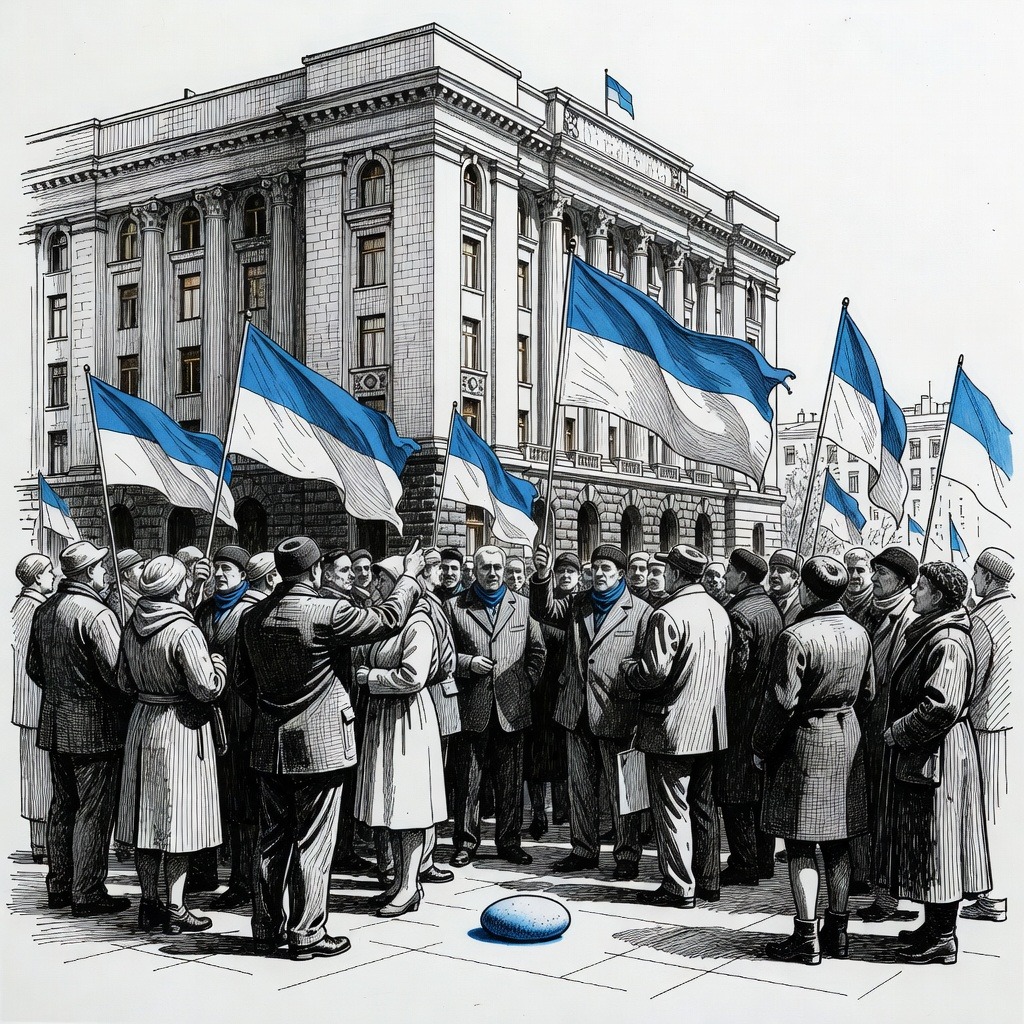
Illustration for: Zelenskyy Dismisses Defense Minister Fedorov and Nominates New Prime Minister in Major Government Reshuffle
AI-generated illustration. Visual interpretation does not represent real individuals or scenes.

Zelenskyy Dismisses Defense Minister Fedorov and Nominates New Prime Minister in Major Government Reshuffle

2026-07-16

The BareStory

Ukrainian President Volodymyr Zelenskyy has dismissed Defense Minister Mykhailo Fedorov as part of a major government reshuffle, prompting public protests. On Thursday, demonstrators gathered in Kyiv to protest the removal of Fedorov, who served in the role for six months. The political shake-up also included the resignation of Prime Minister Yulia Svyrydenko. In her place, Ukraine’s parliament approved Serhii Koretskyi, the former CEO of the state-owned energy company Naftogaz, as the new prime minister.

During his tenure, Fedorov was credited with boosting Ukraine's battlefield position by advancing drone technology, disrupting Russian logistics in Crimea, and stopping the Russian military's use of Starlink internet terminals. He also enacted military reforms to address draft-dodging and troop desertions. While some officials and observers praised Fedorov's modern approach to warfare, reports and lawmakers indicated that his tenure was marked by friction with traditional military generals. Additionally, some officials claimed that Fedorov's growing popularity led him to be viewed as a potential political rival to Zelenskyy.

Following the announcement of Fedorov's removal, several officials resigned, including Pavlo Yelizarov, the deputy commander of the Ukrainian Air Force, who publicly criticized the decision. Zelenskyy defended the broader government changes on social media, stating that the reshuffle aims to prepare Ukraine for a difficult winter, strengthen foreign relations, and assign key priority areas to experienced personnel. Conversely, Kremlin spokesman Dmitry Peskov dismissed the significance of the personnel changes, stating they are of no fundamental importance to Russia and that Moscow sees no immediate prospects for resuming peace negotiations.

Left Perspective

  • Shield Civil Society and Progress: Public accountability and civil liberties are the bedrock of democratic resilience, making the dismissal of Mykhailo Fedorov a worrying step backward. Fedorov’s six-month tenure was defined by modernizing reforms, such as advancing drone technology and stopping Russian military access to Starlink, which protected both soldiers and civilians. Removing a highly effective, reform-minded official who challenged traditional, rigid military structures signals a prioritization of political loyalty over merit and progress.
  • De-escalate Internal Political Friction: Democratic governance must tolerate healthy dissent and rising stars rather than centralizing power within the executive branch. Speculation that Fedorov was dismissed because his growing popularity made him a political rival to President Zelenskyy suggests that political self-preservation is taking precedence over unified governance. This internal consolidation of authority risks alienating the public, as demonstrated by the protests in Kyiv and the high-profile resignation of Air Force Deputy Commander Pavlo Yelizarov.
  • Guard Against Democratic Erosion: Subordinating innovative leadership to traditionalist military generals threatens the long-term democratic evolution of Ukraine's institutions. Forcing out reformers to appease an entrenched military establishment risks stalling vital anti-corruption and modernization efforts, such as those addressing draft-dodging. The long-term danger is an increasingly rigid, top-down governance model that weakens public trust and diminishes the civil liberties the nation is fighting to protect.

Right Perspective

  • Consolidate State Power for War: National survival during an existential conflict demands absolute unity of command, institutional order, and preparation for strategic challenges. President Zelenskyy’s appointment of Serhii Koretskyi, the former CEO of state-owned Naftogaz, as Prime Minister wisely prioritizes energy security and administrative competence ahead of a difficult winter. In times of war, personal ambitions and decentralized factions must be subordinated to a unified command structure to ensure the state can withstand prolonged attrition.
  • Enforce Strict Military Cohesion: Friction between civilian leadership and traditional military generals undermines the execution of cohesive battlefield strategies. While Fedorov's technological initiatives and logistical disruptions in Crimea were valuable, persistent internal conflict with seasoned commanders threatened operational unity. By removing a source of friction, the administration restores a clear chain of command and reinforces the authority of established military institutions during a critical defensive phase.
  • Deter Adversary Exploitation of Instability: Internal political division must be swiftly managed before it can be exploited by foreign adversaries to weaken national resolve. The Kremlin's dismissal of the reshuffle as politically insignificant demonstrates that strategic deterrence relies on showing a united front, rather than allowing public protests and high-level resignations to project weakness. Failing to establish a cohesive, disciplined leadership team risks signaling vulnerability to Moscow, which would undermine Ukraine's leverage in any future negotiations.

How it may affect me

As a U.S. reader:

• The political reshuffle and dismissal of an innovative defense minister could affect the strategic stability of Ukraine ahead of a difficult winter, potentially impacting the efficiency and long-term outcome of U.S. financial and military aid.

• The appointment of a former state energy CEO as prime minister highlights a focus on energy security, which may influence international energy markets and subsequent energy costs in the United States.

• The political friction and public protests in Ukraine could lead to heightened debate among U.S. policymakers regarding the governance and democratic stability of a major foreign aid recipient.

Read the story at