
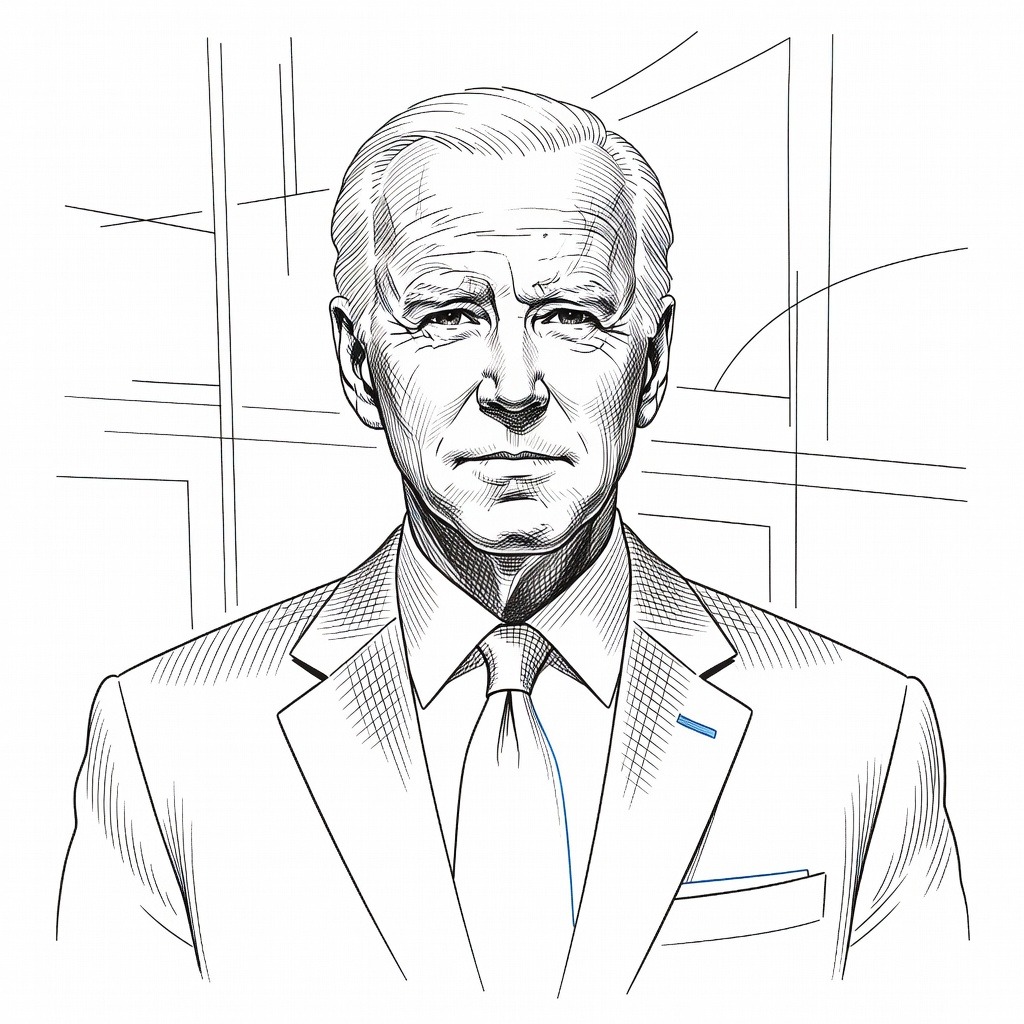
Illustration for: Former President Joe Biden Announces Presidential Memoir "Promise Me, America"
AI-generated illustration. Visual interpretation does not represent real individuals or scenes.

Former President Joe Biden Announces Presidential Memoir "Promise Me, America"

2026-07-16

The BareStory

Former President Joe Biden announced in a video message on Wednesday, July 15, 2026, that he has authored a new presidential memoir titled "Promise Me, America." Scheduled for release on November 17, 2026, the book will mark Biden's third publication. According to the former president, the memoir details major decisions from his presidency—including responses to the COVID-19 pandemic, the economy, and international conflicts—as well as his decision to run for re-election and his subsequent choice to step aside. Since leaving office, Biden stated he has been spending time with family and receiving successful treatment for prostate cancer.

The announcement of the memoir, which is set to release two weeks after the November midterm elections, has drawn criticism and scrutiny from various political figures. Critics on social media, including several conservative commentators and Missouri Republican Representative Jason Smith, questioned the book's authorship and mocked its timing. Some observers noted that the promotional campaign for the book could distract from current political efforts.

Additional figures have spoken out regarding the end of Biden's term and his 2024 campaign. Former Vice President Kamala Harris wrote in her own memoir that it was reckless to allow Biden to decide to run for re-election alone, while Hillary Clinton called Biden's 2024 re-election bid a terrible mistake. Furthermore, former Democratic fundraiser Lindy Li claimed that the book launch would reopen painful wounds for the Democratic party, alleging that the Democratic National Committee had sought to distance itself from Biden prior to her departure from the party.

Left Perspective

  • Democratize the Historical Record: Transparency is a fundamental civic duty, and a primary source account of unprecedented crises like the COVID-19 pandemic is essential for public accountability. By detailing the internal decision-making processes of his presidency, the author provides the electorate with the necessary tools to evaluate executive power and policy efficacy. This self-assessment serves as a crucial counterweight to top-down institutional narratives.
  • Expose Executive Vulnerability: Acknowledging the internal and external pressures of political life—such as the decision to step aside from the 2024 race—humanizes leadership and challenges the myth of the infallible executive. The willingness to document personal struggles, including a battle with prostate cancer, fosters a healthier political culture that values empathy over rigid dominance. This transparency helps dismantle the culture of secrecy that often shields powerful leaders from public scrutiny.
  • Reckon with Strategic Failures: Confronting the criticisms leveled by party figures like Kamala Harris and Hillary Clinton regarding the 2024 re-election bid is a necessary step toward systemic reform. Rather than burying internal party dissent, addressing these friction points openly allows the political system to learn from strategic missteps and rebuild trust with the electorate. Avoiding these painful truths only perpetuates institutional complacency and alienates the public.

Right Perspective

  • Preserve Executive Dignity: The office of the presidency demands a level of decorum and restraint that is compromised by rapid-fire, post-presidential publishing. Rushing to release a memoir so soon after leaving office risks reducing serious statecraft—such as managing global health crises and international conflicts—into a commercialized defense of one's legacy. True institutional strength relies on allowing history, rather than self-authored narratives, to judge an administration's record.
  • Shield the Electoral Process: Releasing a high-profile promotional campaign immediately following the critical November midterm elections threatens to disrupt the political landscape and distract from current governance. The stability of established systems depends on orderly transitions of influence, which can be undermined when former leaders re-enter the spotlight to litigate past battles. This timing risks reigniting partisan division when the focus should be on forward-looking legislative stability.
  • Maintain Institutional Order: Airing dirty laundry and highlighting internal party fractures, as criticized by Lindy Li and other observers, weakens the collective credibility of governing institutions. When high-ranking figures publicly debate the competence and decision-making capacity of a sitting president, it erodes public confidence in the stability of the state itself. Protecting the integrity of the office requires a united front rather than public post-mortems that expose systemic vulnerabilities to adversaries.

How it may affect me

As a U.S. reader:

• You will have access to a firsthand account of major presidential decisions regarding the COVID-19 pandemic, the economy, and international conflicts when the book is released on November 17, 2026.

• You may experience a renewed and highly publicized debate over the stability and strategic decisions of the Democratic party immediately following the November 2026 midterm elections.

• You can expect the book's promotional campaign to potentially distract from current governance and forward-looking legislative efforts in the short term.

Read the story at