
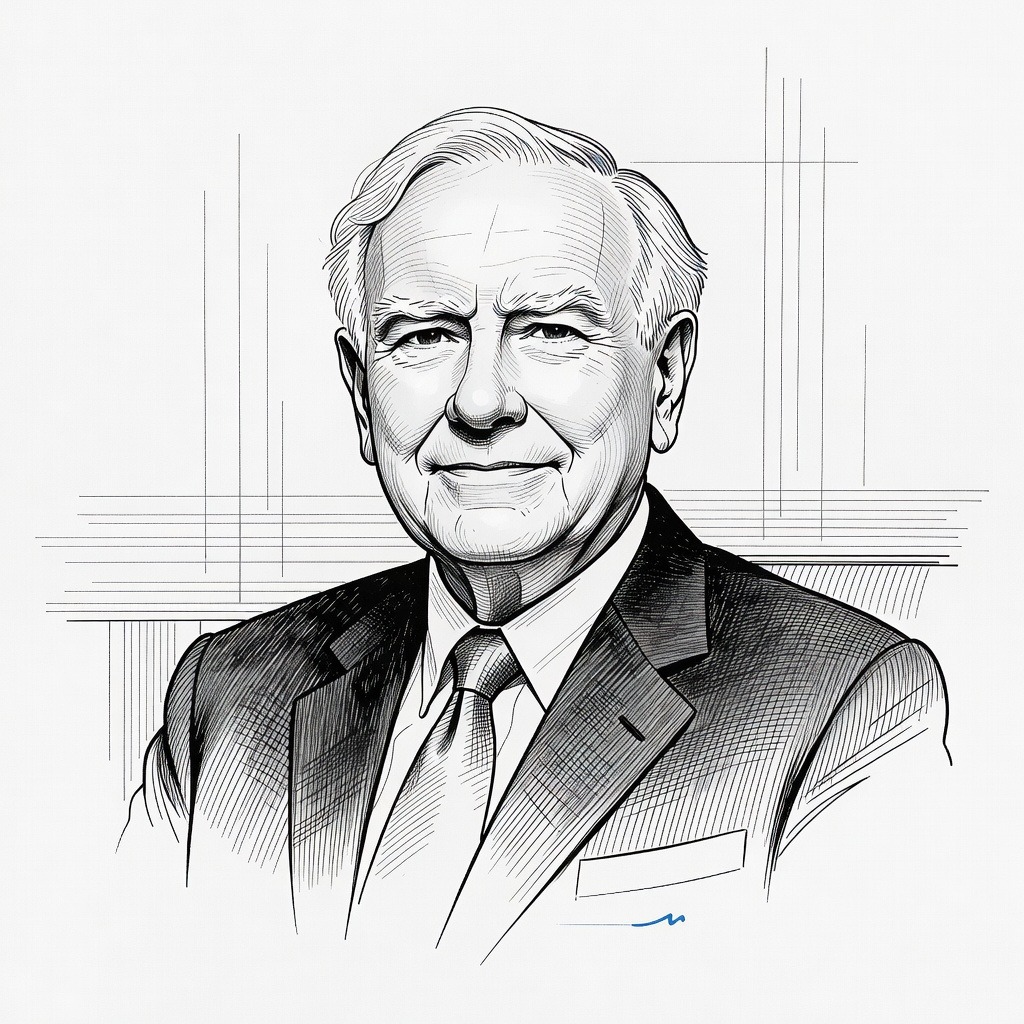
Illustration for: Warren Buffett Criticizes Market Speculation, Clarifies Berkshire Hathaway Investment Decisions
AI-generated illustration. Visual interpretation does not represent real individuals or scenes.

Warren Buffett Criticizes Market Speculation, Clarifies Berkshire Hathaway Investment Decisions

2026-07-15

The BareStory

During an interview from Omaha, Nebraska, Berkshire Hathaway Chairman Warren Buffett criticized the current state of the stock market, characterizing much of its recent activity as speculative trading. The 95-year-old investor stated that finding value in the market has become difficult due to a widespread preference for gambling over long-term investing. Buffett previously compared the stock market to a casino and described the growth of one-day options trading as gambling, noting that there is more money to be made by cultivating gamblers than actual investors.

The market has reached all-time highs this year amid an energy shock from an ongoing war with Iran. Observers have pointed to speculation in artificial intelligence stocks, leveraged exchange-traded funds, and options as drivers of this activity. Retail traders have also heavily purchased shares of memory chipmaker Micron and participated in the recent SpaceX initial public offering.

Buffett also clarified that he, rather than Berkshire Hathaway's new CEO Greg Abel, initiated the conglomerate's recent major investment in Alphabet. Berkshire first disclosed its stake in Alphabet in the third quarter of 2025 and later participated in a $10 billion private placement to fund the tech company's artificial intelligence infrastructure. While Abel, who became CEO at the start of this year, has the final say, Buffett noted they make decisions collaboratively.

Though Buffett expressed regret for not investing in Alphabet sooner, he stated that the company is not among Berkshire’s top four or five favorite holdings. He cited the hundreds of billions of dollars in capital commitments required for artificial intelligence competition as a significant challenge for Alphabet and its competitors. Conversely, Buffett affirmed that Apple remains one of his favorite stocks and Berkshire's largest equity holding, despite the upcoming departure of Apple CEO Tim Cook.

Left Perspective

  • Shielding Productive Capital: The primary social value of public markets is to efficiently channel capital into productive, stable enterprises rather than extractive mechanisms. Warren Buffett’s comparison of modern markets to a casino exposes how speculative instruments, such as one-day options and leveraged ETFs, divert capital away from real-world economic utility. This camp views the rise of gambling-like retail behavior as a systemic failure that enriches financial intermediaries at the expense of ordinary, long-term wealth accumulation.
  • Resisting Tech Monopoly Gambles: High-stakes capital expenditure on unproven artificial intelligence infrastructure represents a reckless deployment of corporate resources. The massive capital commitments required to compete in AI, exemplified by the $10 billion private placement for Alphabet, highlight the growing pressure on tech giants to over-leverage themselves. This perspective favors established, stable business models over speculative tech bubbles that demand endless capital with highly uncertain returns for the broader public.
  • Defending Foundational Enterprise Integrity: Long-term economic stability relies on businesses possessing durable competitive advantages and predictable cash flows. Consistently favoring proven, resilient enterprises like Apple over speculative ventures protects the core economy from the inevitable boom-and-bust cycles of hype-driven sectors. The risk of ignoring these fundamental principles is a highly volatile financial system that leaves everyday retail investors vulnerable to devastating sudden corrections when speculative sentiment shifts.

Right Perspective

  • Catalyzing Liquidity and Innovation: Market efficiency and rapid price discovery are optimized by high trading volumes, diverse financial instruments, and active retail participation. What critics label as "speculation" in AI stocks, leveraged ETFs, and new offerings like SpaceX actually represents vital risk-taking that funds cutting-edge technologies. Dynamic markets require a spectrum of risk tolerances, and short-term liquidity pools ultimately lower the cost of capital for pioneering companies.
  • Seizing Generative Growth Engines: Capital allocation must pivot rapidly toward high-growth technological frontiers to maintain competitive dominance in the global economy. Collaborative, massive investments in infrastructure—such as the $10 billion funding round for Alphabet's AI development—are necessary, high-stakes bets required to secure future market leadership. This perspective views these immense capital commitments not as reckless spending, but as the mandatory entry fee for shaping the next industrial revolution.
  • Optimizing Dynamic Governance Transitions: Corporate resilience is maintained through strategic continuity and pragmatic leadership transitions, rather than rigid adherence to a single executive. The collaborative decision-making process between veteran leadership and the new CEO Greg Abel ensures that institutional knowledge is preserved while adapting to new market realities. Systemic stability is achieved when organizations can navigate major shifts, such as the upcoming departure of Apple CEO Tim Cook, without disrupting their broader strategic trajectory.

How it may affect me

As a U.S. reader:

• The rise of speculative trading and gambling-like instruments may make retail investors more vulnerable to sudden, devastating market corrections as capital shifts away from stable, long-term investments.

• The massive, high-stakes capital investments required to compete in artificial intelligence may either secure future technological leadership for major tech giants or lead to high volatility and over-leveraged companies if these unproven technologies fail to yield expected returns.

• Everyday investors participating in retail trading, dynamic options, or new offerings like SpaceX may face increased financial risk but could also benefit from the high liquidity and lower cost of capital that short-term trading pools provide to innovative industries.

• The collaborative leadership transition at Berkshire Hathaway and its continued backing of stable companies like Apple suggests that large institutional investments may remain stable despite executive changes, potentially protecting broader retirement and long-term investment portfolios from sudden disruption.

Read the story at