
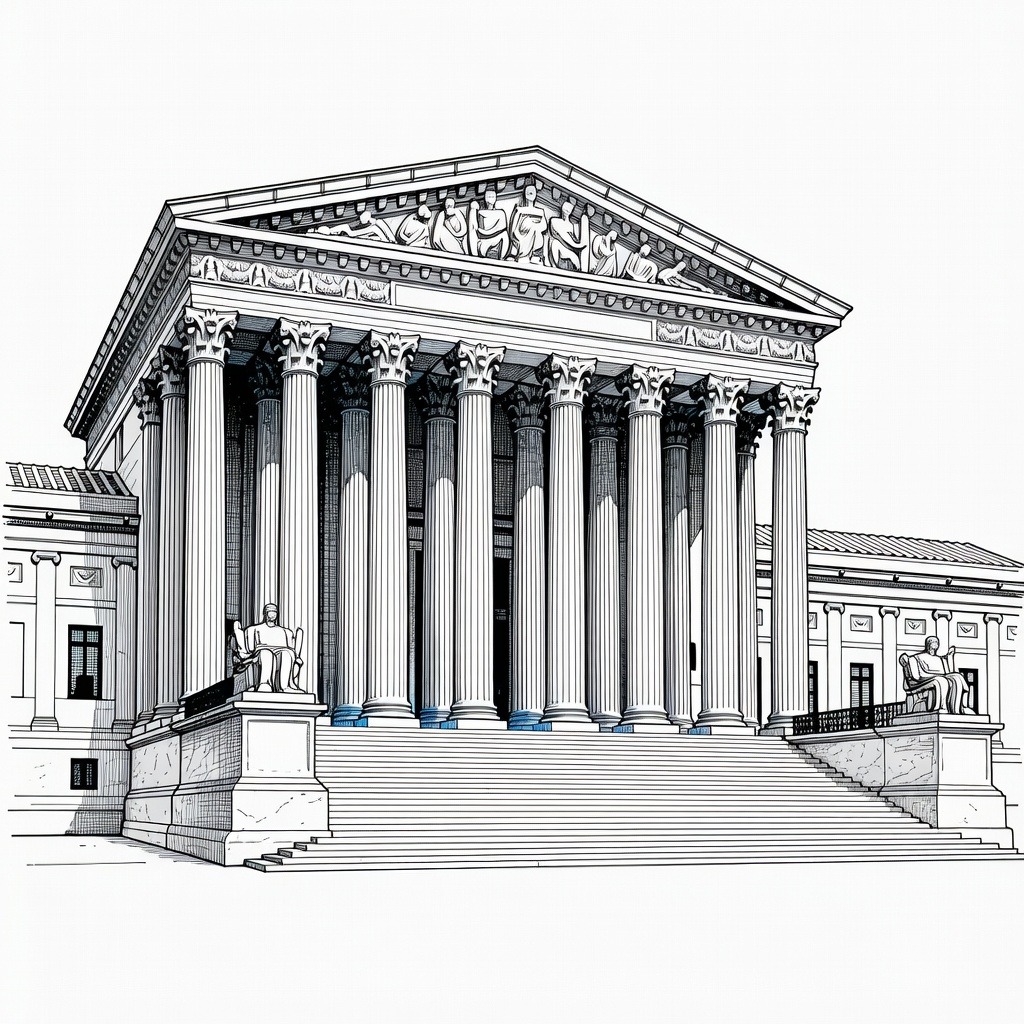
Illustration for: Supreme Court Justices Testify Before Congress to Request Increased Security Funding
AI-generated illustration. Visual interpretation does not represent real individuals or scenes.

Supreme Court Justices Testify Before Congress to Request Increased Security Funding

2026-07-15

The BareStory

U.S. Supreme Court Justices Elena Kagan and Amy Coney Barrett testified before the House Appropriations Committee on Tuesday to request a $228 million budget for the 2027 fiscal year. The rare appearance marked the first time members of the high court have testified on Capitol Hill since 2019.

The proposed budget represents a 10% increase from the previous year, with the justices citing a heightened threat environment to justify the additional funding. According to their testimony, Supreme Court police reported that threats against the justices rose by 38% last year and 25% the year prior. Justice Barrett shared personal security experiences, including receiving a bulletproof vest around the time of the leak of the opinion overturning Roe v. Wade, as well as being targeted in a swatting incident six weeks ago.

The security funding request includes $14.6 million to add six security agents for each justice and 25 officers for the Supreme Court building. The justices testified that the current allocation of four to eight agents per justice is insufficient and causes staff burnout. Additionally, the budget requests $6.5 million to design an off-campus visitor screening facility, $2.3 million for cybersecurity personnel, and funding for drone mitigation.

During the hearing, Democratic lawmakers questioned the justices regarding court ethics and transparency. Representative Rosa DeLauro pressed the justices on their ethical practices following past controversies involving unreported travel and financial ties, calling for a gift ban and questioning the enforcement of the court's 2023 code of conduct. In response, Justice Kagan expressed support for an independent enforcement mechanism to improve public trust, while Justice Barrett did not endorse the proposal.

Left Perspective

  • Leverage Funding for Oversight: Public trust is the foundational currency of judicial legitimacy, making it essential to tie budgetary expansions to ethical accountability. When Supreme Court justices request a 10% budget increase to $228 million, it presents a vital legislative window to address unresolved controversies surrounding unreported travel and financial ties. Democratic lawmakers are justified in conditioning financial support on the implementation of a gift ban and a robust, independent enforcement mechanism for the court's 2023 code of conduct.
  • Expose Constitutional Double Standards: True judicial integrity requires equal commitment to transparency and self-regulation across all members of the bench. While Justice Kagan’s support for an independent enforcement mechanism aligns with the need to restore public faith, Justice Barrett’s refusal to endorse the proposal exposes a concerning resistance to external oversight. Accepting millions of taxpayers' dollars for personal protection while rejecting basic accountability measures creates a double standard that further erodes the court's democratic legitimacy.
  • Fear unchecked Judicial Insularity: Granting significant funding increases without binding ethical guardrails risks codifying an unaccountable, imperial judiciary. Investing $14.6 million for extra security agents and $6.5 million for an off-campus visitor screening facility physically and symbolically insulates the justices from the public they serve. Without parallel reforms to ethics enforcement, this expansion shields the court from legitimate public scrutiny and deepens the systemic disconnect between the bench and the citizenry.

Right Perspective

  • Shield the Rule of Law: Physical safety is the absolute prerequisite for independent, pressure-free judicial decision-making. The alarming 38% rise in threats last year, coupled with targeted swatting incidents and the necessity of bulletproof vests for justices like Barrett, demonstrates that the judiciary is under active, physical siege. Providing $14.6 million to expand security details and prevent staff burnout is not a political concession, but a constitutional necessity to protect the lives of those who uphold the legal order.
  • Defend Constitutional Separation: Coercing constitutional officers into policy concessions by withholding essential security funding violates the separation of powers. Using a hearing on physical safety to press political agendas regarding ethics codes and gift bans weaponizes the budgetary process to exert legislative control over an co-equal branch of government. The high court must remain insulated from partisan leverage, and its safety cannot be held hostage to extract compliance on internal administrative matters.
  • Deter Extremist Mob Rule: Failing to fully fund the requested security measures invites targeted intimidation to influence the nation's jurisprudence. If the state cannot secure its highest jurists against drone threats, cyberattacks, and physical violence, it signals that lawless intimidation is an effective tool for altering judicial outcomes. Underfunding the Supreme Court's security apparatus risks paralyzing the legal system by allowing public hostility and threats of violence to dictate the interpretation of the Constitution.

How it may affect me

As a U.S. reader:

• Your federal tax dollars may be used to cover a proposed 10 percent budget increase to 228 million dollars for the Supreme Court, including 14.6 million dollars for additional security agents and 6.5 million dollars for a new off-campus visitor screening facility.

• You may see either heightened physical safety and independence for the nation's highest court, or a judiciary that is increasingly insulated from public interaction and scrutiny.

• Depending on how Congress handles the budget request, you could see the implementation of new ethics reforms, such as a gift ban or an independent enforcement mechanism for the court's code of conduct, in exchange for the approved security funding.

• If the requested security funding is not approved, the court may face ongoing vulnerabilities to drone threats, cyberattacks, and physical safety risks, potentially impacting the overall stability of the judicial system.

Read the story at