
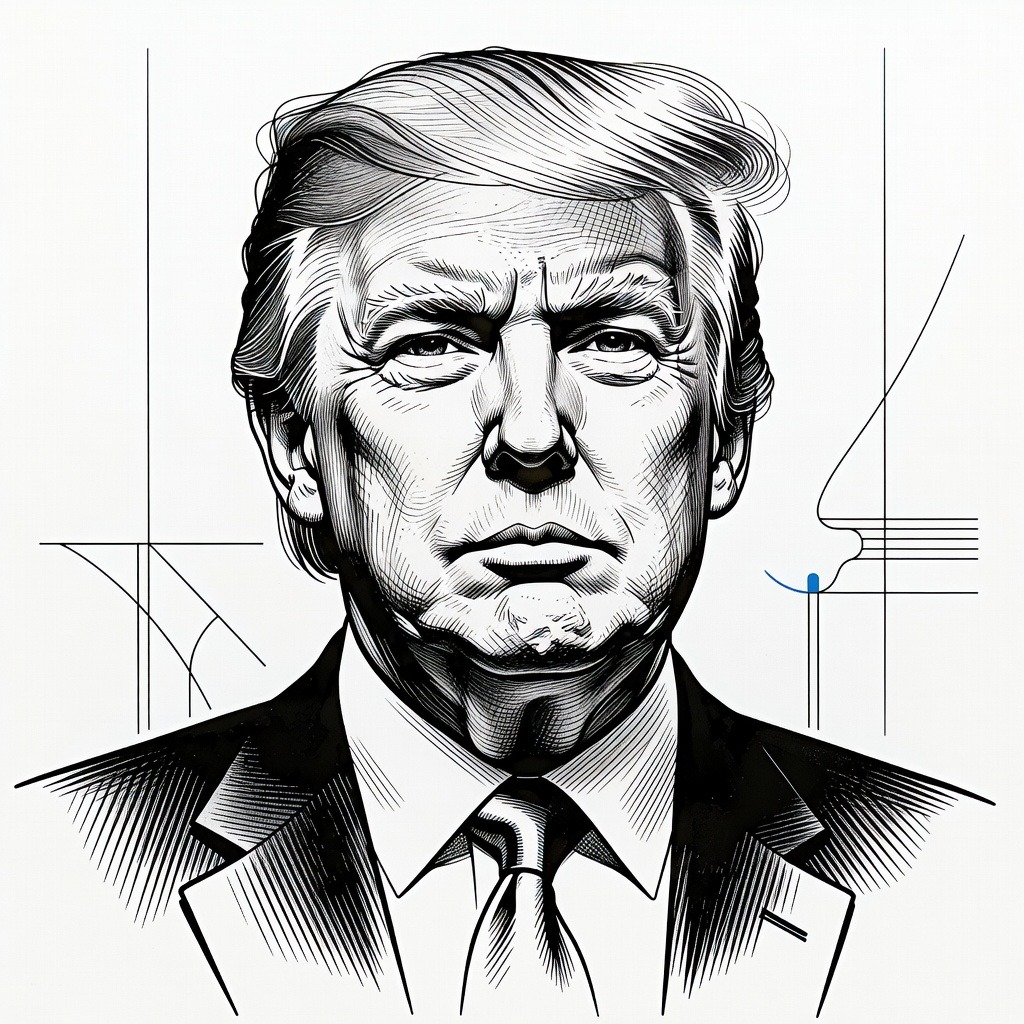
AI-generated illustration. Visual interpretation does not represent real individuals or scenes.
Oil Prices Rise Following US Policy Proposals on the Strait of Hormuz
2026-07-14
The BareStory
U.S. oil prices rose following actions and proposals by President Donald Trump concerning the Strait of Hormuz, according to market data and analysts. U.S. West Texas Intermediate futures increased to around $79.91 per barrel, while Brent international crude climbed to approximately $85.11 per barrel. The gains followed an announcement by President Trump that he was reinstating a blockade on Iran in the strait, alongside a proposal to implement a 20% fee on cargo transiting the waterway.
According to Andy Lipow, president of Lipow Oil Associates, the proposed cargo fee would add an estimated $16 per barrel to crude oil shipped through the strait, although implementation details remain unclarified by the administration. Analysts warned that the proposed levy and potential disruptions threaten to undo previous projections of a global oil surplus. The investment firm Citi warned that the proposal increases the risk of a near-term military confrontation and could lead Iran to abandon a recent bilateral memorandum of understanding.
The geopolitical developments contributed to a downturn in the broader stock market on Monday, with the S&P 500 falling nearly 0.8% and the Nasdaq declining about 1.5%. Conversely, market commentator Jim Cramer noted that certain energy, chemical, and retail stocks outperformed the broader market. Shares of Valero Energy rose roughly 5%, while Dow Inc. and Mosaic both gained approximately 4% as investors reacted to the shifting energy landscape.
Left Perspective
Shield Vulnerable Global Markets
De-escalate Geopolitical Flashpoints
Prevent Artificial Economic Volatility
Right Perspective
Enforce Peace Through Strength
Incentivize Domestic Resource Security
Accept Necessary Transitional Friction
Left Perspective
• Shield Vulnerable Global Markets
The fundamental priority of this camp is protecting everyday consumers and global stability from artificial economic shocks. From this perspective, implementing a 20% cargo fee on the Strait of Hormuz—which analysts estimate adds $16 per barrel to shipped crude—acts as an regressive tax that threatens to erase the projected global oil surplus. The resulting surge in West Texas Intermediate to $79.91 and Brent crude to $85.11 represents a failure of policy that penalizes consumers to assert unilateral dominance.
• De-escalate Geopolitical Flashpoints
International law and diplomatic agreements are the safest pathways to secure global trade and prevent humanitarian crises. Reinstating a blockade on Iran and imposing aggressive maritime levies directly undermines diplomacy, as evidenced by warnings that Iran may abandon its recent bilateral memorandum of understanding. Initiating aggressive unilateral measures in vital waterways creates unnecessary friction and risks escalating localized tensions into broader, destructive military conflicts.
• Prevent Artificial Economic Volatility
Economic progress must be sustainable and broad-based, rather than volatile and concentrated in a few hands. The downturn in the broader stock market—where the S&P 500 fell 0.8% and the Nasdaq dropped 1.5%—demonstrates how aggressive foreign policy destabilizes the wider economy to the detriment of ordinary investors. While a handful of energy and chemical stocks like Valero and Dow Inc. gained value, this concentrated windfall does not justify the widespread systemic instability forced upon the public.
Right Perspective
• Enforce Peace Through Strength
National security and long-term stability require decisive deterrents against hostile nations that threaten global trade arteries. Reinstating a blockade on Iran and proposing a 20% fee on transit through the Strait of Hormuz leverages economic and strategic power to establish clear red lines. By directly targeting the financial lifelines of adversaries, this policy projects the necessary resolve to deter long-term aggression and secure vital maritime shipping lanes.
• Incentivize Domestic Resource Security
Systemic resilience is best achieved by incentivizing domestic production and reducing reliance on volatile foreign supply chains. The rise in Brent crude to $85.11 and WTI to $79.91 signals a market revaluation that makes domestic energy exploration and infrastructure investment highly lucrative. Market responses, such as Valero Energy shares rising 5% and Dow Inc. gaining 4%, demonstrate that strategic policies redirect capital toward critical domestic industries, reinforcing national energy independence.
• Accept Necessary Transitional Friction
Short-term market corrections and diplomatic frictions are a necessary price for correcting long-standing geopolitical imbalances. The temporary drop in the S&P 500 and the Nasdaq represents routine market digestion of a major policy shift, rather than a structural failure. Accepting near-term volatility and the potential dissolution of unstable bilateral agreements is a calculated, realistic trade-off required to establish a more secure, realistic balance of power in the Middle East.
How it may affect me
As a U.S. reader:
• You may face higher costs for gasoline and other energy products in the short term due to U.S. West Texas Intermediate futures rising toward $79.91 per barrel and Brent crude climbing to $85.11 per barrel.
• If you have a diversified stock portfolio, you may see a decline in your overall investment value, as the broader S&P 500 fell nearly 0.8% and the Nasdaq declined about 1.5% due to these geopolitical developments.
• If you hold investments in specific energy, chemical, or retail companies, you might see gains, with shares of companies like Valero Energy rising about 5% and Dow Inc. and Mosaic gaining approximately 4%.
• In the long term, you could experience ongoing economic and energy security impacts if the proposed 20% cargo fee adds an estimated $16 per barrel to shipped crude and erases the projected global oil surplus.
• You may face increased national security risks as analysts warn the policy proposals elevate the risk of a near-term military confrontation in the Strait of Hormuz and could lead Iran to abandon its bilateral memorandum of understanding.