
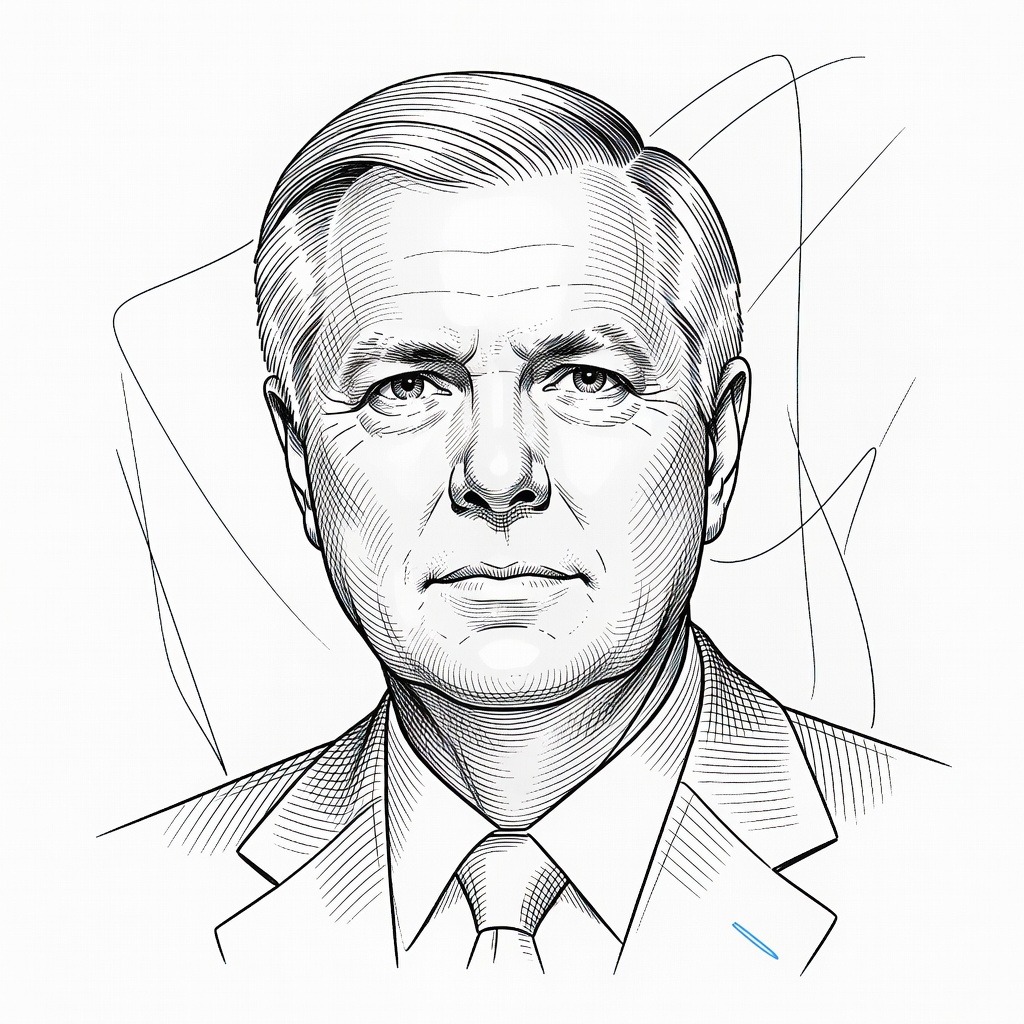
Illustration for: South Carolina Senator Lindsey Graham Dies at 71 After Sudden Illness
AI-generated illustration. Visual interpretation does not represent real individuals or scenes.

South Carolina Senator Lindsey Graham Dies at 71 After Sudden Illness

2026-07-12

The BareStory

United States Senator Lindsey Graham, a Republican from South Carolina, died on the evening of Saturday, July 11, 2026, at the age of 71. According to statements released by his office, the long-serving lawmaker passed away following a brief and sudden illness. No further details regarding the cause of death were immediately made available by his office, though a recording of an emergency call to his residence on Saturday evening indicated a dispatch for cardiac arrest.

First elected to the Senate in 2002 after serving four terms in the House of Representatives, Graham spent 23 years in the upper chamber. He was a prominent foreign policy hawk, a member of multiple key committees, and the chair of the Senate Budget Committee. Graham was also a retired colonel, having served 33 years in the U.S. Air Force, Air National Guard, and Air Force Reserve. He had recently won his primary election in June and was seeking a fifth Senate term.

Under South Carolina law, Republican Governor Henry McMaster will appoint an interim replacement to serve in Graham's vacant Senate seat until January 3, 2027. Because the seat was already scheduled for reelection this year, the next senator will be chosen during the upcoming midterm elections on November 3, 2026. A special election must also be held on August 11 to replace Graham on the ballot.

The news of Graham's death prompted tributes from domestic and international leaders. President Donald Trump called Graham a true American patriot and one of the greatest senators he had ever known. Ukrainian President Volodymyr Zelenskyy, who met with Graham in Kyiv shortly before the senator's death, praised him as a defender of freedom who made ten wartime visits to Ukraine. Israeli Prime Minister Benjamin Netanyahu and President Isaac Herzog also expressed their condolences, describing Graham as a devoted friend to Israel.

Left Perspective

  • Challenging the Hawk Legacy: Humanitarians view Senator Lindsey Graham’s 23-year Senate career and "foreign policy hawk" status through a lens of skepticism toward military intervention. While acknowledging his ten wartime visits to Ukraine, this perspective prioritizes diplomatic de-escalation over the "Peace through Strength" doctrine he championed. From this viewpoint, a legacy defined by hawkish defense spending and robust military aid often risks perpetuating global conflicts rather than resolving their underlying humanitarian crises.
  • Demanding Democratic Accountability: This framework prioritizes direct voter representation and civil liberties over top-down political appointments. Under South Carolina law, Republican Governor Henry McMaster will appoint an interim replacement to serve until January 2027, bypasssing the immediate democratic will of the electorate. For reformers, this process underscores the need to transition away from executive appointments toward immediate special elections, ensuring that the vulnerable are represented by a leader chosen directly by the people rather than an appointed party insider.
  • Fearing Systemic Polarization: The sudden vacancy created by Graham’s passing right after his June primary victory introduces acute political instability ahead of the November 3 midterm elections. This camp fears that the compressed timeline for the August 11 special ballot replacement election will lead to a rushed, hyper-partisan selection process. Without adequate time for robust public debate, the rush to fill the seat risks further alienating voters and entrenched corporate-backed candidates rather than fostering genuine democratic renewal.

Right Perspective

  • Preserving Deterrence and Sovereignty: Strategic realists view Graham's legacy, including his 33 years of military service and close alliances with leaders like Ukrainian President Volodymyr Zelenskyy and Israeli Prime Minister Benjamin Netanyahu, as a testament to the necessity of strong global alliances. This perspective holds that national security and international stability are maintained only through robust strategic deterrence and the projection of power. Tributes from international leaders validate his hawkish stance as a vital shield against foreign aggression.
  • Upholding the Rule of Law: This framework prioritizes institutional continuity, social order, and adherence to established legal frameworks. The transition of power outlined under South Carolina law, where Governor Henry McMaster appoints an interim senator, is seen as a vital mechanism to prevent a destabilizing power vacuum in the Senate. Following this constitutional protocol ensures that governance remains orderly, stable, and legally sound during a time of national transition.
  • Securing National Leadership Continuity: The immediate challenge for this camp is navigating the upcoming August 11 special election and the November midterms to protect the balance of power. The primary risk is that a sudden leadership vacuum in key positions, such as Graham's chairmanship of the Senate Budget Committee, could disrupt fiscal discipline and national security oversight. Preserving his legacy requires a swift, disciplined electoral process to seat a successor who will maintain commitments to national defense and institutional stability.

How it may affect me

As a U.S. reader:

• You will see South Carolina's Senate seat temporarily filled by an interim appointee chosen by Governor Henry McMaster, maintaining Senate operations until January 2027.

• You can expect a highly compressed and potentially polarized political environment leading up to a special ballot replacement election on August 11, followed by the midterm election on November 3, 2026, to determine the long-term successor.

• You may observe immediate shifts or disruptions in federal fiscal policy and national security oversight due to the sudden vacancy in Graham's former role as chair of the Senate Budget Committee.

• You might see shifts in the domestic debate surrounding U.S. foreign policy, military spending, and foreign aid to allies like Ukraine and Israel, as Graham's influential hawkish stance is replaced by new leadership.

Read the story at