
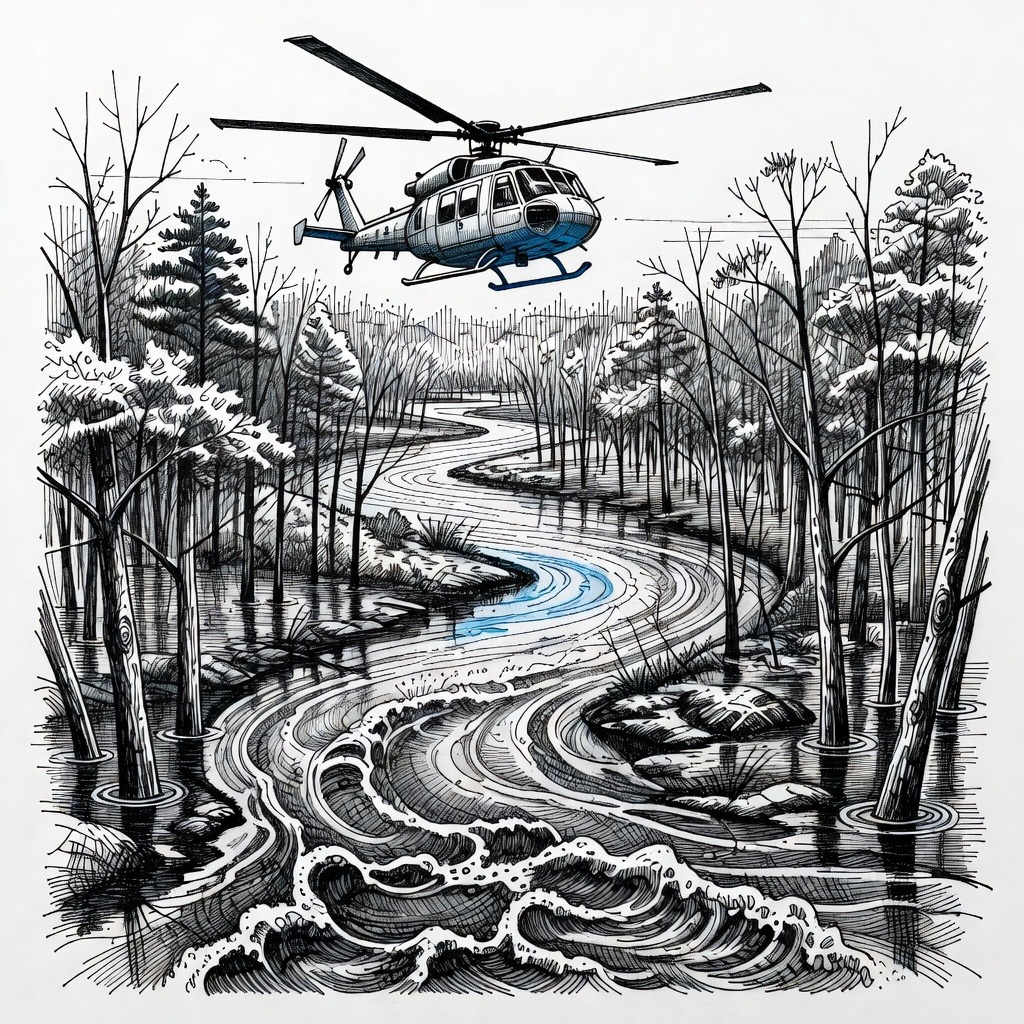
• Shielding the Most Vulnerable The core moral duty of governance is protecting those least able to defend themselves, a value exemplified by the mobilization of eight Black Hawk helicopters to rescue 202 stranded children and counselors at Camp Taum Sauk. When 6 to 12 inches of rain suddenly isolates youth aged 8 to 16, state power must pivot instantly toward collective care rather than bureaucratic hesitation. Using military resources for domestic humanitarian rescue represents the highest and most ethical application of state-funded infrastructure.
• Exposing Structural Climate Deficits This disaster must be analyzed through the lens of systemic vulnerability and the escalating frequency of extreme weather events. Labeling a storm as a "1-in-1,000-year rainfall event" can mask the urgent need for structural reform, proactive climate adaptation, and better zoning laws for recreational areas. The collapse of a building at Bearcat Getaway under the weight of stranded campers reveals that current infrastructure is dangerously unprepared for the realities of modern environmental crises.
• Prioritizing Human-Centric Security Metrics The ultimate measure of any emergency response is the preservation of human life and the minimization of trauma, making the safe return of the campers to St. Louis the primary indicator of success. However, the system fails if anyone is left behind, as highlighted by the missing Crawford County woman whose home was swept from its foundation. True security is not just about successful high-profile military deployments, but about guaranteeing comprehensive, long-term safety nets for the most marginalized rural residents.
How it may affect me
As a U.S. reader:
• If you are a resident or traveler in low-lying and flood-prone areas of southeastern Missouri, you must remain alert and prepared to take protective action due to a forecast of an additional 2 to 4 inches of rain on already saturated soils.
• If you have family members at recreational camps or properties in the affected Missouri counties, you can expect potential disruptions and should verify safety through local operators or official state channels, as road access may be cut off by rapid flooding.
• In the short term, emergency response resources in several Missouri counties may be heavily strained, making it vital for individuals to adhere strictly to official warnings to preserve state resources and protect first responders.
• In the long term, you may face heightened risks from structural vulnerabilities in recreational facilities, as evidenced by the collapse of a building under the weight of stranded campers during the flooding.