
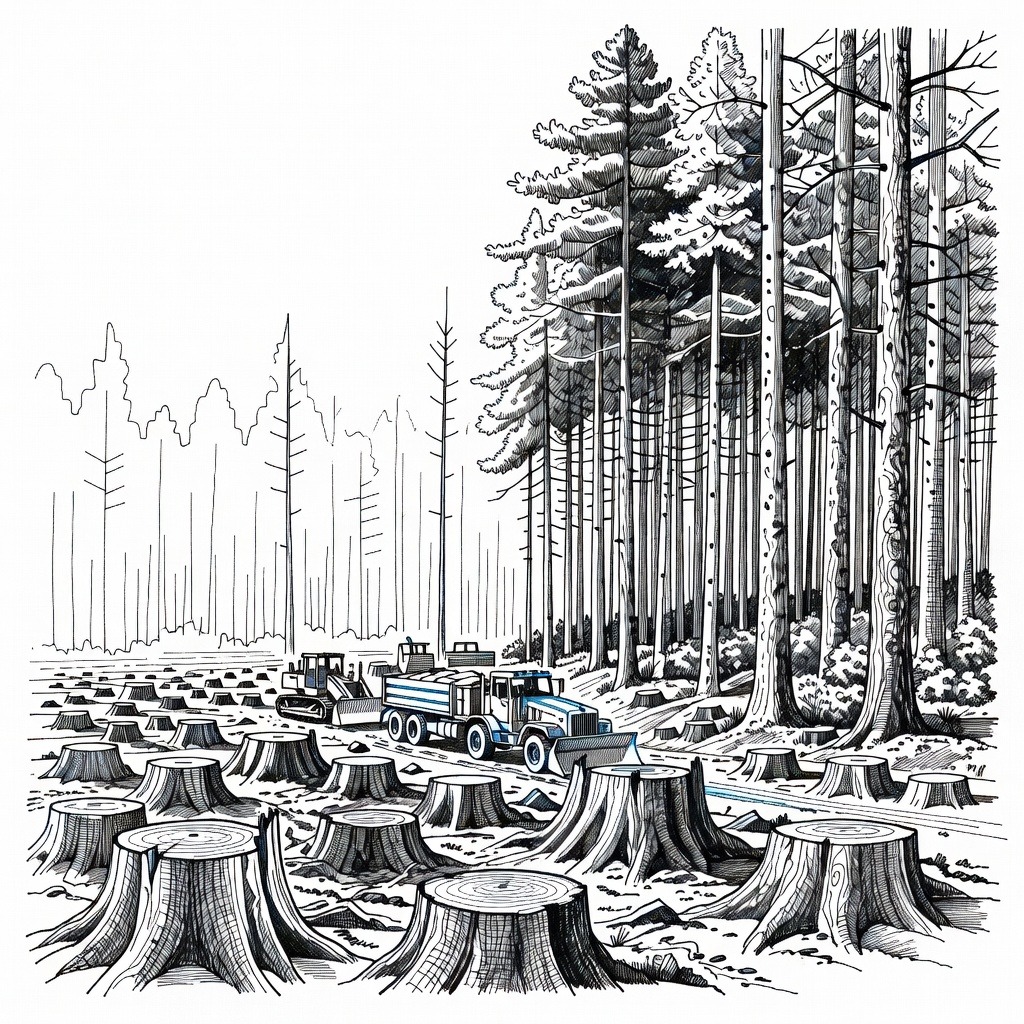
Illustration for: Trump Administration Narrows Endangered Species Act Definition of Harm
AI-generated illustration. Visual interpretation does not represent real individuals or scenes.

Trump Administration Narrows Endangered Species Act Definition of Harm

2026-07-11

The BareStory

The Trump administration has finalized a regulatory rule that narrows the definition of "harm" under the Endangered Species Act (ESA). The joint decision by the U.S. Interior and Commerce Departments alters how federal agencies enforce the 1973 conservation law, permitting activities such as logging, oil and gas drilling, and mining on critical wildlife habitats as long as the animals themselves are not directly killed or injured.

Interior Secretary Doug Burgum stated that federal agencies had previously abused the ESA to obstruct lawful land use and burden American families and businesses. Commerce Secretary Howard Lutnick added that the regulations had burdened fishermen for too long. Administration officials said the policy shift aligns with the Supreme Court's 2024 decision in *Loper Bright v. Raimondo*, which limited the authority of federal agencies to interpret environmental statutes.

Conversely, environmentalists and wildlife advocates opposed the regulatory shift. Aaron Weiss of the Center for Western Priorities argued that habitat destruction is the primary cause of species extinction and called the rule a gift to oil and mining interests. Opponents warned that the rule change could lead to the extinction of certain species by allowing the destruction of their natural habitats.

The administration stated that the regulatory change is intended to reduce permitting and compliance costs while providing greater legal clarity for landowners, energy producers, and developers. Officials emphasized that core ESA protections remain in place, including prohibitions on directly injuring or killing protected wildlife.

Left Perspective

  • Habitats Shield Threatened Species: Ecological preservation relies on the fundamental scientific reality that a species cannot survive without its physical environment. By narrowing the definition of "harm" to exclude indirect habitat destruction from logging, drilling, and mining, this rule effectively guts the Endangered Species Act's core purpose. Preventing the direct killing of an animal is meaningless if the ecosystem that feeds and shelters it is systematically dismantled.
  • Corporate Windfalls Vulnerate Ecosystems: The regulatory shift prioritizes the short-term financial interests of oil, gas, and mining conglomerates over long-term environmental stability. Framing this change as relief for "American families" masks the reality that the primary beneficiaries are extractive industries seeking to bypass vital conservation checks. This represents a dangerous surrender of public trust resources to private corporate exploitation.
  • Systemic Extinction Risk Amplified: Weakening federal oversight creates a fragmented, unprotected landscape where vulnerable species are pushed to the brink of extinction. Relying on a narrow definition of physical injury ignores cumulative ecological degradation, such as migratory disruption and food chain collapse. The long-term implication is an irreversible loss of biodiversity under the guise of administrative streamlining.

Right Perspective

  • Rule of Law Restores Balance: Aligning federal regulations with the Supreme Court’s *Loper Bright* ruling curbs administrative overreach and restores constitutional boundaries. For decades, federal agencies stretched the definition of "harm" beyond the original statutory intent of the 1973 law to block lawful land use. This correction ensures that unelected bureaucrats cannot unilaterally bypass Congress to enact sweeping environmental restrictions.
  • Economic Freedom Powers Prosperity: Reducing permitting and compliance burdens on landowners, energy producers, and developers directly stimulates economic growth and national self-reliance. By providing clear, predictable boundaries for resource extraction and fishing, the rule fosters domestic energy security and lowers costs for consumers. Preserving economic vitality and property rights is a vital national interest that must coexist with conservation.
  • Unshackling Capital Prevents Stagnation: Regulatory paralysis and endless litigation under the previous, overly broad definition of harm threatened infrastructure development and job creation. Maintaining the strict prohibition on directly injuring or killing wildlife ensures core conservation values remain intact while removing the legal gray areas that activist groups weaponized to stall critical economic projects. This balanced approach protects both species and sovereign economic progress.

How it may affect me

As a U.S. reader:

• You may experience lower energy and consumer costs in the short and long term due to reduced permitting and compliance burdens on domestic energy producers, developers, and fishermen.

• If you are a landowner, developer, or resource extractor, you will face fewer regulatory barriers and litigation risks when pursuing projects on or near critical wildlife habitats, provided your activities do not directly kill or injure protected species.

• In the long term, you could see a decline in local biodiversity and the potential extinction of certain vulnerable species due to the destruction of their natural food sources, migratory paths, and shelters.

Read the story at