
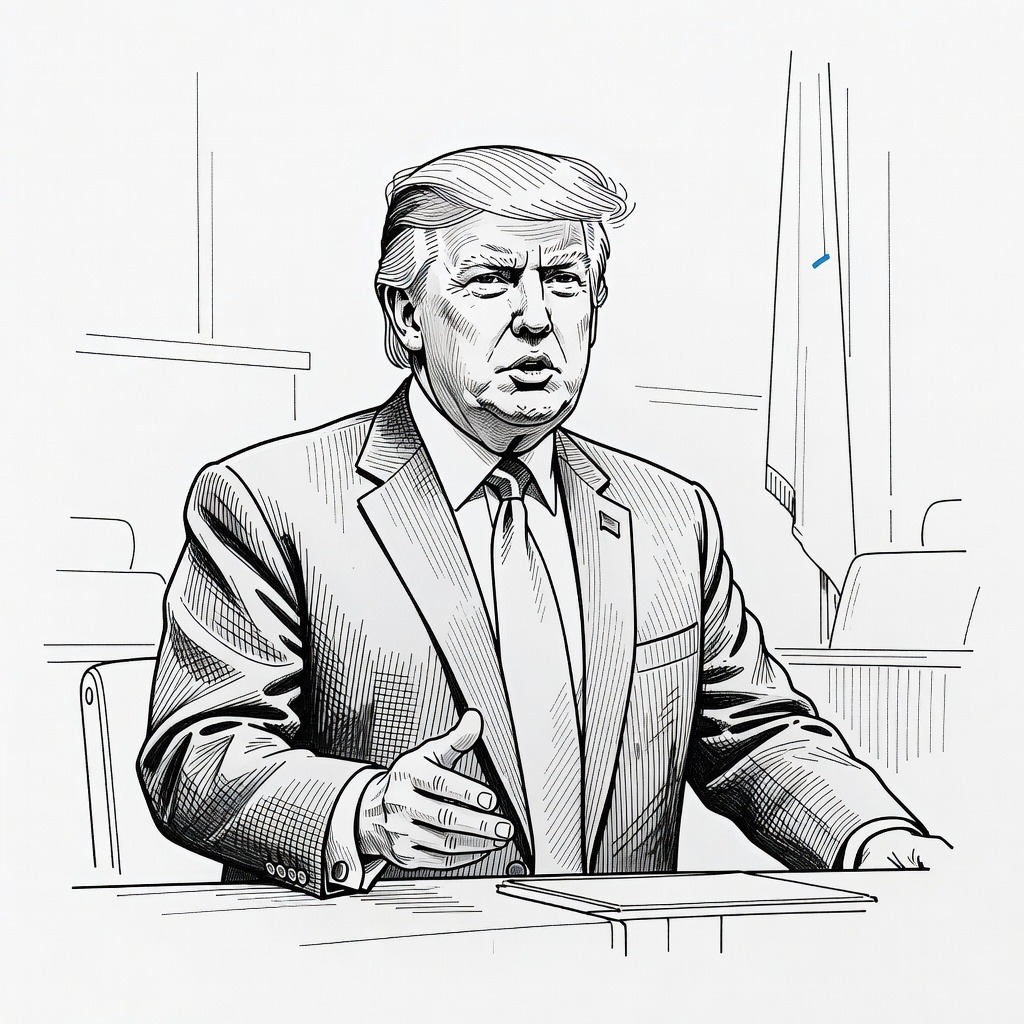
Illustration for: US-Iran Ceasefire Collapses Following Military Strikes and Strait of Hormuz Dispute
AI-generated illustration. Visual interpretation does not represent real individuals or scenes.

US-Iran Ceasefire Collapses Following Military Strikes and Strait of Hormuz Dispute

2026-07-10

The BareStory

The fragile ceasefire and memorandum of understanding (MOU) between the United States and Iran has collapsed after a series of military exchanges, ending a diplomatic process that began in April. President Donald Trump declared the ceasefire over on Wednesday during the NATO summit, citing Iranian attacks on commercial vessels in the Strait of Hormuz.

Following the breakdown, the U.S. military conducted two consecutive nights of retaliatory airstrikes, striking at least 170 targets inside Iran over a 48-hour period, according to military reports. The U.S. also rescinded Iran's international oil sales license, reversing a key economic component of the June 17 MOU. Iran retaliated by launching strikes across the Middle East, with reported targets in Jordan, Qatar, Bahrain, and Kuwait. Additionally, a U.S. projectile struck near Iran's Bushehr nuclear power plant on Thursday, causing fires at a nearby fishing pier.

The conflict has severely impacted maritime traffic through the Strait of Hormuz, with daily ship transits falling from 49 on Tuesday to 25 on Wednesday. U.S. Vice President JD Vance stated that the military operations are intended to keep the waterway open. In response, Iranian Parliamentary Speaker Mohamed Ghalibaf asserted on social media that the strait would only operate under Iranian arrangements.

The renewed hostilities have also influenced energy markets and U.S. domestic politics. The U.S. national average gas price rose to $3.84 per gallon on Thursday, up from below $3 prior to the escalation, while U.S. oil prices fluctuated, reaching $75 per barrel on Wednesday before easing. White House spokesperson Olivia Wales stated the administration's actions would ultimately lower inflation and gas prices, though some congressional Republicans have expressed concern over the economic impact on upcoming elections and questioned a $67 billion supplemental war funding request.

Left Perspective

  • Diplomatic Pivot Abandoned Prematurely: Prioritizing international law and conflict prevention, the collapse of the June 17 MOU represents a catastrophic failure of diplomatic patience. Rather than de-escalating when tensions rose in the Strait of Hormuz, the immediate return to military strikes and the revocation of Iran's oil license dismantled months of diplomatic progress built since April. This rapid reversion to conflict demonstrates how easily constructive dialogue is sacrificed for aggressive posturing.
  • Humanitarian Toll and Nuclear Risk: Protecting civilian populations and regional stability must remain the paramount concern in any security equation. The 48-hour campaign targeting 170 sites inside Iran, alongside a projectile strike near the Bushehr nuclear facility, risks triggering an environmental disaster and catastrophic civilian casualties. These strikes have already provoked retaliatory attacks across Jordan, Qatar, Bahrain, and Kuwait, proving that militarism exacerbates regional vulnerability rather than containing threats.
  • Economic Burden on Everyday Consumers: True economic security relies on stable markets that protect consumer purchasing power from geopolitical shocks. The surge in national average gas prices to $3.84 per gallon directly harms working-class families, exposing the fallacy that aggressive military interventions yield economic stability. Funding this escalation through a $67 billion supplemental war request diverts critical public resources away from domestic needs into an open-ended, highly inflationary foreign conflict.

Right Perspective

  • Peace Through Decisive Strength: National sovereignty and international order depend on the credible threat and execution of military force to deter hostile actors. When Iran targeted commercial vessels in the Strait of Hormuz, it directly violated the MOU and threatened global maritime security, rendering the ceasefire functionally obsolete. Conducting 170 targeted strikes over 48 hours was a necessary, proportionate demonstration of resolve to re-establish deterrence and punish state-sponsored aggression.
  • Securing Critical Economic Arteries: Ensuring the free flow of global commerce is a vital national security priority that requires robust physical enforcement. Halving the daily ship transits through the Strait of Hormuz from 49 to 25 represents an unacceptable stranglehold on global energy corridors by a hostile power. Confronting Iranian claims that the strait will only operate under their arrangements is essential to preserving the international rule of law and defending global shipping lanes.
  • Systemic Stability Outweighs Short-Term Volatility: Long-term market efficiency and domestic economic health cannot exist under constant threats from revisionist regimes. While regional escalation has caused temporary fluctuations in oil prices and gas spikes, removing Iran's international oil sales license is a vital tool to starve the regime of war-fighting revenue. Absorbing short-term economic friction and securing the $67 billion supplemental funding are necessary investments to prevent a far more costly, unchecked expansion of Iranian influence.

How it may affect me

As a U.S. reader:

• You will experience immediate financial pressure at the pump as the national average gas price has risen to $3.84 per gallon, up from below $3 prior to the escalation.

• Your tax dollars may be directed toward a proposed $67 billion supplemental war funding request to support the ongoing military operations and regional escalation.

• You may face broader economic inflation and market volatility due to fluctuating U.S. oil prices and a near-halving of shipping transits through the critical Strait of Hormuz.

• You may see long-term changes in domestic inflation and energy costs depending on whether the administration's military actions successfully reopen the shipping strait or if the loss of Iran's oil sales license further strains global energy markets.

Read the story at