
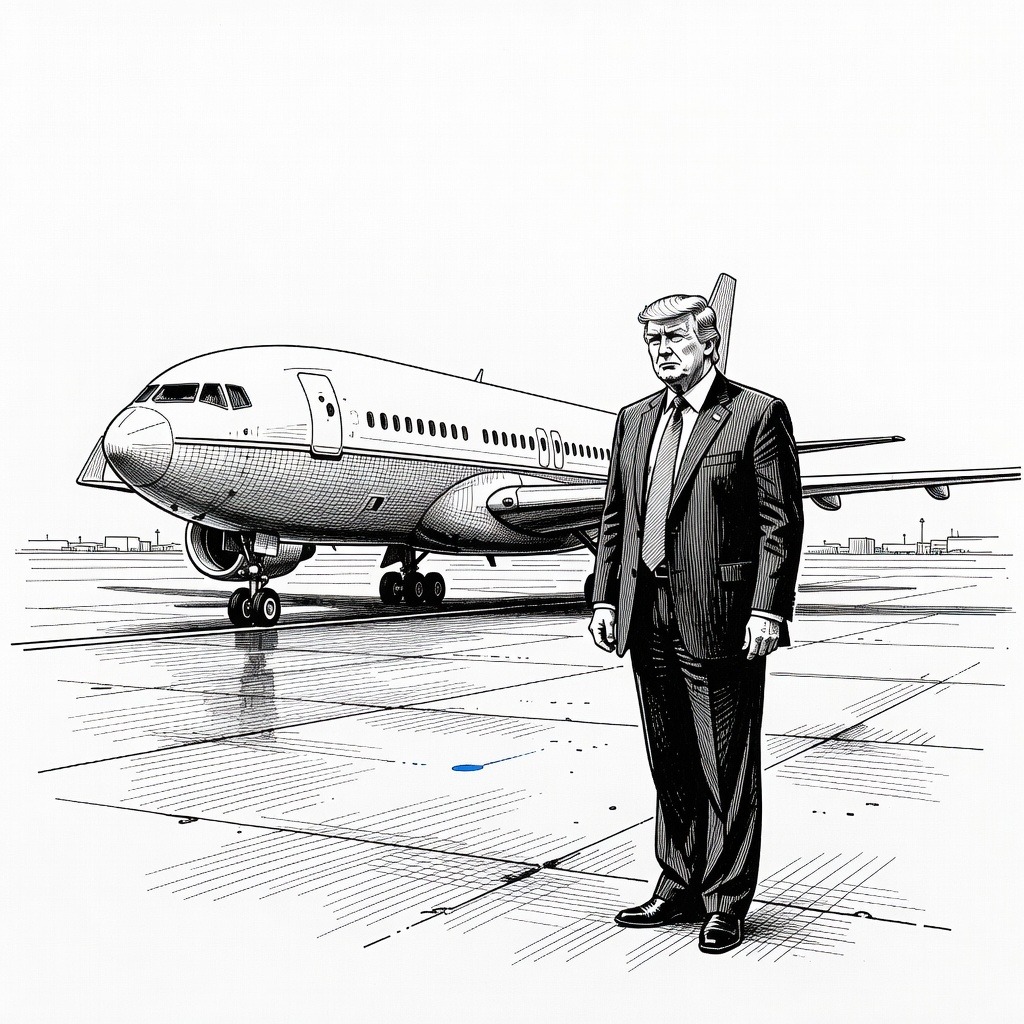
Illustration for: Palm Beach International Airport Renamed for Donald Trump
AI-generated illustration. Visual interpretation does not represent real individuals or scenes.

Palm Beach International Airport Renamed for Donald Trump

2026-07-10

The BareStory

The Palm Beach International Airport in West Palm Beach, Florida, was officially renamed the President Donald J. Trump International Airport on Thursday, July 9, 2026. The transition marks the first time an airport has been named after a sitting U.S. president, according to the Federal Aviation Administration (FAA). Legislation enabling the change was signed into law earlier this year by Florida Governor Ron DeSantis and subsequently approved by the FAA.

The renaming process is estimated to cost $5.5 million. The state of Florida appropriated $2.75 million for the project, with the remaining expenses funded by the local Department of Airports' operating budget and capital improvement program. Airport officials stated that the rebranding and installation of new signage will occur in phases over several weeks. While major airlines have begun integrating the airport's new code, DJT, into booking systems, the official transition from the old code, PBI, is scheduled for August 18.

Early Thursday morning, "Trump Force One," a Boeing 757 owned by The Trump Organization, became the first aircraft to land at the renamed facility. Eric Trump, a passenger on the flight, expressed pride on social media regarding the honor and the new "DJT" boarding pass initials.

The renaming has drawn varied reactions. Airport officials acknowledged in an online FAQ that the change may be received in different ways by passengers, but emphasized their focus remains on safety and service. Meanwhile, a separate ceremony was held Thursday morning in Dandridge, Tennessee, where federal and state officials gathered to rename an I-40 bridge the Donald J. Trump Bridge.

Left Perspective

  • Shield Civic Spaces: Public infrastructure must remain neutral ground to preserve broad public trust and protect civil liberties from partisan overreach. Renaming a major transit hub after a highly polarizing sitting president compromises the shared, non-partisan nature of public spaces. Utilizing $2.75 million in state funds alongside local airport operating budgets for this symbolic change diverts critical resources away from essential public services and infrastructure needs.
  • Dismantle Executive Cults: Democratic governance relies on maintaining a clear distinction between the office of the presidency and the individual occupying it. Initiating this renaming while the president is still in office violates historical norms of waiting until a leader's tenure is complete to objectively assess their legacy. The swift integration of the "DJT" airport code and the symbolic landing of "Trump Force One" represent an inappropriate conflation of private corporate branding with public, state-funded institutions.
  • Prevent Partisan Friction: Injecting high-profile political branding into essential transport hubs threatens operational efficiency and passenger cohesion. Airport officials acknowledging that the change will elicit varied reactions highlights the unnecessary social friction introduced to a space that should prioritize seamless, stress-free travel. Standardizing such politically charged renaming efforts across other public assets, like the I-40 bridge in Tennessee, risks fracturing national identity into geographically segregated political fiefdoms.

Right Perspective

  • Honor National Leadership: Commemorating a sitting president through major infrastructure projects reinforces national sovereignty, civic pride, and institutional continuity. Utilizing a combination of state appropriations and local capital improvement funds is a legitimate exercise of state legislative power to honor a leader who has left an indelible mark on the region. This dedication serves as a permanent, historic anchor that aligns the state's gateway with its contemporary political and cultural heritage.
  • Project Strength and Legacy: High-profile naming dedications project structural permanence and honor decisive leadership within the established rule of law. The landing of "Trump Force One" to inaugurate the President Donald J. Trump International Airport symbolizes a powerful, unified celebration of success and regional transformation. This event, paired with the renaming of the I-40 bridge in Tennessee, reflects a coordinated, lawful effort by state and federal officials to permanently cement a historic legacy into the nation's physical landscape.
  • Assert Local Autonomy: States and municipalities possess the sovereign right to govern their own jurisdictions and honor leaders who represent their constituents' values. The successful collaboration between Florida Governor Ron DeSantis, the state legislature, and the FAA demonstrates the orderly, lawful execution of public policy. Transitioning to the "DJT" code represents a modern, efficient rebranding effort that elevates the airport's profile and asserts regional identity on the global stage.

How it may affect me

As a U.S. reader:

• In the short term, passengers booking flights to or from the newly renamed West Palm Beach airport must prepare for the transition of the airport code from PBI to DJT starting August 18.

• Travelers using the airport will experience rolling changes over several weeks as a phased $5.5 million rebranding and sign installation process takes place.

• Public resources totaling $2.75 million in Florida state funds, along with local airport operating budgets and capital improvement funds, are being redirected to cover the renaming costs rather than other public services or infrastructure projects.

• Travelers may experience varied social reactions and potential friction at the transit hub due to the highly polarizing nature of renaming a public facility after a sitting president.

Read the story at