
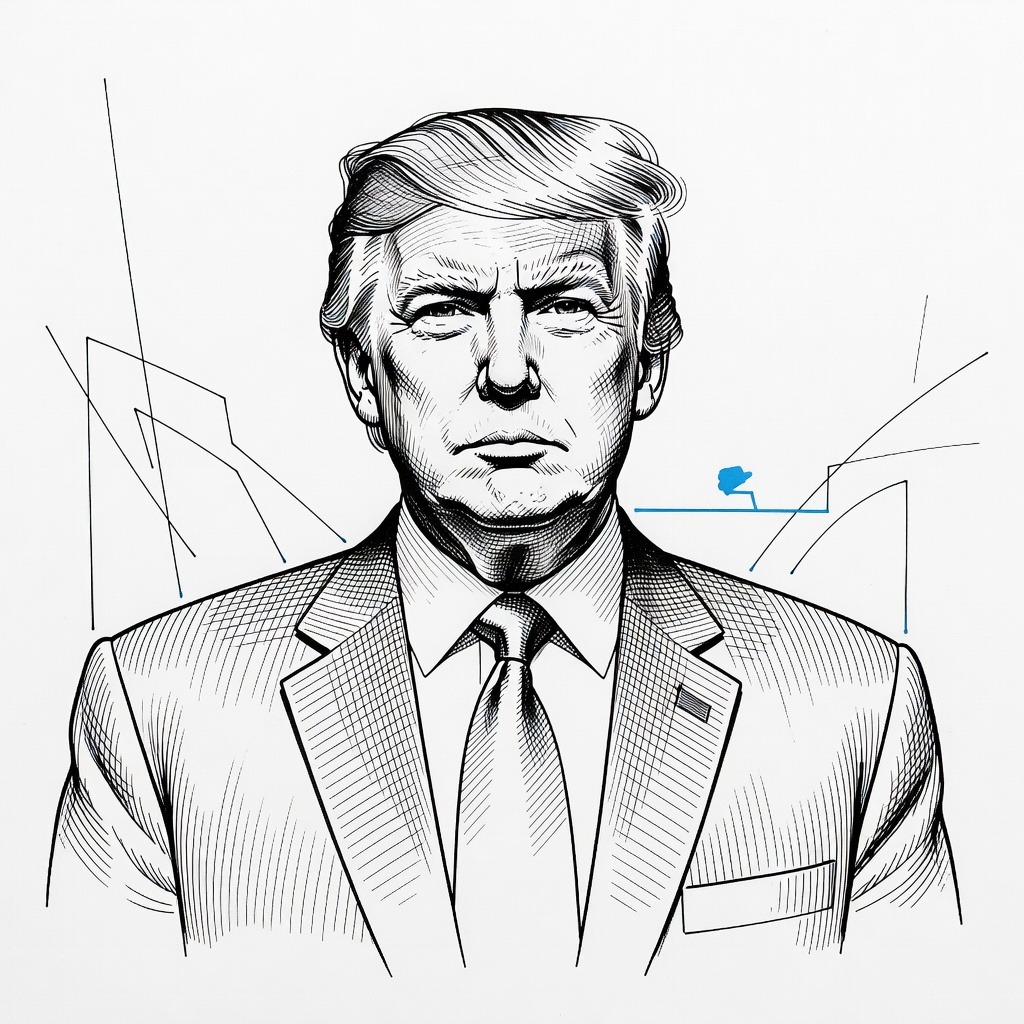
Illustration for: Trump Seeks Supreme Court Rehearings on Birthright Citizenship and E. Jean Carroll Judgment
AI-generated illustration. Visual interpretation does not represent real individuals or scenes.

Trump Seeks Supreme Court Rehearings on Birthright Citizenship and E. Jean Carroll Judgment

2026-07-09

The BareStory

President Donald Trump has asked the Supreme Court to reconsider two separate matters, filing petitions for rehearings on a civil defamation judgment and a recent ruling on birthright citizenship.

On Wednesday, Trump's legal team submitted a corrected petition asking the Supreme Court to rehear its June 29 decision, which had declined to hear his appeal of a $5 million civil judgment. A 2023 jury verdict found Trump liable for sexually abusing and defaming writer E. Jean Carroll in the 1990s, allegations that Trump has denied. His lawyers argued the case should be reopened because Trump plans to file a separate appeal involving presidential immunity for official statements, which they claim affected the Carroll trial. Despite the pending petition, a Manhattan District Court judge ordered on Wednesday that the $5 million secured by Trump in 2023, plus nearly $800,000 in interest, be distributed to Carroll.

Separately, Trump announced on Wednesday that he will seek a Supreme Court rehearing regarding birthright citizenship. On June 30, the Supreme Court ruled that children born in the United States are automatically citizens under the Fourteenth Amendment, rejecting a January 2025 executive order by Trump that sought to deny citizenship documents to children of undocumented immigrants. In a social media post, Trump criticized the ruling, claiming it would lead to fraudulent schemes advertising citizenship deliveries and arguing the decision was incorrect.

Both rehearing efforts face significant procedural hurdles. Supreme Court rules restrict rehearings after a denial of certiorari to substantial grounds not previously presented or intervening circumstances. Furthermore, legal experts note that the Supreme Court has not agreed to rehear an already argued case since 1965.

Left Perspective

  • Shield Civil Rights Foundations: Prioritizing equal protection under the law requires upholding the Fourteenth Amendment's guarantee of birthright citizenship as an absolute constitutional barrier. Rejecting the executive order that sought to deny citizenship documents to children of undocumented immigrants protects vulnerable populations from arbitrary state exclusion. Any attempt to reverse this ruling via a judicial rehearing threatens to dismantle long-standing civil rights protections and undermine foundational legal stability.
  • Enforce Private Legal Accountability: Preserving the integrity of the judicial system requires holding powerful individuals, including former presidents, accountable to civil judgments. The Manhattan District Court judge's order to distribute the $5.8 million in secured funds and interest to E. Jean Carroll represents a vital triumph of personal accountability over stalling tactics. Utilizing secondary claims of presidential immunity to delay a finalized jury verdict for sexual abuse and defamation threatens to erode public trust in equal justice.
  • Respect Established Judicial Finality: Maintaining institutional credibility relies on the Supreme Court adhering to its strict procedural standards and historic precedents. Because the Court has not agreed to rehear an already argued case since 1965, attempting to bypass these high procedural hurdles constitutes an abuse of the legal process. Demanding exceptions for these cases risks politicizing the judiciary and overwhelming the high court with meritless, repetitive appeals.

Right Perspective

  • Defend Sovereign Border Control: Prioritizing national sovereignty and the rule of law requires a strict, originalist interpretation of citizenship that deters illegal immigration. Challenging the June 30 ruling on birthright citizenship is necessary to close perceived legal loopholes that incentivize unlawful entry and birth tourism. Seeking a rehearing is a vital mechanism to prevent fraudulent schemes advertising citizenship deliveries and to protect the integrity of national borders.
  • Preserve Executive Authority Boundaries: Protecting the office of the presidency requires ensuring that official communication is shielded by robust executive immunity. Seeking a rehearing on the E. Jean Carroll civil judgment is a strategic necessity to ensure that future presidential communications are not chilled by weaponized civil litigation. Delaying the final distribution of funds is justified to resolve the critical, unresolved constitutional question of how presidential immunity impacts statements made during tenure.
  • Challenge Entrenched Judicial Overreach: Correcting historic or flawed legal interpretations justifies pursuing all available constitutional and procedural avenues, regardless of historical rarity. Using the petition process to challenge both the Fourteenth Amendment interpretation and the denial of certiorari is a legitimate exercise of legal advocacy designed to contest judicial activism. Forcing the Supreme Court to confront these high-stakes constitutional questions ensures that the judiciary remains accountable to the text of the Constitution rather than modern legal consensus.

How it may affect me

As a U.S. reader:

• You may see the distribution of $5.8 million to E. Jean Carroll proceed immediately, following a Manhattan District Court judge's order, despite the former president's ongoing petitions for a Supreme Court rehearing.

• You could experience long-term impacts on the definition of U.S. citizenship if the Supreme Court takes the highly unusual step of granting a rehearing and reverses its decision on the Fourteenth Amendment, which currently guarantees automatic citizenship to children born in the U.S.

• You might see changes in illegal immigration patterns and the prevalence of citizenship delivery schemes depending on whether the legal challenges to birthright citizenship succeed or fail.

• You will likely see no immediate changes to existing presidential immunity standards or birthright citizenship rules, as legal experts note the Supreme Court faces high procedural hurdles and has not granted a rehearing on an already argued case since 1965.

Read the story at