
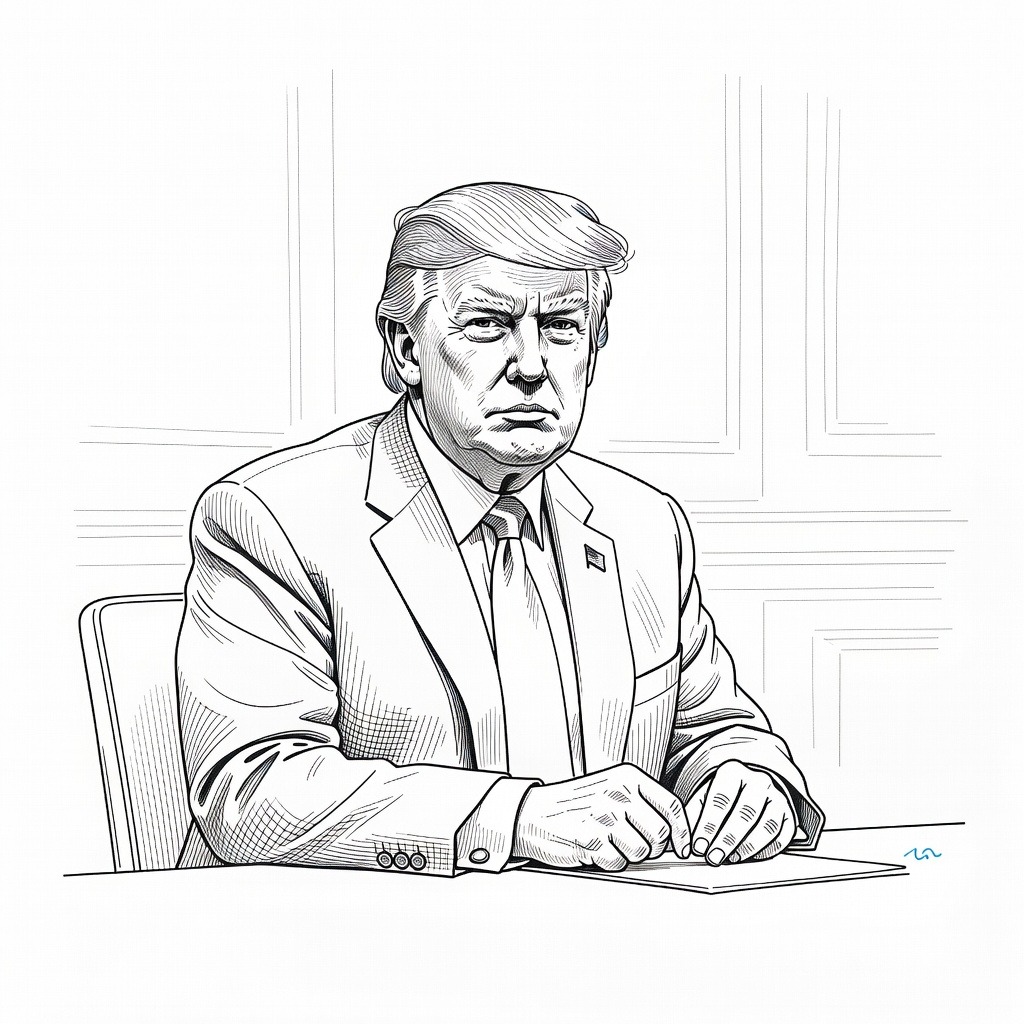
Illustration for: Appeals Court Rejects Trump’s Request to Restore Name to Kennedy Center
AI-generated illustration. Visual interpretation does not represent real individuals or scenes.

Appeals Court Rejects Trump’s Request to Restore Name to Kennedy Center

2026-07-08

The BareStory

A federal appeals court on Wednesday denied a request by President Donald Trump to restore his name to the Kennedy Center in Washington, D.C. The decision by a three-judge panel of the U.S. Court of Appeals for the District of Columbia Circuit means the name will remain off the performing arts landmark while a full appeal of a lower court's order is pending.

The panel, consisting of Judges Gregory Katsas, Patricia Millett, and Robert Wilkins, ruled that Trump and the Kennedy Center's board failed to demonstrate that they would suffer irreparable harm without the restoration of the name. The judges noted that because the physical removal of the name had already taken place, an emergency stay would not prevent the alleged harms. Furthermore, the court stated that the arguments regarding potential damage to fundraising lacked specific facts or evidence, relying instead on conclusory assertions.

The legal dispute follows a May 29 order by District Court Judge Christopher Cooper, who mandated the removal of Trump's name. Cooper ruled that Congress originally named the institution and holds the sole authority to alter it, noting that the center's organic statute specifies it is to be named for President John F. Kennedy. The center's board had added Trump’s name in December, months after Trump appointed himself as a trustee and became the board's chair.

Representative Joyce Beatty, a Democrat from Ohio and board member, initiated the lawsuit against Trump and the board to have the name removed. In that ongoing litigation, Judge Cooper has ordered the center to submit a status report on its operations and programming before the end of the month.

Left Perspective

  • Halt Self-Aggrandizing Overreach: Public institutions must not be used as vehicles for personal branding or unilateral executive glorification. The court's decision to keep the name off the performing arts landmark vindicates the principle that public spaces belong to the citizenry, not to self-appointed trustees who attempt to rewrite history. By rejecting the emergency request, the judiciary successfully checked an attempt by a political figure to install his own name on a monument explicitly dedicated by Congress to another president.
  • Defend Legislative Supremacy: The core of this dispute lies in preserving the separation of powers and respecting the statutory intent of Congress. Because the Kennedy Center's organic statute specifies it is to be named for President John F. Kennedy, any alteration to that identity must come from legislative action, not a unilateral board decision. Judge Cooper’s ruling correctly identifies that Congress holds the sole authority to alter the name, protecting the rule of law against arbitrary administrative maneuvers.
  • Enforce Strict Evidentiary Standards: Speculative financial damage must not be used as a pretext to bypass established legal procedures. The appeals court panel rightly noted that assertions regarding potential damage to fundraising lacked specific facts or evidence, relying instead on conclusory claims. Requiring concrete proof of irreparable harm ensures that powerful political actors are held to the same rigorous legal standards as any other litigant in a federal court.

Right Perspective

  • Preserve Administrative Discretion: Governing boards must possess the autonomy to make strategic decisions that they believe will best support their institutions. The board's December decision to add the name occurred under the leadership of an appointed trustee and chair, representing a legitimate exercise of administrative oversight aimed at securing the center's future. Restricting the board's ability to govern its own naming rights undermines the operational flexibility required to manage major national cultural landmarks.
  • Shield Against Partisan Litigation: Public institutions should be insulated from politically motivated lawsuits that disrupt stable governance and operations. The legal challenge initiated by a Democratic representative serves as a partisan distraction that drags a prestigious cultural institution into ideological warfare. Forcing the center to submit disruptive status reports on operations and programming represents unnecessary judicial micromanagement of an independent board.
  • Prevent Unjust Reputation Harm: Denying the emergency restoration of the name inflicts ongoing reputational and institutional damage while the full appeal is pending. The sudden physical removal of a name authorized by the governing board creates administrative chaos and sends a signal of instability to donors and stakeholders. By dismissing these concerns as merely conclusory, the court overlooks the real-world, chilling effect that public legal battles have on philanthropic engagement and institutional continuity.ofturn-of-the-century building features a classic stone facade and large display windows.

How it may affect me

As a U.S. reader:

• Visitors to the Kennedy Center in Washington, D.C., will observe that the physical name of Donald Trump remains removed from the performing arts landmark while the full legal appeal proceeds.

• Members of the public who support or engage with the Kennedy Center may see temporary operational changes, as the district court has ordered the center to submit a formal status report on its operations and programming before the end of the month.

• Donors and philanthropic stakeholders of the Kennedy Center may experience ongoing uncertainty regarding the institution's leadership, fundraising stability, and naming rights as the legal dispute over the board's administrative authority continues.

Read the story at