
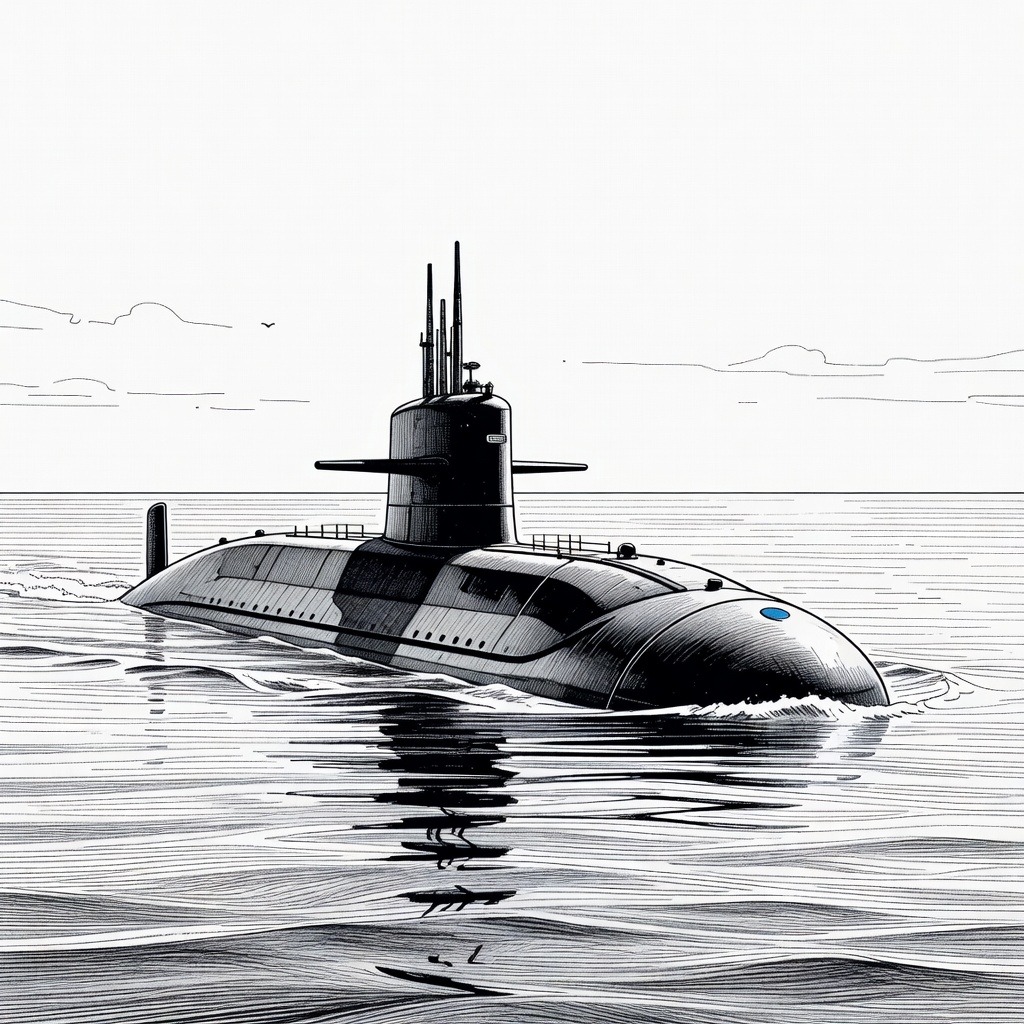
Illustration for: China Test-Fires Submarine-Launched Ballistic Missile into the Pacific
AI-generated illustration. Visual interpretation does not represent real individuals or scenes.

China Test-Fires Submarine-Launched Ballistic Missile into the Pacific

2026-07-08

The BareStory

The Chinese navy conducted a test-launch of a long-range ballistic missile carrying a dummy warhead from a nuclear-powered submarine into the Pacific Ocean on Monday at 12:01 p.m. local time. According to China's official Xinhua News Agency, the missile landed precisely within designated international waters. This launch marks China's first strategic missile test in the region since September 2024.

China's Ministry of Defense and official spokespersons stated that the launch was a routine part of annual training, met its targets, and complied with international law. Chinese officials maintained that the test was not directed at any specific nation and that Beijing keeps its nuclear forces at the minimum level necessary for national security. Analysts noted the test demonstrates the sea-based leg of China’s nuclear triad and its second-strike nuclear capabilities.

The test drew swift criticism from several nations. Australian Foreign Minister Penny Wong described the launch as destabilizing, while New Zealand Foreign Minister Winston Peters stated it signaled a recurring pattern from Beijing, noting the missile was fired into the South Pacific Nuclear Free Zone. The U.S. State Department expressed concern over what it described as China's rapid and opaque nuclear weapons buildup. Japan's Chief Cabinet Secretary Minoru Kihara also cited a lack of transparency and Chinese military activities as grave concerns.

In response to the regional security environment, Australia and Fiji signed a mutual defense treaty on Monday. Additionally, Vanuatu agreed to bar foreign military bases, and the Solomon Islands announced a review of its security agreement with China. While Chinese officials stated neighboring countries were notified, New Zealand's foreign minister noted the notification arrived only hours before the launch, and an analyst from the Asia Society Policy Institute stated the U.S. did not receive advance notification.

Left Perspective

  • Breaching Nuclear-Free Sanctuaries: Preserving regional peace requires strict adherence to denuclearized zones and respect for local sovereignty. Firing a long-range ballistic missile into the South Pacific Nuclear Free Zone directly undermines international disarmament treaties and environmental protections. This action represents a physical encroachment on vulnerable island nations that have actively chosen to remain outside of great-power nuclear competition.
  • Weaponizing Opaque Brinkmanship: Strategic stability relies on transparent communication and mutual trust to prevent catastrophic miscalculations. Providing New Zealand with notification only hours before the launch, while failing to notify the United States entirely, exposes a reckless disregard for international safety protocols. This lack of transparency transforms a routine training exercise into a high-stakes provocation that escalates anxiety across the Pacific.
  • Sparking Regional Militarization: True security is built through diplomatic cooperation rather than competitive arms racing. The immediate fallout—manifested in Australia and Fiji signing a mutual defense treaty and other Pacific nations scrambling to adjust their security postures—demonstrates how unilateral displays of force trigger a destabilizing domino effect. This defensive escalation ultimately leaves all regional actors less secure and diverts resources away from vital humanitarian and development needs.

Right Perspective

  • Securing Second-Strike Viability: National sovereignty and survival in a multipolar world depend on maintaining a credible, survivable nuclear deterrent. Testing a submarine-launched ballistic missile successfully validates the sea-based leg of the nuclear triad, ensuring a second-strike capability that deters potential adversaries from contemplating a first strike. This demonstration of military readiness is a logical necessity to balance the strategic capabilities of rival nuclear powers.
  • Exercising Lawful Power Projection: Sovereign states possess the uncontested right under international law to conduct military exercises and test defense systems in international waters. Adhering to international law and ensuring the dummy warhead landed precisely within designated international waters validates the legitimacy of the test. Power is respected when it is demonstrated; maintaining a minimum deterrent requires periodic testing to prove operational efficacy.
  • Exposing Weak Strategic Alliances: A nation's security posture must adapt to the realities of a shifting geopolitical landscape. The mixed reactions from Pacific nations—ranging from the Solomon Islands reviewing its security pact with Beijing to Vanuatu banning foreign military bases—reveal a fractured regional alignment that a strong state can navigate to its tactical advantage. Demonstrating resolve forces regional neighbors to recognize shifting power dynamics and adjust their strategic calculations accordingly.

How it may affect me

As a U.S. reader:

• In the short term, you may see increased geopolitical tension and potential communication friction between the U.S. and China due to a lack of advance notification regarding the missile test.

• In the long term, you may observe a shifting security landscape in the Pacific, characterized by new defense treaties and adjusted security postures among regional allies such as Australia, Fiji, Vanuatu, and the Solomon Islands.

• You can expect the U.S. government to continue addressing concerns over China's growing nuclear triad capabilities, particularly its sea-based second-strike nuclear forces, which may influence future U.S. defense spending and strategic planning.

• You may see further diplomatic friction as the U.S. and its regional allies push for greater transparency in China's military activities and adherence to international safety protocols.of

Read the story at