
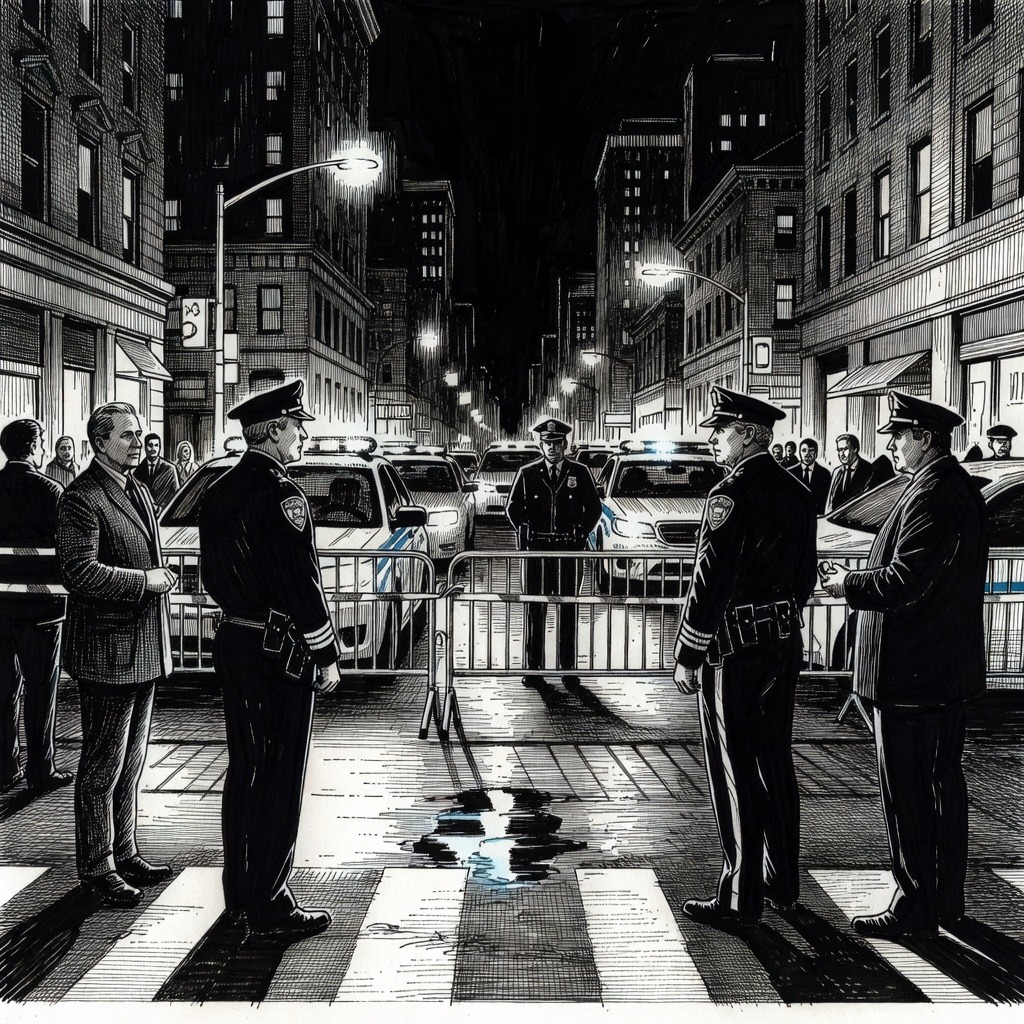
Illustration for: Eight People, Including Four Children, Injured in Coney Island Shooting
AI-generated illustration. Visual interpretation does not represent real individuals or scenes.

Eight People, Including Four Children, Injured in Coney Island Shooting

2026-07-05

The BareStory

Eight people, including four children, were injured in a shooting in the Coney Island neighborhood of Brooklyn, New York, late on July 4. According to the New York Police Department (NYPD), officers responded to the shooting at approximately 10:35 p.m. on the 2900 block of West 31st Street.

Police officials stated that the victims include two men, aged 33 and 37, two women, aged 21 and 25, and four boys aged 6, 7, 12, and 14. All victims were transported to local hospitals. Seven of the injured are in stable condition, while the 21-year-old woman remains in critical condition. According to NYPD Commissioner Jessica Tisch, the 21-year-old was shot in the chest, the 6-year-old in the stomach, the 7-year-old in both legs, the 12-year-old in the leg, and the 14-year-old in the thigh.

The shooting occurred when an unidentified man wearing black clothing and a black ski mask approached a family barbecue and fired multiple rounds, according to police. Commissioner Tisch stated during a news briefing that there was no indication of an argument or confrontation preceding the gunfire. Tisch also noted that a gang-related homicide had occurred on the same block earlier in the week, and authorities are investigating if the two events are connected.

A firearm was recovered at the scene of the incident. As of the time of the reports, no arrests have been made, and the investigation remains ongoing. Police stated they believe there is currently no threat to the public. Mayor Zohran Mamdani released a statement condemning the violence, stating that it would not be tolerated and would be fought with every available tool.

Left Perspective

  • Dismantle Proliferating Firearms: Prioritizing the preservation of human life and the protection of vulnerable communities requires addressing the root systemic issue of gun availability. The recovery of a firearm at the scene of an incident where eight people—including children as young as six—were injured proves that the unchecked circulation of weapons is the primary threat to public safety. Without systemic intervention to curb the flow of firearms, communities remain defenseless against sudden, devastating violence.
  • Mitigate Deep-Seated Social Trauma: Protecting the emotional and physical well-being of marginalized neighborhoods requires recognizing that violence is a symptom of neglected social infrastructure. The fact that a shooter could target a family barbecue on West 31st Street without any prior confrontation highlights how systemic instability breeds unpredictable violence. This camp interprets these facts as a call to invest in community-based violence-interruption programs rather than relying solely on reactive policing.
  • Deter Escalating Cyclical Violence: The primary risk is that treating violence as isolated criminal acts fails to address the underlying socio-economic drivers, leading to perpetual trauma. When authorities investigate potential connections to a prior gang-related homicide on the same block, it underscores the failure of traditional punitive measures to break cycles of retaliation. Long-term safety will remain elusive if municipal leadership relies on reactionary policing tools instead of addressing systemic poverty and disenfranchisement.

Right Perspective

  • Enforce Rigorous Law Order: Prioritizing community stability and the rule of law requires the swift, decisive application of state power to deter criminal behavior. The unprovoked attack by a masked gunman at a family holiday gathering represents a direct assault on civic order and public peace. To restore safety, the municipal government must back its rhetoric with aggressive policing and maximize the use of law enforcement resources to apprehend the perpetrator.
  • Neutralize Active Criminal Threats: Preserving the integrity of neighborhoods demands a zero-tolerance approach to gang activity and organized lawlessness. The overlap of this mass shooting with a gang-related homicide on the same block earlier in the week reveals a localized breakdown of order that threatens the daily lives of law-abiding citizens. This camp reasons that targeted, intelligence-led policing is the only effective shield against such brazen disregard for human life and public authority.
  • Prevent Institutional Deterioration: The ultimate threat is the erosion of public confidence in the state's ability to maintain basic safety, which leads to societal decay. If suspects can escape arrest after injuring four children and multiple adults in broad daylight, it signals to criminals that the state has lost control of the streets. Failure to swiftly prosecute these offenders risks normalizing violence, undermining the authority of law enforcement, and weakening the social fabric of the city.

How it may affect me

As a U.S. reader:

• You may experience immediate, localized disruptions and an increased police presence in the Coney Island area as law enforcement continues its investigation and seeks to apprehend the at-large suspect.

• You may see localized debates and policy shifts regarding public safety, with potential actions ranging from increased funding for community-based violence-interruption programs to more aggressive, targeted policing aimed at neutralizing gang activity.

• You could face a heightened risk of ongoing retaliatory violence in the affected neighborhood if law enforcement and community programs fail to break the cycle connected to the area's recent gang-related homicide.

• You may experience a decline in public confidence regarding community safety and the efficacy of law enforcement if the suspect remains at large and no arrests are made following the shooting of eight people.

Read the story at