
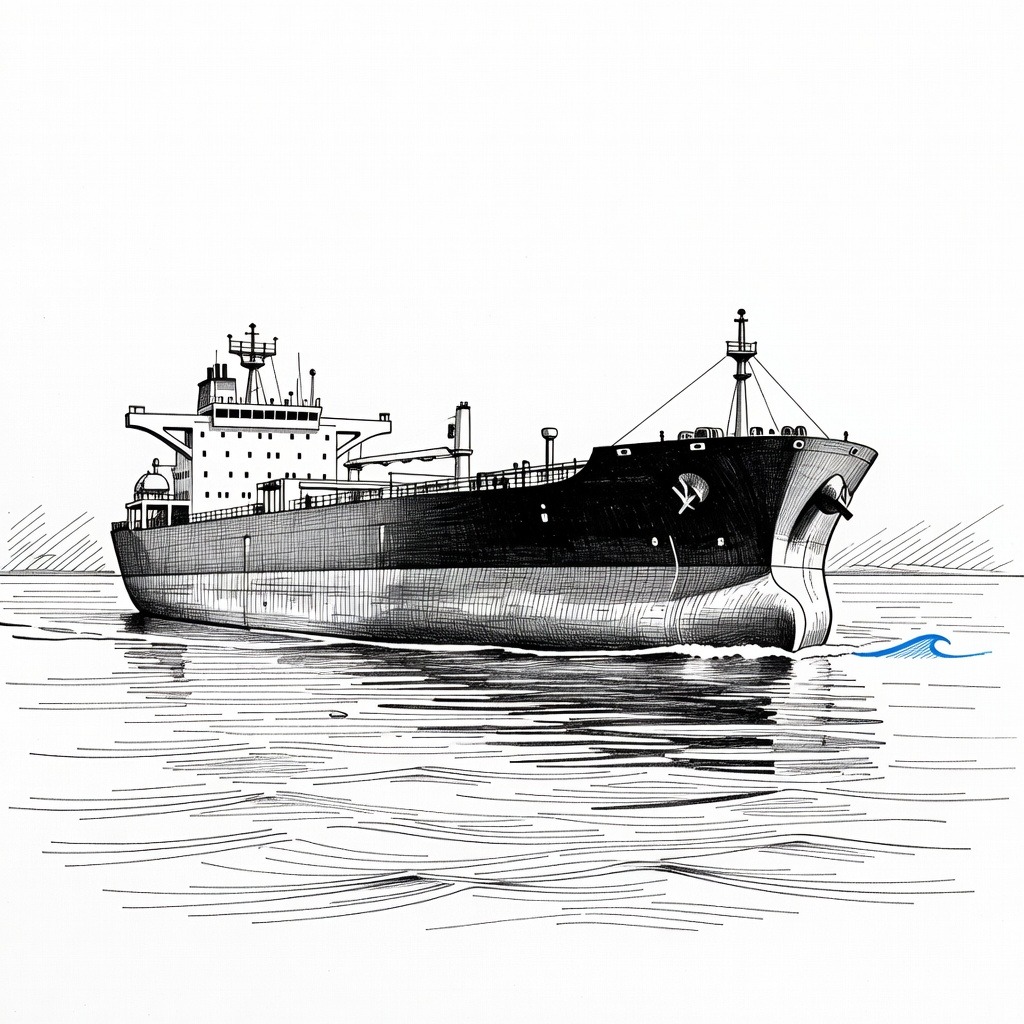
Illustration for: Tensions Rise Over Strait of Hormuz Navigation and Proposed Transit Tolls
AI-generated illustration. Visual interpretation does not represent real individuals or scenes.

Tensions Rise Over Strait of Hormuz Navigation and Proposed Transit Tolls

2026-07-04

The BareStory

The United Kingdom, France, and Oman have agreed to cooperate to ensure the safety of Oman's territorial waters. This development follows a June 17 memorandum of understanding between the United States and Iran that ended nearly four months of war, reopened the Strait of Hormuz, and established a 60-day negotiation window for a permanent peace agreement.

With the reopening of the waterway, oil shipments have risen significantly. Saudi Arabia has transported approximately 34 million barrels through the strait since June 17, more than doubling its previous export volume, while Brent crude oil prices have dropped 39% from their March highs. Additionally, Iran's parliament speaker, Mohammad Bagher Ghalibaf, stated that Iran has exported over 40 million barrels of crude oil at prices roughly 20% higher than before the war, following the removal of a U.S. naval blockade.

The U.K. and France expressed readiness to deploy a wider Multinational Military Mission to maintain freedom of navigation in the strait. French President Emmanuel Macron announced the deployment of mine countermeasures to the Middle East, including two mine-hunting ships, two frigates, and a maritime patrol aircraft. Iran's Deputy Foreign Minister Kazem Gharibabadi opposed the European deployment, stating that security in the region belongs to coastal states and warning that "crisis-makers" would be held responsible.

A primary point of contention remains the potential implementation of transit tolls on commercial shipping. While Iran asserts its intention to levy fees on vessels passing through the strategic waterway, the U.S. strongly opposes any tolls. Under the June 17 agreement, Tehran is barred from imposing tolls during the 60-day negotiation period. Oman has held joint talks with Iran regarding a new maritime security order, but stated that any final agreement will adhere to international law.

Left Perspective

  • Prioritize Diplomatic Safeguards Over Force: De-escalation and international law are the only sustainable paths to lasting peace. The June 17 memorandum of understanding, which ended four months of war and reopened the Strait of Hormuz, proves that diplomatic frameworks yield immediate material benefits, such as the 39% drop in Brent crude prices. Relying on military deployments risks disrupting this fragile 60-day negotiation window and undermining a permanent peace agreement.
  • Empower Regional Multilateral Governance: True maritime security must be cooperative and respect local sovereignty rather than rely on unilateral Western dominance. Oman’s active engagement in joint talks with Iran to establish a new maritime security order aligned with international law represents the correct path forward. Elevating regional mediators prevents the escalatory cycle triggered by Western naval blockades and respects the geographic reality of coastal states.
  • Resist Economic Hegemonies and Conflict-Drivers: Imposing militarized solutions to block transit tolls or enforce blockades ultimately harms global consumers and vulnerable populations by choking trade. While the U.S. opposes tolls, the focus must remain on finalizing a permanent peace treaty during the 60-day freeze rather than risking a return to war over transit fee disputes. Preventing a relapse into conflict is the ultimate shield for the global economy, as demonstrated by the rapid stabilization of energy markets post-blockade.

Right Perspective

  • Project Strength to Guarantee Navigation: Freedom of navigation through global chokepoints is a non-negotiable pillar of international stability that can only be secured through credible military deterrence. The deployment of French mine-hunting ships, frigates, and maritime patrol aircraft, alongside British commitments, is a necessary projection of force to deter hostile actors. Without a robust Western naval presence, strategic waterways remain vulnerable to coercion by revisionist states like Iran.
  • Enforce Rules-Based Economic Access: Free market efficiency relies on the absolute rejection of illegal extortion by hostile coastal regimes. The United States’ firm opposition to Iran's proposed transit tolls on commercial shipping is vital to preventing a dangerous precedent of maritime piracy under the guise of state sovereignty. Enforcing the strict ban on tolls during and after the 60-day negotiation window protects global commerce from predatory extraction.
  • Neutralize Adversarial Economic Windfalls: Allowing hostile regimes to exploit peace agreements to fund destabilizing activities is a severe strategic vulnerability. Following the lifting of the U.S. blockade, Iran has exported over 40 million barrels of crude oil at 20% higher prices, directly enriching a state actor that threatens regional security. Western powers must maintain a dominant military posture in the Strait of Hormuz to ensure this newfound economic leverage is not weaponized against democratic allies during negotiations.

How it may affect me

As a U.S. reader:

• You may experience lower prices at the gas pump in the short term due to a 39 percent drop in Brent crude oil prices following the reopening of the Strait of Hormuz and increased oil exports.

• You could face future increases in the cost of imported goods and energy if negotiations fail after the 60-day window and Iran implements its proposed transit tolls on commercial shipping.

• Your tax dollars and military personnel could be directed toward prolonged maritime deployments or potential conflict if the U.S. and its European allies escalate military deterrence to block Iranian tolls and maintain freedom of navigation.

• You may see increased geopolitical risks if Iran uses its renewed oil revenues, totaling over 40 million barrels sold at higher prices following the lifting of the U.S. blockade, to fund activities that threaten regional stability.

Read the story at