
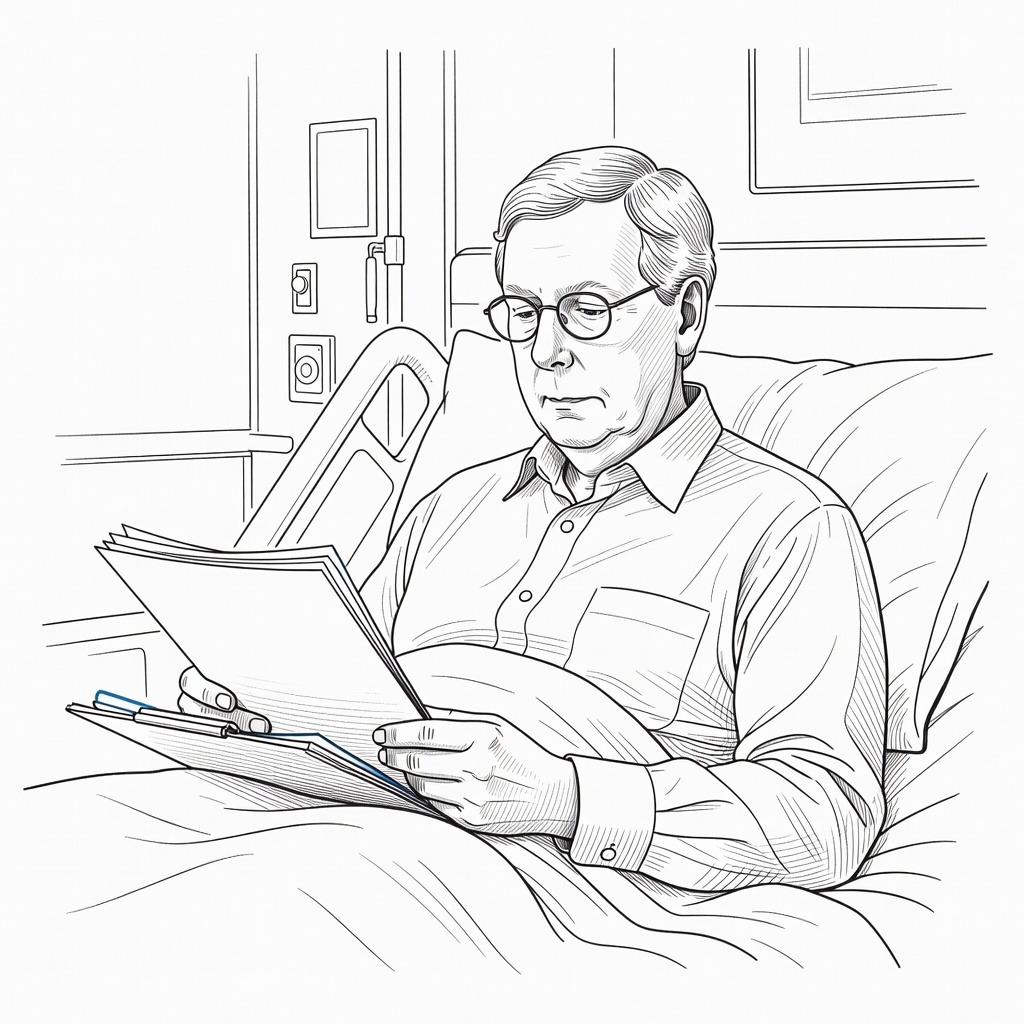
• Piercing the Transparency Shield The fundamental value of democratic accountability dictates that citizens must have complete transparency regarding the health of their highest-ranking elected officials. McConnell's office withholding his specific diagnosis while emergency records reveal a life-threatening cardiac event at his home address creates an unacceptable information deficit for the public. Failing to confirm whether a key policymaker was indeed the unconscious individual treated by first responders prioritizes political image management over the electorate's right to know if their representative is fully capable.
• Dethroning the Gerontocratic Status Quo Prioritizing progress and government reform requires challenging the entrenched culture of career politicians clinging to power despite obvious physical decline. Highlighting McConnell’s repeated medical episodes—including multiple falls, a concussion, public freezing incidents in 2023, and flu hospitalizations earlier this year—reveals the systemic risk of centralized power in an aging legislature. Holding onto office under these conditions stymies generational renewal and places personal or party preservation above active, energetic governance.
• Exposing the Representation Gamble The primary risk of this situation is the degradation of democratic representation when a senator must govern from a hospital bed. Coordinating staff remotely during a congressional recess cannot substitute for the robust, active engagement required of a legislator facing complex national issues. When an elite official's physical limitations require a protective staff apparatus to manage their public duties, the democratic process itself is compromised to shield an individual's career.
How it may affect me
As a U.S. reader:
• In the short term, you may experience a decline in active democratic representation as a key policymaker conducts official Senate duties and coordinates staff remotely from a hospital room.
• Over the longer term, the decision to keep McConnell in office rather than forcing an early departure may either protect you from sudden political chaos and legislative power vacuums or prolong governance by an aging official experiencing physical decline.
• The limited public transparency regarding the senator's specific medical diagnosis may restrict your ability to verify if a high-ranking leader is fully capable of managing public and regional affairs.