
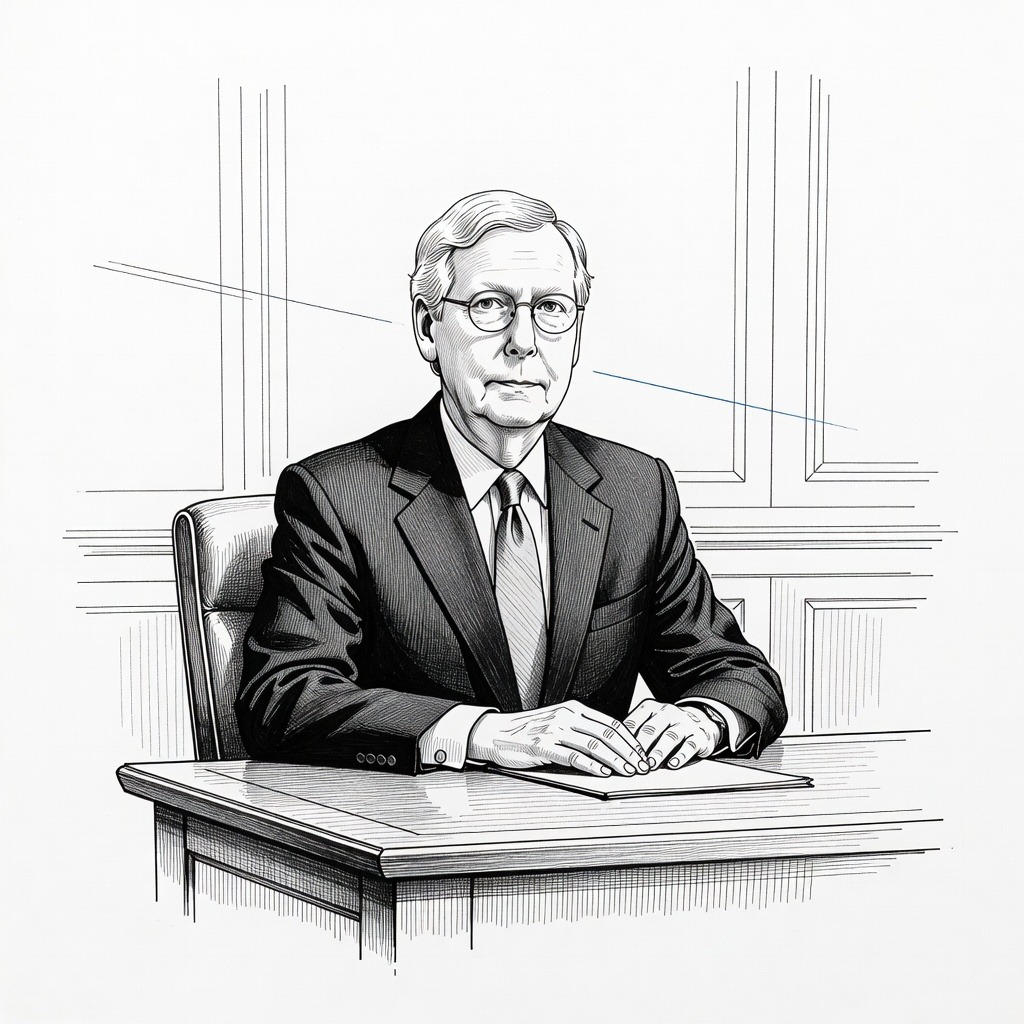
• Unmasking Institutional Opacity The public's right to transparency is paramount to maintaining a functional and accountable democracy. By withholding specific details regarding Senator McConnell’s June 14 hospitalization—especially following an emergency dispatch for an unconscious person requiring CPR—the political establishment prioritizes protecting institutional power over the public's right to know. When public officials refuse to disclose vital health statuses while remaining in office, it erodes public trust and undermines the accountability essential for democratic representation.
• Challenging Status Quo Inertia Prioritizing individual tenure over collective civic function creates a system where representation suffers due to physical incapacity. McConnell's repeated medical emergencies, including public freezing episodes, a concussion, and now an undisclosed hospitalization, highlight a pattern of institutional inertia where power is concentrated in aging leaders who cannot fully execute their duties. Holding onto office under these conditions demonstrates how entrenched political structures protect their own influence at the expense of active, responsive, and equitable governance.
• Exposing Systemic Vulnerabilities The lack of a clear timeline for McConnell's return after missing Senate votes since June 11 creates a vacuum that stalls the legislative process and leaves constituents unrepresented. Reformers fear that maintaining a facade of normal operations—such as assertions from staff and Senate colleagues that the senator is "actively working"—masks a deep systemic vulnerability. Failing to address these transitions transparently leaves the electorate vulnerable to unelected staff managing public affairs behind closed doors.
How it may affect me
As a U.S. reader:
• In the short term, the senator's ongoing absence from the Senate since June 11 may stall the legislative process and temporarily leave his constituents without direct representation.
• The nondisclosure of specific health details could result in unelected staff members managing public affairs behind closed doors, potentially reducing democratic accountability.
• Shielding the senator's health status from intense public scrutiny may prevent immediate power vacuums and protect ongoing federal policy negotiations from disruption.
• In the longer term, avoiding an abrupt resignation helps ensure a stable and orderly transition of legislative power leading up to his planned retirement at the end of the year.