
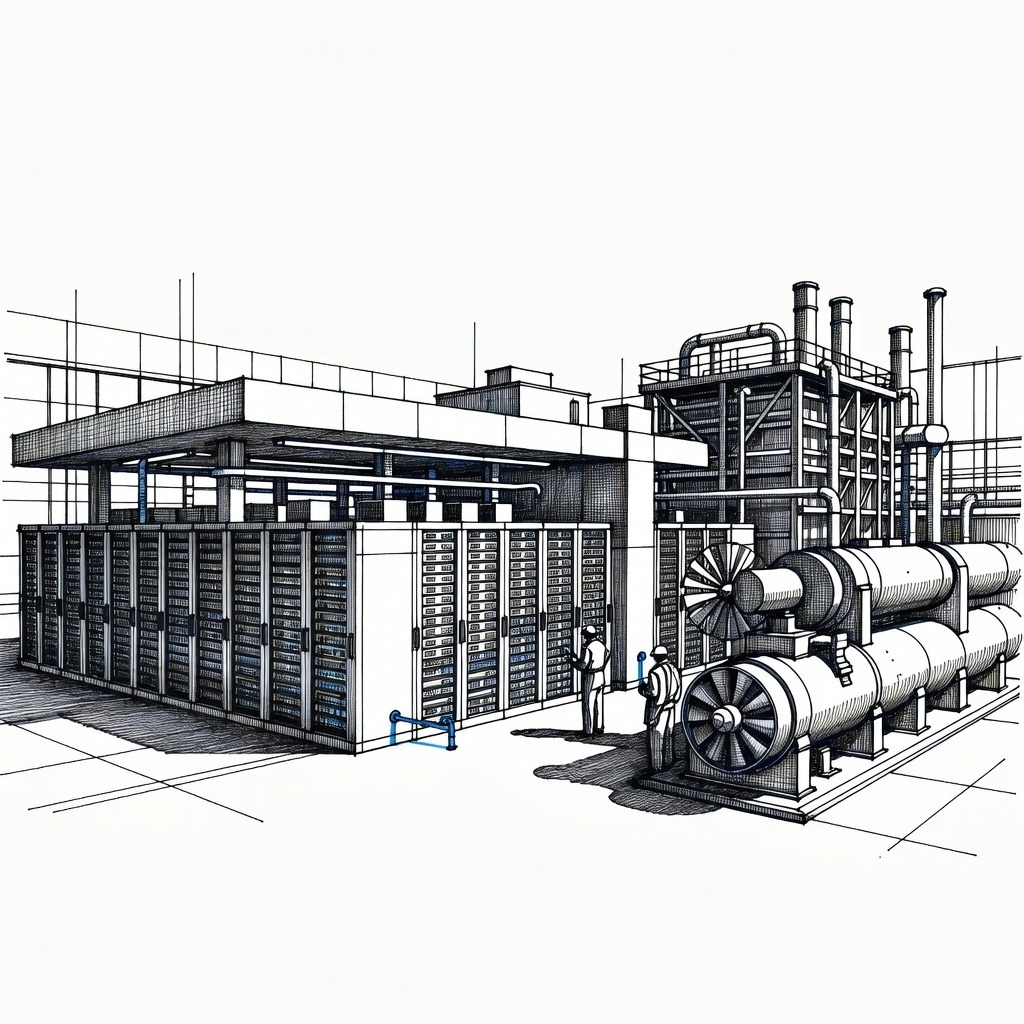
AI-generated illustration. Visual interpretation does not represent real individuals or scenes.
Chevron and Microsoft Partner on Off-Grid Power Plant for Texas Data Center
2026-06-24
The BareStory
Chevron and Microsoft have reached an agreement to supply energy for a new off-grid artificial intelligence data center in Texas. The facility will rely on a dedicated natural gas power plant utilizing turbines supplied by GE Vernova and Caterpillar.
According to Chevron, the facility—dubbed Project Kilby—will be located in Reeves County, West Texas, and is scheduled to begin power delivery in 2028. The company stated the plant is designed to generate 2.7 gigawatts of capacity, which Chevron estimates is equivalent to the power needs of two million households. Contract details indicate the energy purchase agreement spans 20 years.
A Chevron executive said the off-grid design is intended to prevent competition with local consumers for electricity, noting that the company eventually plans to route excess power to the public grid. The executive claimed the project currently holds community support due to anticipated job creation and economic benefits. Meanwhile, a GE Vernova spokesperson stated that the heavy-duty turbines required for the project are already factored into the manufacturer's financial backlog.
Financial analysts observed that the agreement highlights the massive energy demands driven by expanding artificial intelligence infrastructure. However, analysts also cautioned that such large-scale developments face potential headwinds, including macroeconomic pressures and growing public and political opposition to data centers regarding their local water usage and electricity costs.
Left Perspective
Engine of Resource Extraction
Facade of Consumer Protection
Gamble on Trickle-Down Promises
Right Perspective
Triumph of Private Innovation
Engine of Long-Term Prosperity
Shield Against Regulatory Friction
Left Perspective
• Engine of Resource Extraction
Prioritizing social equity requires scrutinizing the immense ecological and resource footprint of corporate mega-projects. A 2.7-gigawatt natural gas plant—capable of powering two million homes—dedicated entirely to Microsoft's AI ambitions represents a massive privatization of natural resources. Securing a 20-year fossil fuel contract locks in long-term extraction for singular corporate profit, directly contrasting with broad-based consumer priorities for sustainable, equitable energy transitions.
• Facade of Consumer Protection
Protecting communities from institutional extraction means rejecting superficial corporate assurances regarding localized impacts. While Chevron frames the off-grid nature of Project Kilby as a shield against local electricity competition, financial analysts rightly identify severe risks regarding regional water usage. The extraction of communal water resources to cool isolated AI data centers shifts the true systemic cost onto vulnerable West Texas populations under the guise of technological advancement.
• Gamble on Trickle-Down Promises
Defending against corporate monopolies necessitates profound skepticism toward promises of eventual public benefit. Chevron’s claim that excess power will eventually route to the public grid, coupled with vague assurances of job creation, relies on a historically flawed trickle-down economic model. Permitting unchecked macroeconomic pressures to dictate local development risks leaving taxpayers bearing the infrastructural burdens long after the corporate profits have been secured.
Right Perspective
• Triumph of Private Innovation
Prioritizing systemic stability and market efficiency is best achieved when private capital actively solves complex infrastructural challenges. By fully funding a dedicated off-grid power plant, Microsoft and Chevron are advancing artificial intelligence capabilities without burdening the existing utility network. This 2.7-gigawatt project exemplifies how incentivizing corporate investment generates necessary technological growth while responsibly shielding local consumers from immediate electricity competition.
• Engine of Long-Term Prosperity
Broad prosperity relies on the fiscal discipline and capital mobilization demonstrated by long-term industrial commitments. The 20-year energy purchase agreement and the utilization of heavy-duty turbines from GE Vernova and Caterpillar inject massive, sustained capital into the domestic manufacturing pipeline. Anticipated job creation in Reeves County and a secure financial backlog for manufacturers prove that market-driven tech expansion serves as a robust engine for regional economic vitality.
• Shield Against Regulatory Friction
Maintaining national economic competitiveness requires defending market efficiency against reactionary political headwinds. Financial analysts correctly identify macroeconomic pressures and rising political opposition over local water and utility costs as primary threats to large-scale infrastructure development. Stifling Project Kilby due to localized opposition threatens to paralyze the exact capital investments required to modernize American energy infrastructure and eventually supply excess power back to the public grid.
How it may affect me
As a U.S. reader:
• Consumers are shielded in the short term from utility competition and potential electricity price increases, as the data center will operate entirely off the existing public grid.
• The public power grid may experience a long-term increase in supply if the companies successfully implement their eventual plan to route excess electricity from the 2.7-gigawatt plant to local consumers.
• Communities located near the data center may face ongoing strains on communal water supplies, as the facility will require significant local water resources for its cooling systems.
• Workers in the domestic manufacturing sector may benefit from long-term economic stability, as the 20-year contract creates a secure financial backlog for American companies producing the required heavy-duty turbines.
• The broader public may be impacted by long-term environmental and resource allocation trends, as the 20-year natural gas agreement dedicates massive fossil fuel extraction to private corporate infrastructure rather than public sustainable energy transitions.