
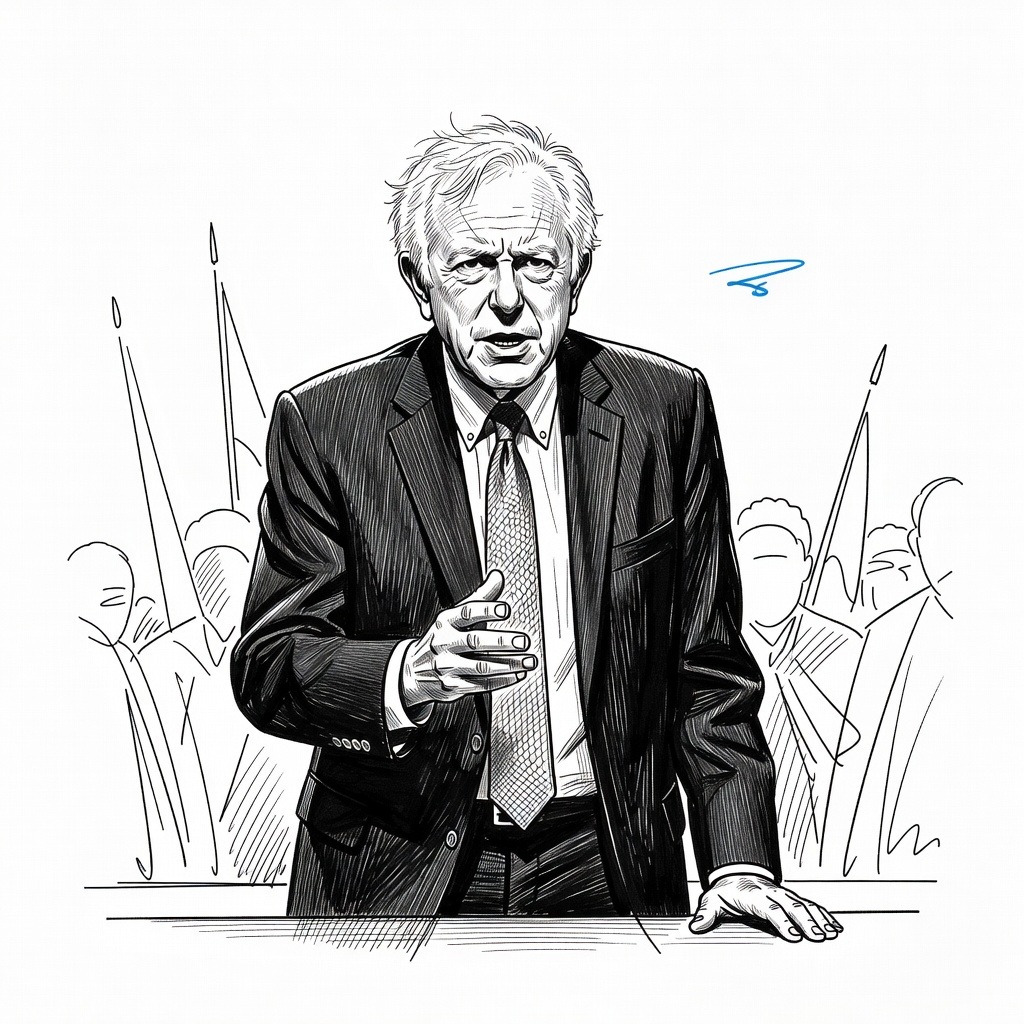
AI-generated illustration. Visual interpretation does not represent real individuals or scenes.
New York Democratic Primaries Highlight Divisions Over Affordability and Israel
2026-06-19
The BareStory
New York City Mayor Zohran Mamdani and Senator Bernie Sanders held a Brooklyn rally on Thursday to support a slate of progressive challengers in the upcoming New York Democratic congressional primaries. The candidates—including Darializa Avila Chevalier, Brad Lander, and Claire Valdez—are campaigning on affordability and seeking to unseat establishment-backed opponents. Their rivals, who include Representatives Adriano Espaillat and Dan Goldman, as well as Brooklyn Borough President Antonio Reynoso, have the backing of prominent party leaders such as Governor Kathy Hochul.
Foreign policy and the American Israel Public Affairs Committee (AIPAC) have emerged as central disputes in the contests. Challengers have criticized their opponents over their support for Israel and ties to the pro-Israel organization. Lander, running in the 10th District, criticized Goldman for voting to send military aid to Israel and claimed Israel’s actions in Gaza constitute a genocide. In response, Goldman and Espaillat have noted that their challengers receive backing from American Priorities, a super PAC established to oppose pro-Israel groups. Additionally, several political figures and advocacy groups have expressed concern that the anti-AIPAC rhetoric in the races risks blurring into antisemitism.
Candidates have also faced scrutiny over their positions on local housing and criminal justice. In the 13th District, Chevalier has drawn criticism from local officials for previously advocating the elimination of a public housing policy that bars individuals convicted of severe crimes. Chevalier argued in a 2017 panel that the regulation was abused to target minor infractions. However, local politicians and housing representatives countered that the exclusion rule is necessary to protect public housing residents from violent offenders and maintain community safety.
Left Perspective
Dismantle Entrenched Political Monopolies
Repudiate Complicity in Conflict
Decriminalize Basic Human Necessities
Right Perspective
Preserve Institutional Political Stability
Anchor Traditional Strategic Alliances
Shield Communities from Disorder
Left Perspective
• Dismantle Entrenched Political Monopolies
The progressive alignment of Zohran Mamdani and Bernie Sanders against Hochul-backed incumbents is driven by a mandate to shatter the political status quo. This camp views establishment leaders as inherently detached from working-class struggles, prioritizing institutional preservation over aggressive affordability measures. Championing challengers like Darializa Avila Chevalier, Brad Lander, and Claire Valdez is viewed as a necessary mechanism to return electoral power to marginalized voters rather than entrenched party elites.
• Repudiate Complicity in Conflict
Withholding military aid to Israel is framed as a non-negotiable moral and humanitarian imperative. By defining Israel’s actions in Gaza as a genocide, Lander and the progressive slate evaluate Dan Goldman’s voting record not as strategic diplomacy, but as direct complicity in human rights abuses. Scrutinizing AIPAC's influence reflects a deeper conviction that domestic politics must be cleansed of hawkish lobbying interests that subvert democratic accountability to fuel foreign military aggression.
• Decriminalize Basic Human Necessities
Avila Chevalier’s opposition to the public housing exclusion policy stems from a foundational skepticism toward punitive state bureaucracies. This faction argues that regulations ostensibly targeting "severe crimes" are routinely weaponized by the state against vulnerable populations for minor infractions. They interpret these exclusionary rules as mechanisms of perpetual marginalization, viewing housing as a fundamental right that must not be revoked by a structurally flawed criminal justice system.
Right Perspective
• Preserve Institutional Political Stability
Defending the incumbent slate of Goldman, Adriano Espaillat, and Antonio Reynoso is rooted in the necessity of systemic continuity and pragmatic governance. Traditionalists view the aggressive primary challenges spearheaded by Sanders and Mamdani as destabilizing forces that fracture institutional unity and impede functional policymaking. Pointing to the challengers' reliance on the "American Priorities" super PAC, they see a hypocritical political insurgency that threatens established democratic order under the guise of grassroots reform.
• Anchor Traditional Strategic Alliances
Maintaining robust military aid to Israel reflects a steadfast commitment to long-standing geopolitical partnerships and strategic deterrence. From this perspective, Goldman and Espaillat's defense against anti-AIPAC campaigns is about protecting essential foreign policy continuity from radical, isolationist impulses. Furthermore, this camp warns that the intense, targeted rhetoric directed at pro-Israel groups dangerously erodes civic cohesion, crossing the line from standard political critique into destabilizing antisemitism.
• Shield Communities from Disorder
Retaining strict public housing rules regarding criminal convictions is viewed as a fundamental duty to uphold the rule of law and protect civic safety. Local officials countering Avila Chevalier argue that the exclusion of individuals convicted of severe crimes is a strictly necessary barrier against violence. This faction prioritizes the immediate physical security and social order of law-abiding residents over lenient reform theories that risk reintroducing known threats into vulnerable neighborhoods.
How it may affect me
As a U.S. reader:
• The outcome of these congressional primaries may create long-term shifts in the national Democratic agenda, determining whether future federal legislation prioritizes aggressive working-class affordability reforms or institutional continuity and pragmatic governance.
• Federal spending and foreign policy could be directly impacted, as the election of progressive candidates may increase congressional pressure to withhold military aid to Israel, whereas establishment victories would maintain current geopolitical partnerships and strategic deterrence.
• Policies regarding public housing eligibility may change, affecting whether housing authorities continue to exclude individuals with severe criminal convictions to prioritize community safety or eliminate these rules to prevent the perpetual marginalization of vulnerable populations.
• The public could experience short-term and long-term effects on civic cohesion and campaign finance, as these races escalate national debates over the influence of super PACs, foreign policy lobbying, and whether fierce political critiques cross into destabilizing antisemitic rhetoric.