
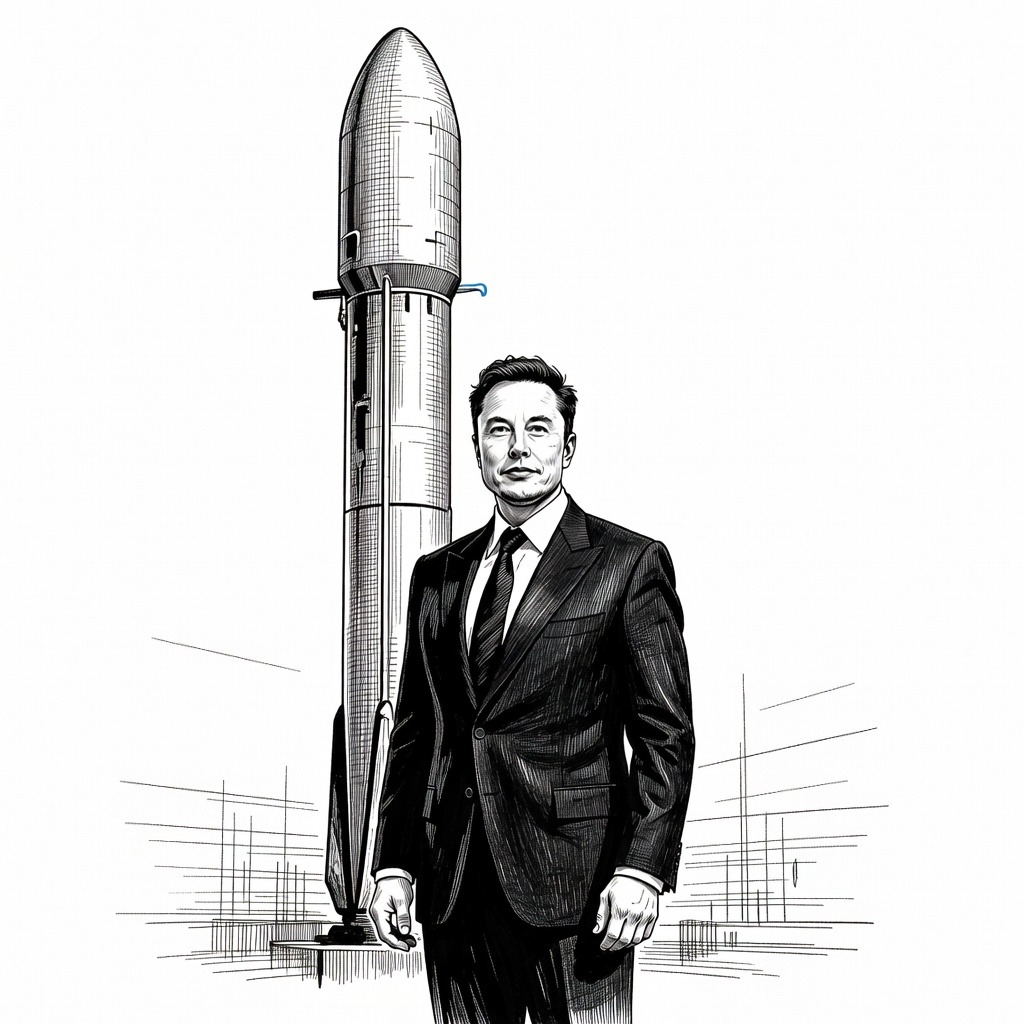
• Shielding Against Autocratic Governance Prioritizing equitable market participation requires robust institutional checks on executive power. Musk retaining 82% of voting rights over a $2.5 trillion public entity severely neuters standard corporate governance and extracts public capital without offering public accountability. This lopsided structure reduces outside shareholders to mere financial passengers, disenfranchising the public while concentrating over $1 trillion in personal wealth in the hands of a single executive.
• Illusion of Independent Oversight Protecting markets from corporate malfeasance requires strict transparency and genuine fiduciary oversight. Roelof Botha’s appointment to the audit committee as an "independent director" is fundamentally compromised by corporate filings noting his relationship to an existing SpaceX employee. This conflict of interest signals that the board’s expansion is merely a performative compliance measure, failing to provide the rigorous structural friction needed to protect retail investors from executive overreach.
• Gamble on Unchecked Projections Systemic economic stability is threatened when extreme market volatility is driven by speculative executive claims rather than grounded fundamentals. The wild post-IPO stock surge of over 40% from its $135 baseline, followed by rapid pullbacks, was actively fueled by Musk’s unverified social media projections of $1 trillion in revenue by 2030. This creates a dangerous environment where retail investors absorb the immense financial risk orchestrated by an unaccountable tech monopoly.
How it may affect me
As a U.S. reader:
• Retail investors now have the opportunity to purchase shares in the aerospace company, though they will face short-term financial exposure to stock volatility, as demonstrated by the recent 40 percent surge and subsequent market pullbacks.
• Members of the public who invest will act primarily as financial participants with practically no long-term ability to influence corporate governance or operations, since the chief executive retains 82 percent of the voting rights.
• Shareholders depending on the board of directors for independent financial oversight will have to rely on an audit committee whose newest member has disclosed ties to a current company employee.
• The long-term financial returns and risks for the investing public will be heavily tied to whether the company can execute on aggressive, unverified executive projections, such as reaching 1 trillion dollars in revenue by 2030.