
• Interrogate Executive Information Flow Prioritizing government accountability, this camp views the disconnect between law enforcement and the Executive as a structural failure. FBI Director Kash Patel announced the disruption of a massive, multi-state plot, yet President Trump remained completely unbriefed while attending the G7. This lack of coordination signals internal dysfunction, raising deep skepticism about how critical intelligence is managed and whether agency narratives are properly overseen by civilian leadership.
• Shield Against Surveillance Overreach Valuing civil liberties, reformers apply strict scrutiny to the investigation of a 23-person network using encrypted Signal messages. While the initial break came from a relative's tip, the rapid, wide-scale mapping of private digital communications raises underlying fears about state dragnet capabilities. There is persistent anxiety that leveraging immense digital dragnets to thwart one plot establishes a perilous precedent that gradually erodes public privacy rights.
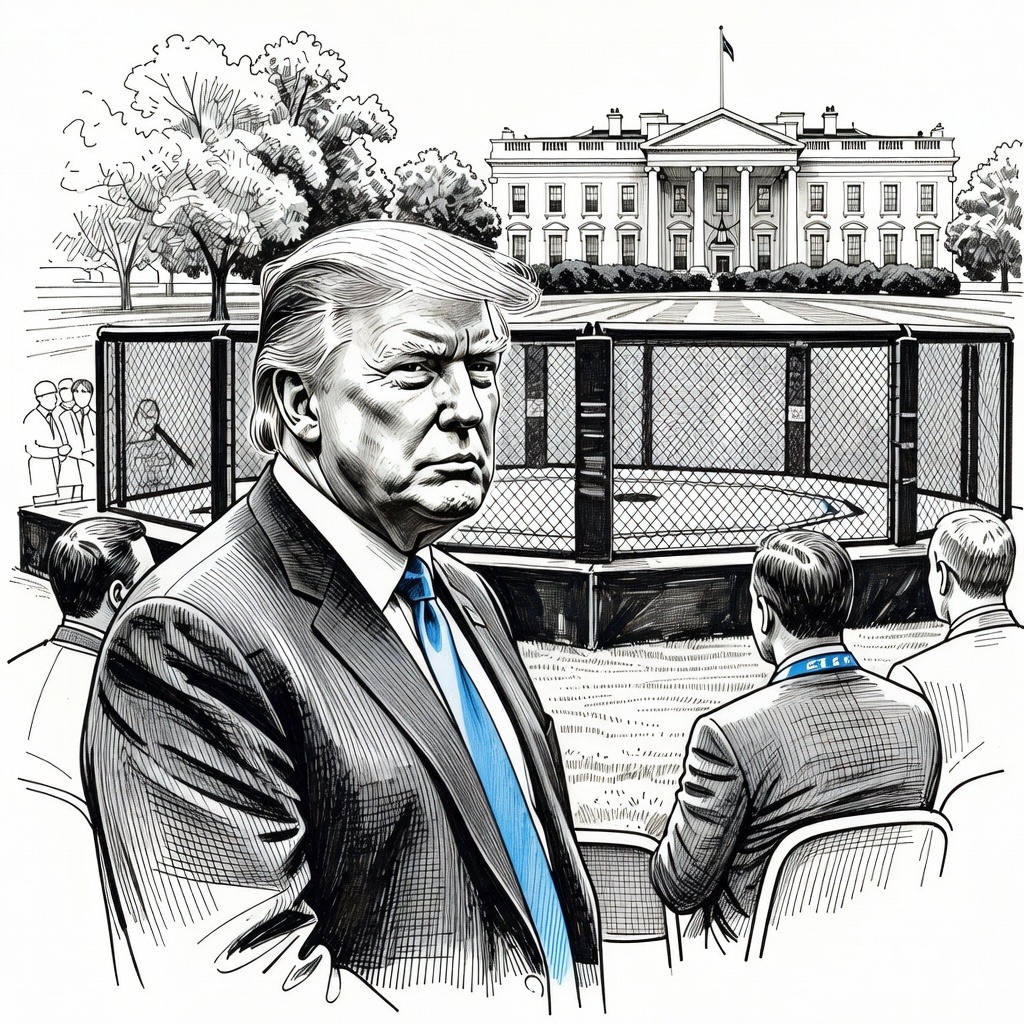
• Critique State-Sponsored Spectacle Prioritizing the separation of civic institutions from personal branding, this camp questions the vulnerabilities generated by the nature of the target itself. Hosting a UFC match on the South Lawn to celebrate a presidential birthday fundamentally merges partisan entertainment with state infrastructure. Reformers argue this deliberate erosion of institutional norms unnecessarily manufactures a highly provocative, high-profile target that strains public security resources.
How it may affect me
As a U.S. reader:
• The discovery of a complex drone and sniper plot is likely to result in the short-term and long-term hardening of physical defenses around federal buildings, potentially restricting public access and increasing security checkpoints at large civic gatherings.
• The rapid identification of suspects using the encrypted app Signal points to a potential long-term expansion of government surveillance capabilities, which could impact the privacy expectations of everyday citizens relying on private digital communications.
• The targeting of a high-profile entertainment event at the White House may prompt immediate reevaluations of public security resource allocation, potentially limiting or altering how federal infrastructure is used for non-traditional public events in the future.
• Because the initial investigative breakthrough relied heavily on a family member's tip, the public may see an increased emphasis on civic reporting, with law enforcement encouraging citizens to actively monitor and report suspicious behaviors within their own personal networks.
• The reported intelligence disconnect, where the president remained unbriefed about a major thwarted plot during an international summit, could affect short-term public confidence regarding how federal agencies coordinate and manage critical domestic security threats.