
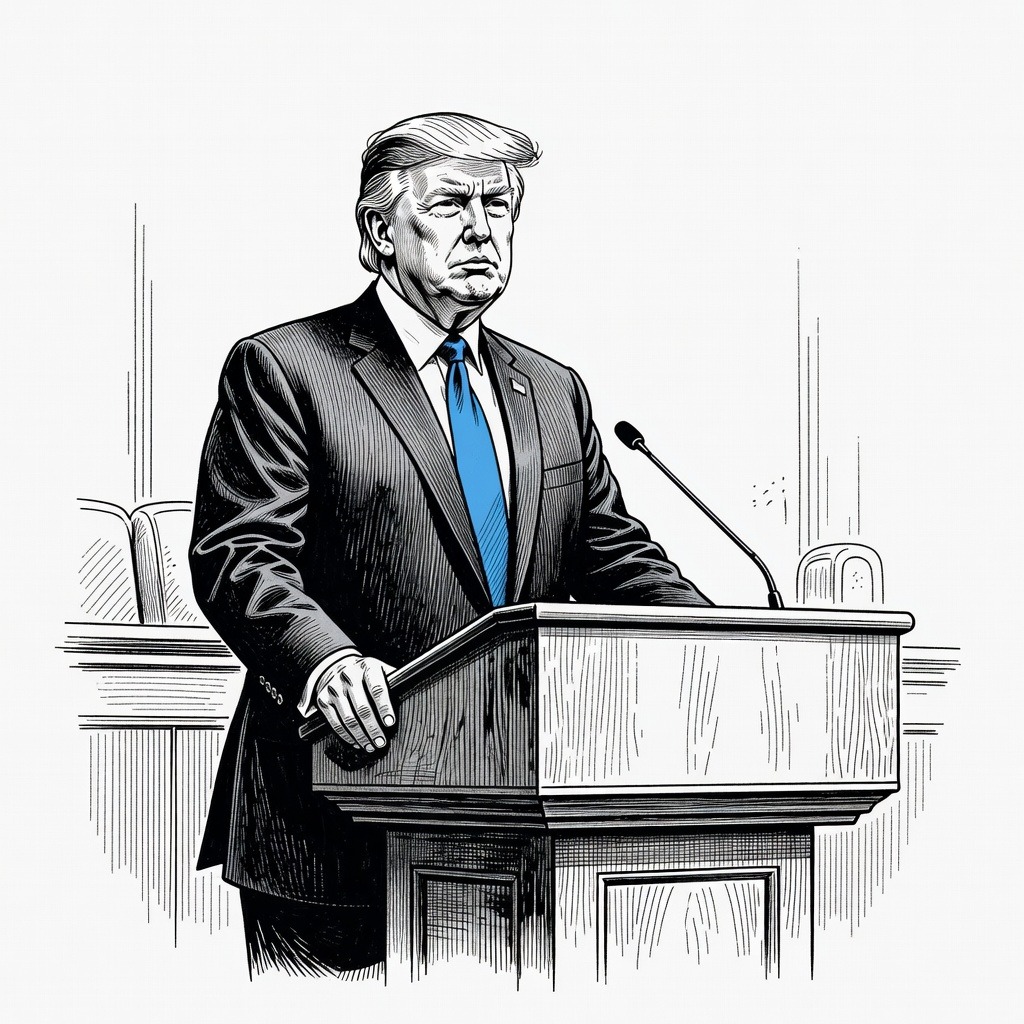
• Shielding Local Democratic Autonomy The core priority is protecting municipal self-governance from federal executive overreach. President Trump’s explicit threat to place Washington, D.C., under federal control if Janeese Lewis George wins is viewed as a direct assault on the democratic rights of district residents. By attempting to preemptively veto a local electorate's choice, this federal posture is interpreted as an authoritarian encroachment on civil liberties and the fundamental right to independent local representation.
• Expanding Institutional Voter Access Reforming electoral mechanics to better reflect the true will of the populace is championed as a necessary evolution of democracy. The implementation of ranked-choice voting in the D.C. primary is celebrated as a progressive mechanism that dismantles establishment monopolies and allows diverse voices to compete without a "spoiler" effect. Even with the anticipated delays in vote tallying warned of by election officials, this systemic friction is seen as a worthwhile trade-off to achieve a more pluralistic, representative government.
• Countering National Consolidation Tactics The overarching fear is the top-down consolidation of ideological power at the expense of local constituencies. Trump’s strategic endorsements in the Georgia, Alabama, and Oklahoma Republican contests are perceived as efforts to mandate loyalty to a centralized national political machine rather than addressing the specific needs of state-level voters. This camp views the mobilization of progressive and independent voters in these local races as a vital firewall against right-wing institutional capture.
How it may affect me
As a U.S. reader:
• In the short term, the new ranked-choice voting system in Washington, D.C., is expected to delay official election results, which may complicate the vote tallying process and impact public confidence in electoral reliability.
• A mayoral primary victory for Janeese Lewis George could lead to long-term administrative changes in the nation's capital, as the federal executive branch has threatened to override local autonomy and place the district under direct federal control to maintain order.
• The finalized nominees from the primary and runoff elections in Georgia, Alabama, Oklahoma, and California will dictate the candidate choices available to voters in November, ultimately shaping the long-term legislative direction of the U.S. Congress.
• Candidates advancing with endorsements from President Trump will likely align their general election campaigns with a unified national platform, which could shift future congressional focus toward broader traditionalist agendas rather than specific, state-level priorities.