
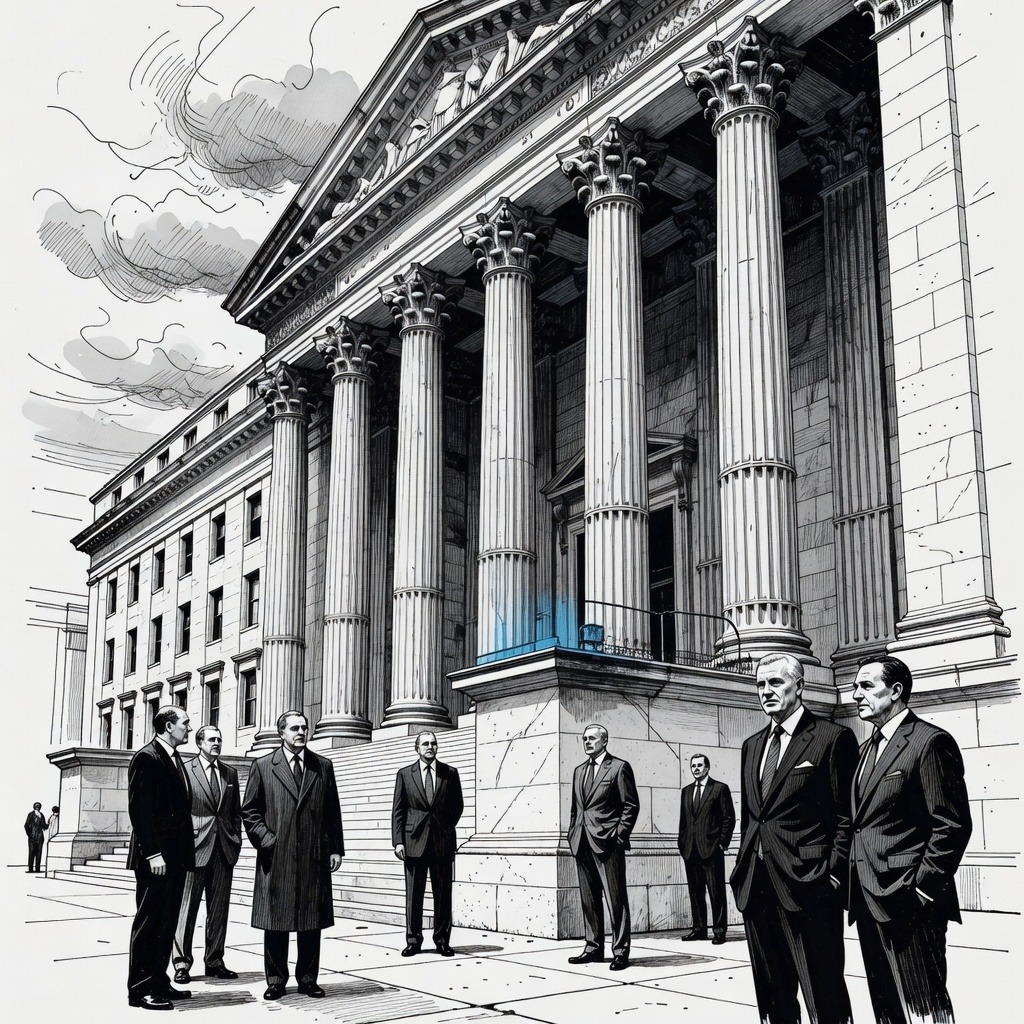
AI-generated illustration. Visual interpretation does not represent real individuals or scenes.
Federal Reserve Expected to Hold Rates Steady at Warsh's First Meeting
2026-06-15
The BareStory
New Federal Reserve Chair Kevin Warsh is scheduled to lead his first Federal Open Market Committee meeting on Wednesday, June 17. Markets broadly expect the central bank to hold interest rates steady, with inflation still running at roughly double the Fed's 2 percent long-term target.
President Donald Trump, who selected Warsh for the role, has previously called for sharply lower interest rates. However, a person familiar with the dynamics stated that the president trusts the new chair and intends to grant him operational independence. Warsh has indicated a desire to shift the central bank's policy approach, including measuring underlying inflation using a "trimmed mean" metric rather than the traditional core inflation measure favored by his predecessor, Jerome Powell. Despite the president's push for rate cuts, futures data suggests traders currently anticipate at least one interest rate increase before the end of the year.
The central bank's meeting coincides with a shifting economic landscape driven by recent geopolitical developments. The United States and Iran recently announced a tentative memorandum of understanding to establish a 60-day ceasefire, with the goal of negotiating a peace settlement to end their ongoing war and reopen the Strait of Hormuz. Market participants stated the framework has driven oil prices down, potentially easing inflation concerns tied to spiked energy costs.
The decline in oil prices and bond yields helped spark a broad stock market rally early in the week. However, consumers continue to face economic headwinds from elevated borrowing costs. Additionally, an estimate released by the minority faction of the U.S. Congress Joint Economic Committee claimed that the Iran conflict and recent tariffs have cost American households more than $3,100 since the beginning of 2025.
Left Perspective
Prioritizing Household Purchasing Power
Interrogating Policy Metric Shifts
Harnessing Diplomatic Energy Relief
Right Perspective
Defending Central Bank Autonomy
Modernizing Monetary Analytical Tools
Capitalizing on Geopolitical De-escalation
Left Perspective
• Prioritizing Household Purchasing Power
The fundamental measure of economic success is the material condition of the working class, not corporate equity valuations. The estimated $3,100 cost to American households from tariffs and the Iran conflict represents a severe, regressive financial extraction from everyday consumers. Holding rates steady ensures borrowing costs remain painfully elevated, squeezing families who are already struggling to navigate inflation that is running at double the Fed's long-term target.
• Interrogating Policy Metric Shifts
Transparency and institutional accountability are paramount when adjusting the levers of national monetary policy. Warsh’s declared intent to measure underlying inflation using a "trimmed mean" rather than the traditional core metric risks mathematically obscuring actual cost-of-living increases. Altering this statistical baseline could structurally minimize the immediate financial pain felt by vulnerable populations, smoothing out data to justify policies that favor capital over labor.
• Harnessing Diplomatic Energy Relief
Diplomatic de-escalation is an essential prerequisite for equitable domestic prosperity and cost control. The 60-day ceasefire with Iran and the potential reopening of the Strait of Hormuz provide direct, tangible relief by immediately driving down global oil prices. This diplomatic breakthrough bypasses the Fed's blunt interest rate tools, offering a vital deflationary mechanism that protects consumers from spiked energy costs without deliberately slowing the broader economy.
Right Perspective
• Defending Central Bank Autonomy
Long-term systemic stability depends entirely on the operational independence and fiscal discipline of monetary institutions. Warsh’s anticipated decision to hold rates steady—despite previous demands for cuts from the president who appointed him—signals a steadfast commitment to sound money principles. With inflation still hovering at roughly double the 2 percent target, prioritizing disciplined inflation control over political expediency preserves the Fed's market credibility.
• Modernizing Monetary Analytical Tools
Effective inflation targeting requires precise, resilient data models rather than rigid adherence to legacy measurements. Transitioning to a "trimmed mean" measurement allows the central bank to filter out extreme price volatility, preventing policy overreactions to temporary market shocks. This technocratic pivot provides a more accurate picture of underlying economic realities, justifying the futures market's disciplined anticipation of at least one more necessary rate hike this year.
• Capitalizing on Geopolitical De-escalation
Broad prosperity and capital efficiency rely heavily on securing global trade routes and minimizing systemic risk. The tentative peace framework to reopen the Strait of Hormuz successfully catalyzed a stock market rally by rapidly lowering bond yields and suppressing oil prices. Resolving this foreign conflict removes a massive inflationary headwind, restoring market confidence and allowing the domestic economy to absorb elevated borrowing costs without fracturing.
How it may affect me
As a U.S. reader:
• In the short term, everyday borrowing costs for loans and credit cards will remain elevated because the Federal Reserve is holding interest rates steady, and these costs could increase further if anticipated rate hikes occur before the end of the year.
• Consumers may experience a short-term drop in energy and fuel expenses, as the tentative 60-day ceasefire with Iran and the potential reopening of the Strait of Hormuz are already driving down global oil prices.
• Individuals with retirement accounts or stock investments may see short-term financial gains due to a broad market rally triggered by declining oil prices and falling bond yields.
• Long-term household purchasing power could stabilize if the geopolitical conflict is permanently resolved, ending a financial drain that has reportedly cost American families more than $3,100 from the conflict and related tariffs since the beginning of 2025.
• Over the long term, the Federal Reserve's decision to change how it calculates inflation could alter future interest rate policies, affecting how quickly the central bank lowers borrowing costs in response to cost-of-living increases versus temporary price shocks.