
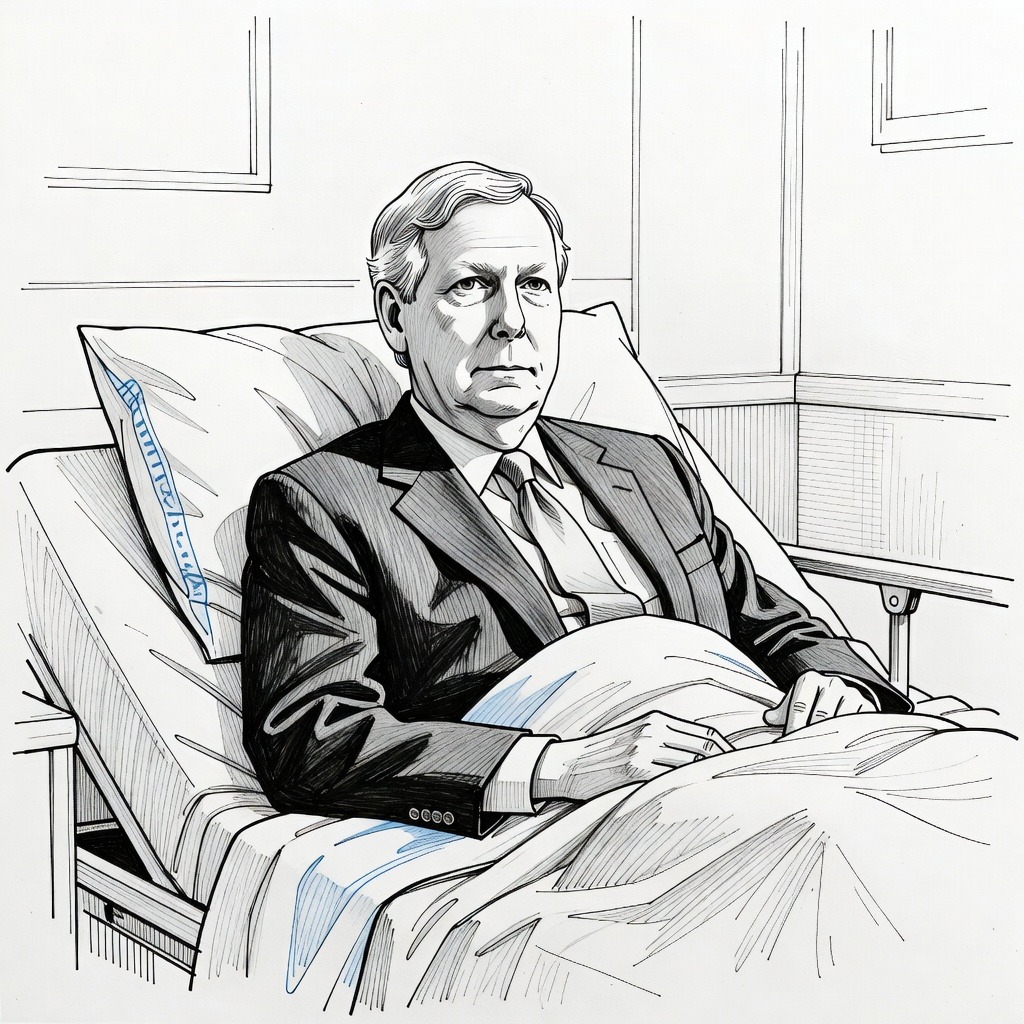
• Demand for Institutional Transparency Democratic accountability requires that the physical and cognitive fitness of highly powerful public officials be subject to public scrutiny. The deliberate decision by spokesperson David Popp to keep the 84-year-old senator's medical condition "undisclosed" represents a failure of transparency that treats public office as a private entitlement. For the Reformer, withholding a diagnosis—especially after a well-documented history of concussions and public freezing episodes—denies voters the information necessary to assess the viability of their representation.
• Indictment of Entrenched Gerontocracy The concentration of legislative power among aging politicians stifles the systemic change required for social progress. McConnell’s repeated hospitalizations and physical setbacks highlight the institutional bottleneck created when lawmakers cling to office well into their eighties. This perspective views his intention to hold his seat until January 2027 not as an act of duty, but as a symptom of a rigid status quo that prioritizes individual legacy over dynamic, responsive governance.
• Risk of Legislative Paralysis Maintaining proximity to power despite evident physical decline introduces profound vulnerabilities into the democratic process. The ongoing health crises—ranging from flu-like symptoms to severe falls—create an unpredictable environment where constituent needs may be sidelined by an absentee representative. The ultimate fear is that refusing to yield power earlier jeopardizes active governance, leaving marginalized populations unprotected while an incapacitated leader blocks a necessary generational transition.
How it may affect me
As a U.S. reader:
• In the short term, the public may experience legislative unpredictability and periods of absentee representation if the senator's medical care requires him to step away from his duties.
• The decision to keep his specific diagnosis undisclosed limits the information available to voters, restricting their ability to fully evaluate his physical and cognitive fitness to continue serving.
• In the long term, his history of health issues introduces the risk of a sudden, unplanned departure from office, which could create a power vacuum and disrupt orderly Senate operations and conservative governance.
• His intention to remain in his seat until January 2027 despite physical setbacks postpones a generational transition in representation, which may stall broader systemic changes in legislative governance.