
U.S. President Holds Phone Calls with Ukrainian and Russian Leaders Ahead of G7 Summit

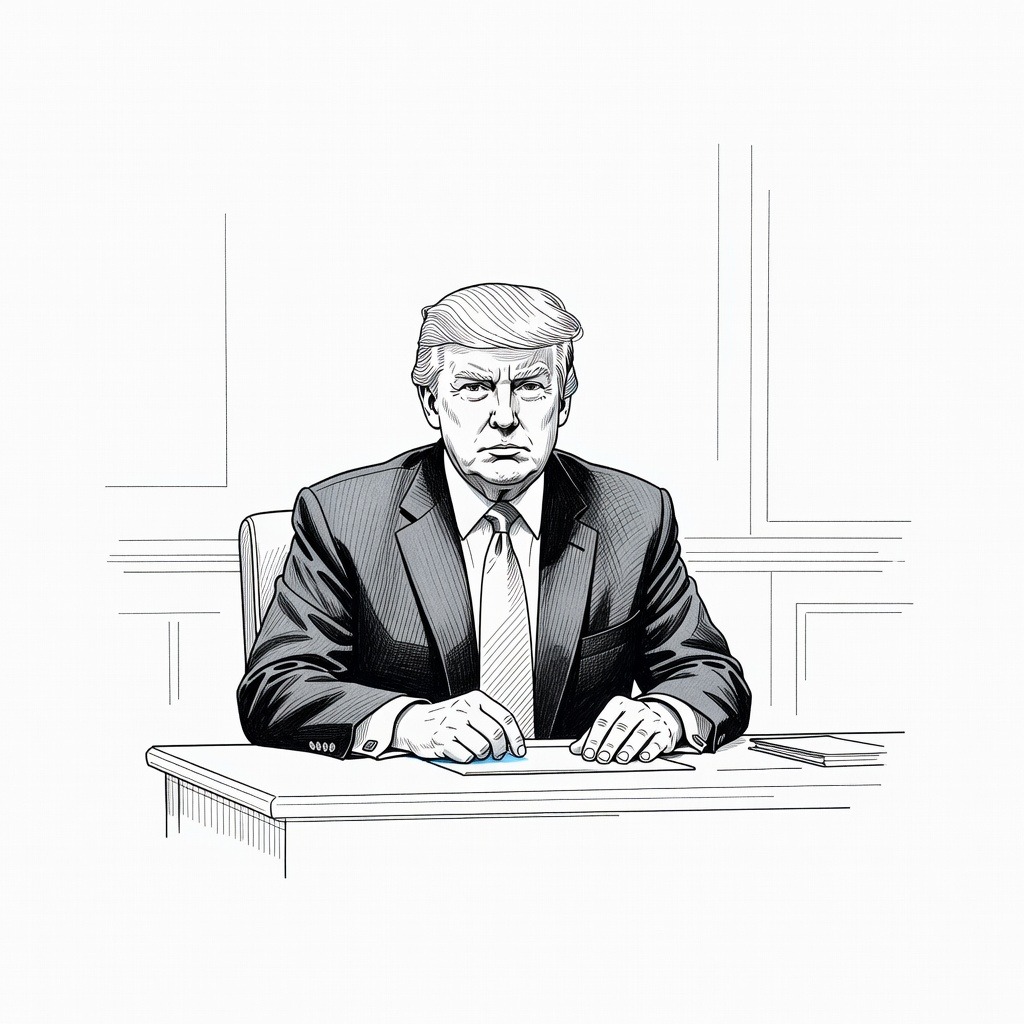
Illustration for: U.S. President Holds Phone Calls with Ukrainian and Russian Leaders Ahead of G7 Summit
AI-generated illustration. Visual interpretation does not represent real individuals or scenes.

THE BARE STORY

On Sunday, coinciding with his 80th birthday, U.S. President Donald Trump held separate phone conversations with Ukrainian President Volodymyr Zelenskyy and Russian President Vladimir Putin. The discussions occurred ahead of the upcoming G7 Summit in France, where Trump and Zelenskyy are scheduled to continue talks regarding the ongoing war.

Zelenskyy stated he congratulated Trump, thanked him for U.S. defense support, and discussed initiatives to accelerate peace. The Ukrainian leader also reported that his country's frontline military position has strengthened. A senior U.S. administration official indicated the two leaders will participate in a working session together at the summit on Tuesday.

Details of the call with Moscow were provided by Russian presidential aide Yuri Ushakov, who stated the conversation lasted nearly an hour. Ushakov claimed Trump emphasized ending the conflict and suggested a swift resolution could improve U.S.-Russian relations. Putin asserted that recent Ukrainian attacks would not change battlefield dynamics and suggested Zelenskyy travel to Moscow for any meetings.

The diplomatic efforts coincide with continued hostilities. Russian regional authorities reported fatal drone attacks, with a local governor stating one person was killed and nine injured in the Oryol region, and officials noting another death in the Bryansk region. Meanwhile, Zelenskyy confirmed Ukraine struck a fuel facility in the Yaroslavl region, describing the attack as a strategy to disrupt invasion funding.

Broader international and security issues were also addressed. Ushakov stated Trump indicated an agreement with Iran was nearing completion, aligning with earlier U.S. goals to secure an Iranian treaty before the G7 gathering. Separately, British Prime Minister Keir Starmer announced the detention of a sanctioned tanker in the English Channel, which he claimed was part of a Russian fleet operating to evade international sanctions.

Same Facts. Different Perspectives.

Two AI models. Two viewpoints. One factual foundation.

• Leverage Hard-Power Deterrence Rooted in Realpolitik, this perspective views U.S. defense support as the primary catalyst for bringing adversaries to the negotiating table. Zelenskyy’s acknowledgment of a strengthened frontline proves that robust military aid generates the geopolitical leverage required for effective diplomacy. Trump’s hour-long call with Putin operates on the premise of "peace through strength," utilizing Ukraine's stabilized battlefield realities to force concessions and demand an end to the conflict on advantageous terms.

• Degrade Adversarial War Machinery Prioritizing strategic dominance and operational degradation, this camp views Ukraine’s deep-strike capabilities as essential to neutralizing the Russian threat. Striking the Yaroslavl fuel facility actively cripples Moscow's invasion funding and logistical endurance, proving that hard-power capability shapes diplomatic outcomes. Putin’s dismissal of these attacks as strategically insignificant is interpreted as a defensive posture against effective, asymmetric warfare that slowly drains his military capacity.

• Enforce Global Strategic Containment Valuing strict enforcement mechanisms to project national security, this framework supports cutting off rogue state lifelines to re-establish global deterrence. The UK’s interdiction of a Russian tanker in the English Channel actively enforces the sanctions regime, neutralizing the shadow fleets that fund hostile maneuvers. Coupling this aggressive maritime enforcement with a finalized Iran agreement serves a broader grand strategy of isolating aggressive states and securing international security architectures.

How it may affect me

As a U.S. reader:

• In the short term, the upcoming G7 negotiations and a nearing diplomatic agreement with Iran aim to stabilize international relations, which could lower the likelihood of intersecting global security crises that threaten U.S. national security.

• Long-term allocations of U.S. defense support and national resources sent abroad could decrease if recent presidential calls with Ukrainian and Russian leaders successfully lead to a negotiated ceasefire.

• If diplomatic efforts achieve a swift resolution to the war, U.S.-Russian relations may improve over the long term, potentially altering the strict economic sanctions and global strategic containment measures currently enforced by the U.S. and its allies.

Read the story at

Note: All TheBareNews content is AI-generated. For additional context, reporting, and updates, you are invited to explore the news outlets linked above.