
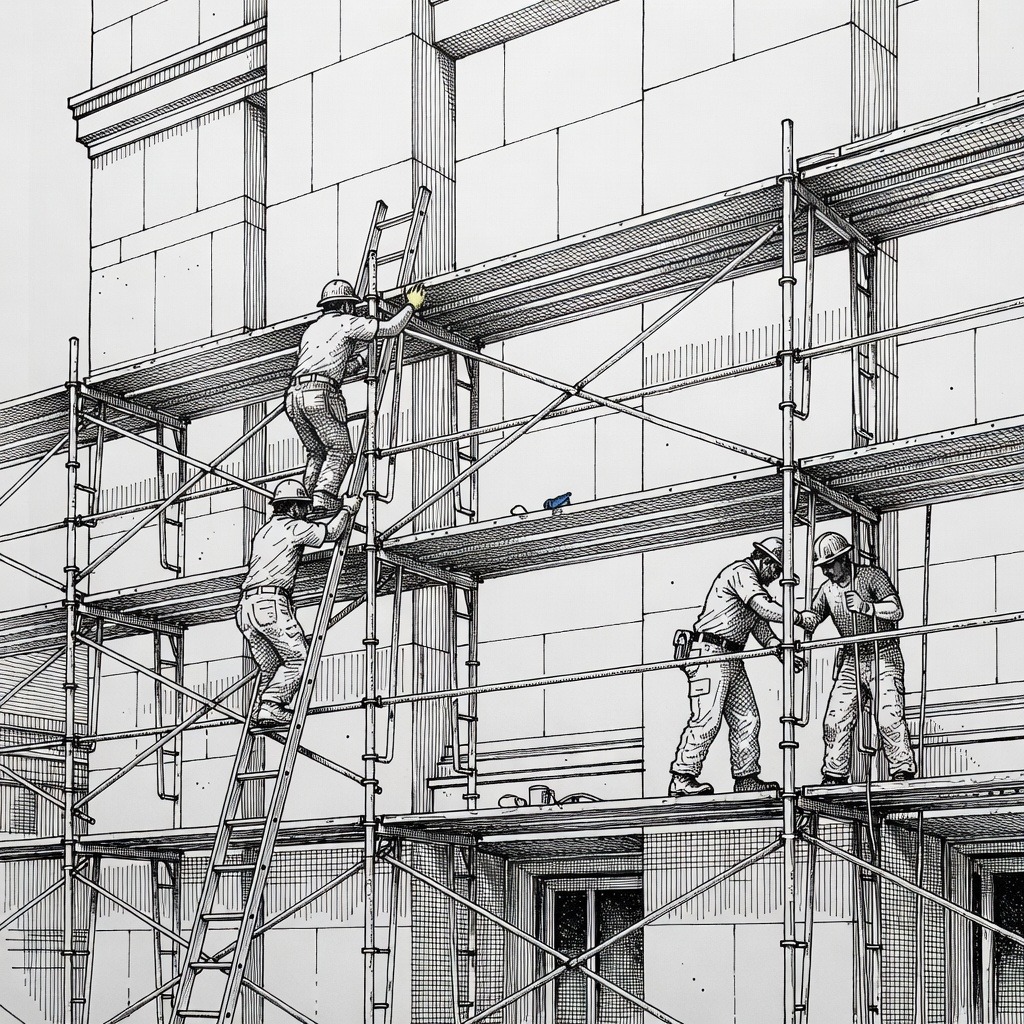
AI-generated illustration. Visual interpretation does not represent real individuals or scenes.
Federal Judge Rejects Administration's Request to Delay Removal of Trump Name from Kennedy Center
2026-06-12
The BareStory
A federal judge on Friday denied a request from the Trump administration to delay an order requiring the removal of the president's name from the Kennedy Center. The ruling coincided with a 14-day court deadline for the administration to strip the name from the Washington, D.C., performing arts venue.
U.S. District Judge Christopher Cooper initially ruled on May 29 that the administration's attempt to rename the facility the "Trump Kennedy Center" and close it for a two-year renovation was illegal. Cooper stated that only Congress holds the authority to alter the institution's name. The legal challenge was brought by Representative Joyce Beatty, a Democratic ex officio member of the center's board, who sued after the president appointed himself board chairman and the facility was renamed in December.
The Justice Department filed a notice of appeal on Thursday to challenge the original ruling. While the center's website and promotional materials had already removed the president's name, physical signage remained on the building. In social media posts following the initial ruling, the president indicated he was stepping away from the renovation project and criticized the judge and political opponents, stating they would rather see the institution fail than allow him to transform it. Lawyers for Beatty argued in a Friday filing that the administration's last-minute request for a stay was frivolous.
In his Friday decision, Cooper determined that the administration failed to prove a stay was warranted and stated that delaying the order would perpetuate unlawful governmental action. Scaffolding was erected outside the building on Friday as the deadline arrived. The ongoing legal dispute remains subject to further review by the D.C. Circuit Court of Appeals, which retains the authority to intervene in the case.
Left Perspective
Enforce Constitutional Power Boundaries
Shield Public Institutional Legacy
Halt Unlawful Administrative Delay
Right Perspective
Assert Robust Executive Leadership
Bypass Partisan Institutional Gridlock
Protect Appellate Due Process
Left Perspective
• Enforce Constitutional Power Boundaries
Government accountability relies on strict adherence to the separation of powers. By affirming that only Congress holds the authority to alter the Kennedy Center's name, Judge Cooper’s ruling acts as a critical check on unilateral executive action. This camp views the president's attempt to self-appoint as chairman and rebrand the facility as an unconstitutional overreach that demands immediate judicial correction.
• Shield Public Institutional Legacy
Public institutions must be protected from being treated as personal or political extensions of the executive branch. Representative Beatty’s lawsuit reflects a priority to preserve the civic, historically established identity of the Kennedy Center. The swift removal of physical signage and promotional materials is seen as a necessary victory to prevent the privatization of public monuments by fleeting political administrations.
• Halt Unlawful Administrative Delay
Allowing an administration to maintain illegal alterations during a lengthy appeals process incentivizes future executive overstepping. The refusal to grant a stay prevents the Justice Department from using procedural stalling tactics to perpetuate what the court has already deemed unlawful governmental action. Erecting scaffolding at the 14-day deadline ensures immediate compliance and reinforces the principle that no branch is above the law.
Right Perspective
• Assert Robust Executive Leadership
Effective governance often requires a strong executive hand to initiate necessary institutional transformations. The administration’s move to oversee the board and implement a two-year renovation is framed as decisive leadership aimed at revitalizing a federal facility. From this perspective, the Justice Department’s appeal is a defense of the executive branch's practical authority to manage and modernize government assets.
• Bypass Partisan Institutional Gridlock
Institutional continuity requires actionable solutions, which are frequently hindered by political opposition and legislative stagnation. The president’s critique that opponents prefer to see the institution fail rather than be transformed highlights a fundamental frustration with bureaucratic obstruction. The lawsuit initiated by a Democratic representative is viewed not as a constitutional safeguard, but as a partisan weapon used to block tangible infrastructural improvements.
• Protect Appellate Due Process
The rule of law necessitates allowing the judicial process to fully play out before enforcing costly physical changes. Requesting a stay is a standard legal procedure to maintain the status quo while the D.C. Circuit Court of Appeals reviews the fundamental questions of executive authority. Forcing the immediate erection of scaffolding and removal of signage is seen as a premature, punitive measure that actively undermines the administration's right to a fair appellate review.
How it may affect me
As a U.S. reader:
• In the short term, the public avoids a proposed two-year closure of the Kennedy Center, meaning regular access to the performing arts facility remains uninterrupted by this specific renovation plan.
• Visitors to the venue in Washington, D.C., will immediately observe physical changes to the building's exterior as scaffolding is used to remove the president's name from all public signage.
• Over the long term, the outcome of the ongoing appeals process will establish a legal precedent regarding whether the executive branch or Congress has the ultimate authority to rename, manage, and modernize public federal institutions.
• The resolution of this dispute will likely impact future infrastructure projects at government facilities, dictating whether future administrations can use unilateral executive action to bypass legislative stagnation to initiate public works.