
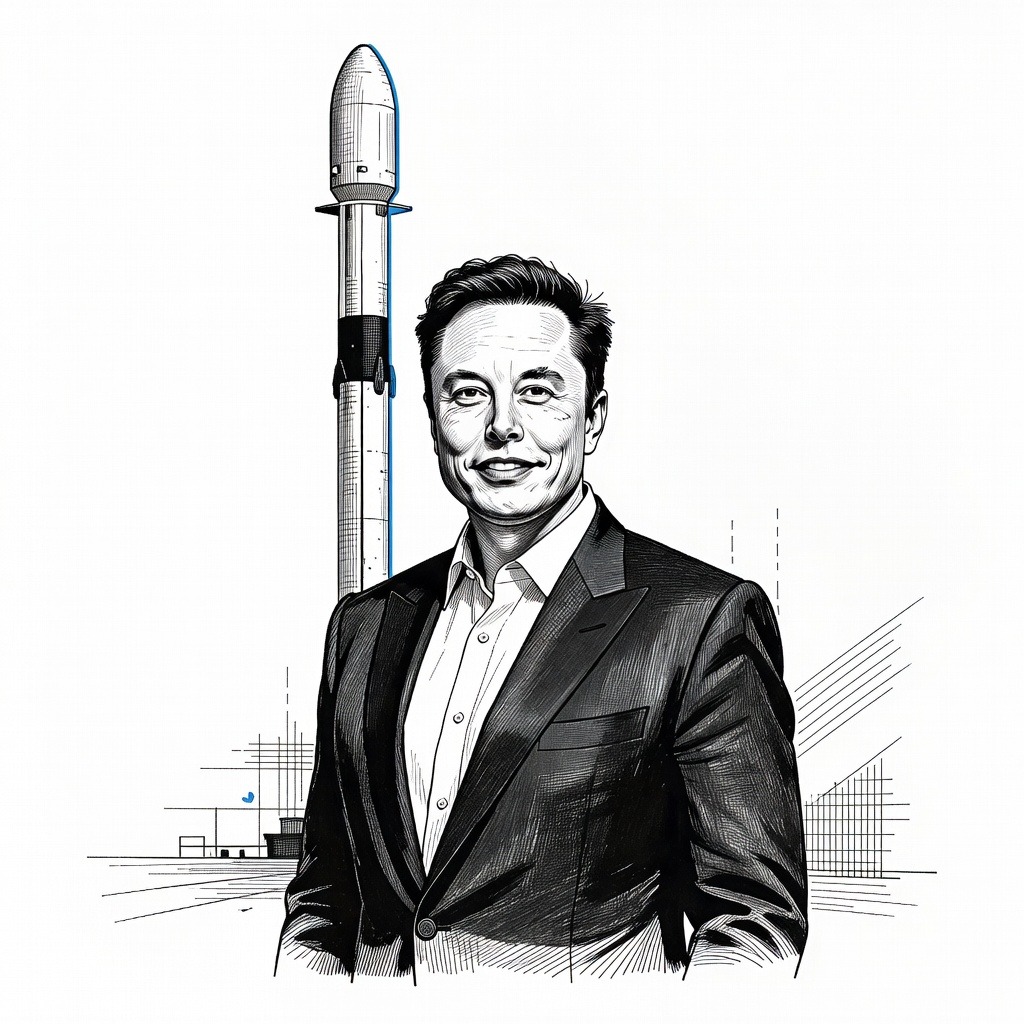
• Apex of Wealth Concentration Prioritizing social equity, this milestone is viewed as a systemic failure of distribution rather than a triumph of enterprise. The mathematical reality that a single individual commands a net worth exceeding the combined resources of the poorest 46 percent of the global population signals a severely imbalanced economic architecture. This extreme capital accumulation isolates resources at the absolute top, demonstrating how modern financial structures reward concentrated ownership while yielding minimal structural relief for the broader global society.
• Speculative Retail Extraction Risk Consumer advocates look skeptically at the $1.77 trillion valuation juxtaposed against a staggering $4.28 billion quarterly net loss. The corporate narrative that public demand drove this $75 billion IPO masks the inherent risk of transferring immense institutional debt and speculative financial burdens onto retail investors. With only Starlink operating profitably out of the entire ecosystem, the massive public influx of capital serves to subsidize elite, high-risk tech ambitions while exposing everyday shareholders to highly volatile, currently unprofitable ventures.
• Erosion of Institutional Guardrails Retaining 80 percent corporate control while holding only a 42 percent ownership stake allows singular, autocratic dominance over a massive publicly funded entity. The decision by the Nasdaq and Russell committees to explicitly alter their inclusion regulations to accommodate this listing demonstrates how concentrated capital can distort and rewrite foundational market rules. Consequently, the S&P 500’s refusal to waive its profitability requirements is viewed as the lone remaining institutional defense, effectively protecting passive index fund investors from forced exposure to an unchecked, loss-leading corporation.
How it may affect me
As a U.S. reader:
• Everyday retail investors now have the ability to purchase SpaceX stock directly, giving them access to potential long-term growth but also exposing them to the short-term financial risks associated with the company's multi-billion-dollar quarterly net losses.
• Individuals with passive retirement or investment accounts tied to Nasdaq or Russell index funds will automatically gain immediate financial exposure to SpaceX and its market performance.
• Passive investors holding S&P 500 index funds will not experience any immediate financial impact or exposure, as the index's committee is enforcing standard profitability requirements and a twelve-month waiting period before inclusion.
• People active in the broader stock market may notice short-term price fluctuations, as the unprecedented size of this listing has already triggered surges in shares and options for other space-related proxy companies.
• In the long term, the billions of dollars raised from the public market could accelerate the expansion and consumer availability of major infrastructure projects, specifically the Starlink satellite internet network and new artificial intelligence technologies.