
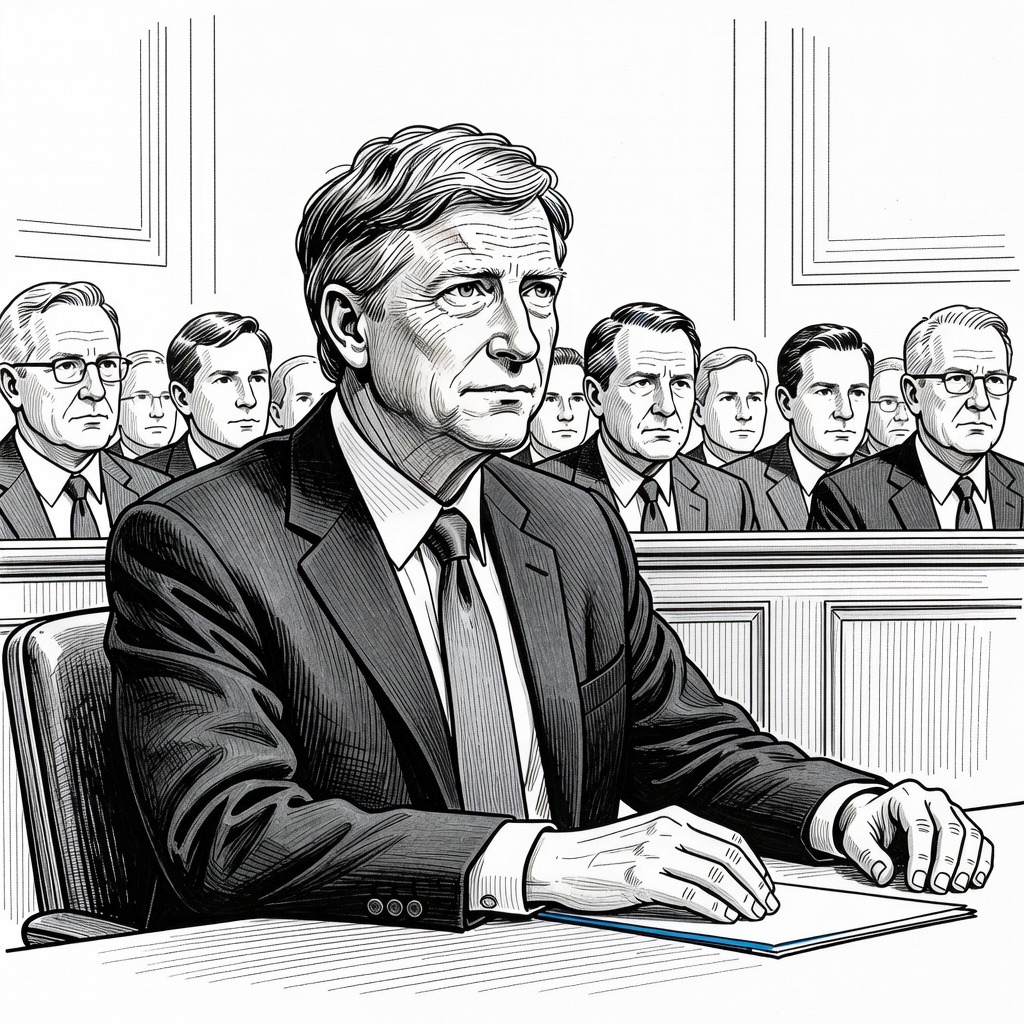
Bill Gates Testifies Before House Committee Over Past Association With Jeffrey Epstein

Illustration for: Bill Gates Testifies Before House Committee Over Past Association With Jeffrey Epstein
AI-generated illustration. Visual interpretation does not represent real individuals or scenes.

THE BARE STORY

Technology founder Bill Gates appeared before the House Oversight Committee on Wednesday for a voluntary, closed-door interview regarding his past relationship with Jeffrey Epstein. Epstein, a registered sex offender, died by suicide in jail in 2019 while facing charges for trafficking underage girls.

During the inquiry, Gates maintained that he had no knowledge of Epstein's crimes, asserting that he only interacted with him during the 2010s to access potential wealthy donors for global health philanthropy. According to his spokesperson, Gates severed ties when the fundraising efforts proved unsuccessful and never visited any of Epstein's properties. However, Representative Melanie Stansbury stated that Gates admitted to knowing about Epstein's prior criminal convictions, telling the committee he initially viewed the relationship as an acceptable avenue to secure charitable funding.

Gates also claimed during the interview that Epstein later attempted to use knowledge of Gates’s personal affairs to pressure him into re-engaging. Representative James Comer noted that the technology founder expressed regret over the association during Wednesday's session. Following the interview, Gates released a statement supporting the public release of all files related to the Epstein case to aid victims in seeking justice.

The committee's focus on Gates was prompted by documents recently released by the Justice Department and Epstein’s estate. According to the committee, these files contained photographs of Gates with individuals in Epstein's orbit, as well as an email in which Epstein appeared to claim he helped secure medical treatment for Gates. Lawmakers have indicated they are investigating multiple individuals who maintained contact with Epstein to determine who may have facilitated his activities.

Same Facts. Different Perspectives.

Two AI models. Two viewpoints. One factual foundation.

• Exposing Philanthropic Moral Hazard The defense of seeking "wealthy donors for global health philanthropy" highlights a systemic flaw where concentrated wealth insulates individuals from ethical accountability. The Reformer perspective views Gates's admission to Representative Melanie Stansbury—acknowledging Epstein's prior criminal convictions while still pursuing charitable funding—as a stark example of billionaire philanthropy operating above societal moral standards. This logic argues that prioritizing financial capital over the safety of the vulnerable normalizes predatory behavior under the guise of charitable ends.

• Dismantling Corrupt Power Asymmetries The revelation that Epstein attempted to use knowledge of Gates's personal affairs as leverage demonstrates how elite, opaque networks breed systemic exploitation and shield abusers. This camp views the newly released Justice Department documents and photographs as critical tools for piercing the veil of impunity that allowed Epstein’s trafficking operations to flourish. Investigating these high-level connections is essential to dismantling the power imbalances that allow billionaires to bypass the accountability mechanisms governing ordinary citizens.

• Centering True Victim Justice True accountability requires prioritizing the victims of trafficking over the reputational preservation of powerful public figures. While Gates’s eventual statement supporting the release of all Epstein-related files aligns with this humanitarian goal, the Left remains highly skeptical of voluntary, closed-door testimonies that allow billionaires to quietly manage their public image. The persistent fear is that structural inequalities will allow the ultra-wealthy to offer public "regret" and PR statements as a substitute for the deeper systemic reckoning required to truly protect marginalized victims.

How it may affect me

As a U.S. reader:

• There is no significant public impact expected from this event, as the closed-door congressional inquiry and related investigations strictly concern the past personal associations, philanthropic networking, and potential legal accountability of specific high-profile individuals rather than practical matters or policies that affect everyday citizens.

Read the story at

Note: All TheBareNews content is AI-generated. For additional context, reporting, and updates, you are invited to explore the news outlets linked above.