
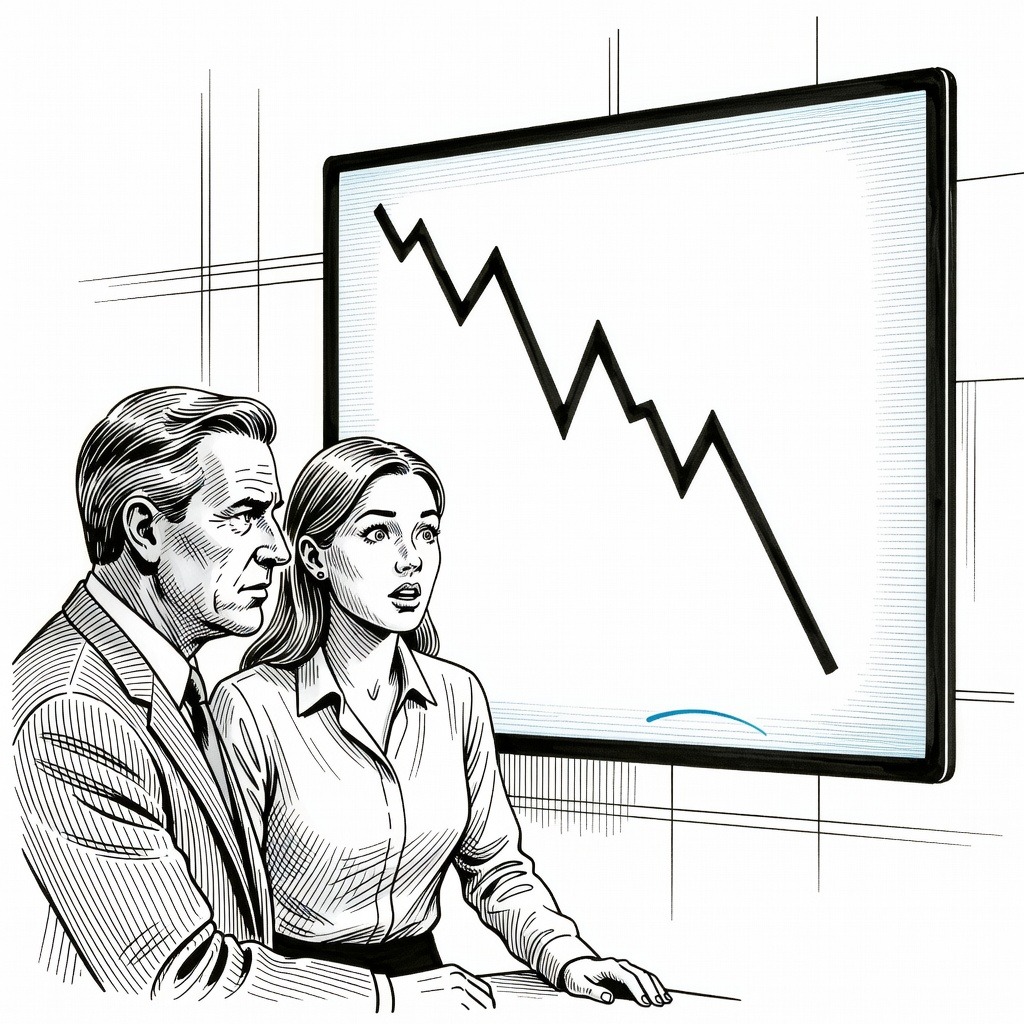
• Exposing Speculative AI Overreach Speculative tech bubbles inevitably concentrate wealth at the top while creating broader economic fragility, as evidenced by the sudden $1.8 trillion erasure in S&P 500 market capitalization. The hyper-inflation of equities linked to artificial intelligence—driving sharp declines for giants like Samsung and SK Hynix—reveals a system driven by corporate hype rather than tangible public utility. This rapid correction exposes the underlying danger of allowing unchecked institutional momentum to dictate global economic stability.
• Offloading Institutional Tech Risk The massive disparity between foreign institutional flight and domestic purchasing highlights a structural transfer of financial risk onto the everyday citizen. While overseas entities extracted $62 billion from the Kospi before the plunge—justified as "mechanical portfolio rebalancing" by institutional managers—domestic retail investors were left to absorb $70 billion of the fallout. This pattern demonstrates how large financial apparatuses extract peak profits during a rally and seamlessly socialize the resulting losses onto the working public.
• Punishing Macroeconomic Labor Gains The prevailing monetary framework inherently penalizes working-class economic footing by treating strong employment as a systemic threat. Because resilient U.S. labor data pushed Goldman Sachs to project Federal Reserve rate cuts being delayed until late 2027, the market directly punished signs of wage and job security. This dynamic ensures that everyday consumers are subjected to prolonged, punishing borrowing costs precisely because the labor force demonstrated baseline financial resilience.
How it may affect me
As a U.S. reader:
• Short-term retail investment and retirement account balances heavily tied to the S&P 500 will likely see reductions following the recent 1.8 trillion dollar erasure in the index's market capitalization.
• Everyday consumers will face prolonged, higher borrowing costs over the long term, as projections for the final Federal Reserve interest rate cuts have now been delayed until late 2027.
• The delay in these long-term rate cuts is directly driven by stronger-than-expected U.S. labor data, meaning the current job and wage stability experienced by workers is actively contributing to the extended high-interest environment.
• Citizens with stock market exposure will continue to navigate short-term portfolio volatility as U.S. equities are forced to price in compounding global pressures, including the escalating Iran war and corrections in the artificial intelligence sector.