
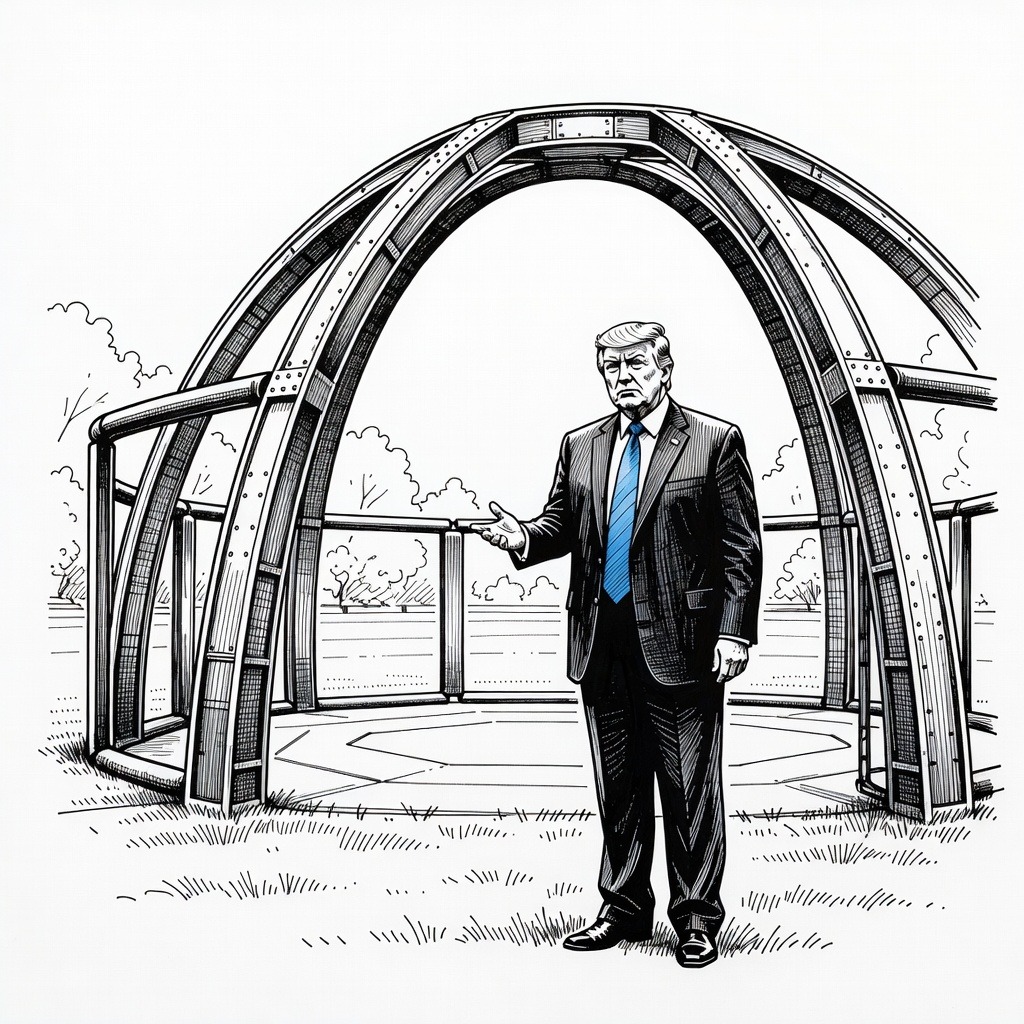
AI-generated illustration. Visual interpretation does not represent real individuals or scenes.
Lawsuit Seeks to Halt UFC Event on White House South Lawn
2026-06-08
The BareStory
Over the weekend, the Public Integrity Project filed a federal lawsuit seeking to stop an Ultimate Fighting Championship (UFC) event scheduled for June 14 on the White House South Lawn. The planned event, which involves the construction of a large steel arch on the presidential grounds, coincides with President Donald Trump's 80th birthday.
The lawsuit alleges that the administration bypassed standard environmental reviews and permitting processes required for the use of national parklands. The plaintiffs claim the event is a private, for-profit enterprise designed to financially benefit the president—who the filing notes holds stock in the UFC's parent company—as well as the event's broadcast partner, Paramount SkyDance. Furthermore, the lawsuit asserts that the gathering is intended to celebrate the president's birthday rather than its stated purpose of commemorating the 250th anniversary of American independence.
Defending the event, an administration official characterized the lawsuit as a baseless attempt to obstruct a historic sporting occasion. The official maintained that the planned fight night is tied to the nation's semiquincentennial celebrations and is consistent with other properly permitted events hosted on the South Lawn and the nearby Ellipse.
The lawsuit asks a federal judge to declare the event's authorization unlawful and permanently halt ongoing preparations at the White House and the Lincoln Memorial. Paramount declined to comment on the litigation, and the UFC did not respond to inquiries regarding the legal challenge.
Left Perspective
Guarding Public Heritage Assets
Preventing Institutional Monetization
Unmasking Subverted State Functions
Right Perspective
Asserting Lawful Executive Prerogative
Fostering Grand Civic Celebrations
Neutralizing Bureaucratic Lawfare Tactics
Left Perspective
• Guarding Public Heritage Assets
Protecting the ecological and historical integrity of national parklands is a foundational priority for this framework. The lawsuit's allegation that the administration bypassed standard environmental reviews to construct a large steel arch on the South Lawn signals a dangerous disregard for established procedural guardrails. By fast-tracking these approvals, the administration is perceived as prioritizing spectacle over the diligent preservation of vital public spaces like the White House grounds and the Lincoln Memorial.
• Preventing Institutional Monetization
Maintaining strict ethical boundaries against kleptocracy drives the opposition to this event. Plaintiffs highlight that the UFC event functions as a private, for-profit enterprise that financially benefits a president who holds stock in the UFC's parent company, alongside broadcast partner Paramount SkyDance. This camp views the arrangement as a direct violation of government accountability, where sovereign public resources and venues are inappropriately leveraged to generate private corporate profit and personal wealth.
• Unmasking Subverted State Functions
Preserving the solemnity and collective ownership of national milestones is essential to institutional trust. The lawsuit alleges that the June 14 gathering is functionally a private celebration of President Trump's 80th birthday, masked as a commemoration of the 250th anniversary of American independence. The long-term risk perceived here is the privatization of the presidency itself, where the symbolic power of the office and state-funded celebrations are co-opted to serve personal vanity rather than the broader public interest.
Right Perspective
• Asserting Lawful Executive Prerogative
Maintaining the operational flexibility and traditional authority of the presidency is paramount to this worldview. Administration officials defend the June 14 event as entirely consistent with other properly permitted gatherings historically hosted on the South Lawn and the Ellipse. From this perspective, the executive branch holds the inherent authority to utilize its own grounds for national functions, and attempts to halt these preparations are viewed as a direct infringement on the legitimate, established powers of the office.
• Fostering Grand Civic Celebrations
Integrating popular culture into national milestones is seen as a highly effective tool to promote civic unity and contemporary patriotism. The administration frames the UFC fight night as a historic sporting occasion explicitly tied to the nation's semiquincentennial celebrations. This camp reasons that utilizing massive cultural phenomena—even those involving corporate partners like Paramount SkyDance—amplifies the reach of the 250th anniversary, drawing far broader public engagement than traditional, sterile government ceremonies.
• Neutralizing Bureaucratic Lawfare Tactics
Protecting the executive branch from being paralyzed by administrative litigation is a core defensive priority. The administration characterizes the Public Integrity Project’s lawsuit as a baseless attempt to obstruct a planned historic event by using standard environmental reviews and permitting processes as a pretext. The underlying fear is that allowing a federal judge to permanently halt White House operations based on procedural complaints incentivizes the weaponization of bureaucracy to sabotage sovereign civic duties.
How it may affect me
As a U.S. reader:
• In the short term, you may experience altered public access to the White House grounds and the Lincoln Memorial due to the construction of a large steel arch and ongoing event preparations on national parklands.
• Your viewing options for the upcoming 250th anniversary of American independence may shift to feature a highly broadcast, pop-culture sporting event rather than a traditional government ceremony.
• A long-term effect of the lawsuit could be a change in how standard environmental reviews are enforced, which would impact the future ecological and historical preservation of public spaces.
• The resolution of this legal challenge may set a long-term precedent regarding government accountability, clarifying whether sovereign public venues can be used for for-profit events that financially benefit an officeholder or corporate partners.
• The court's decision could have long-term implications for executive authority, either preserving a president's operational flexibility to host grand civic gatherings on official grounds or allowing administrative litigation to limit such actions.