
• Shielding Decentralized Electoral Integrity The Left prioritizes objective institutional processes and maximum civic enfranchisement over political narratives. California’s legal protocol to accept mail-in ballots up to a week after Election Day, provided they are postmarked on time, is viewed as a deliberate statutory mechanism to protect civil liberties and voter rights. From this perspective, treating administrative delay as inherent fraud undermines public faith, making the host's demand for concrete evidence a vital democratic safeguard against disinformation.
• Enforcing Equal Judicial Accountability Protecting the rule of law requires that those who violently breach democratic institutions face consequences, rather than receive state-sponsored indemnification. The $1.8 billion compensation fund is seen as an executive overreach that corrupts the justice system by attempting to financially reward individuals convicted of the January 6 Capitol breach. Acting Attorney General Todd Blanche’s decision to permanently halt the fund, alongside court blocks, represents the necessary functioning of institutional checks preventing the misuse of federal settlements.
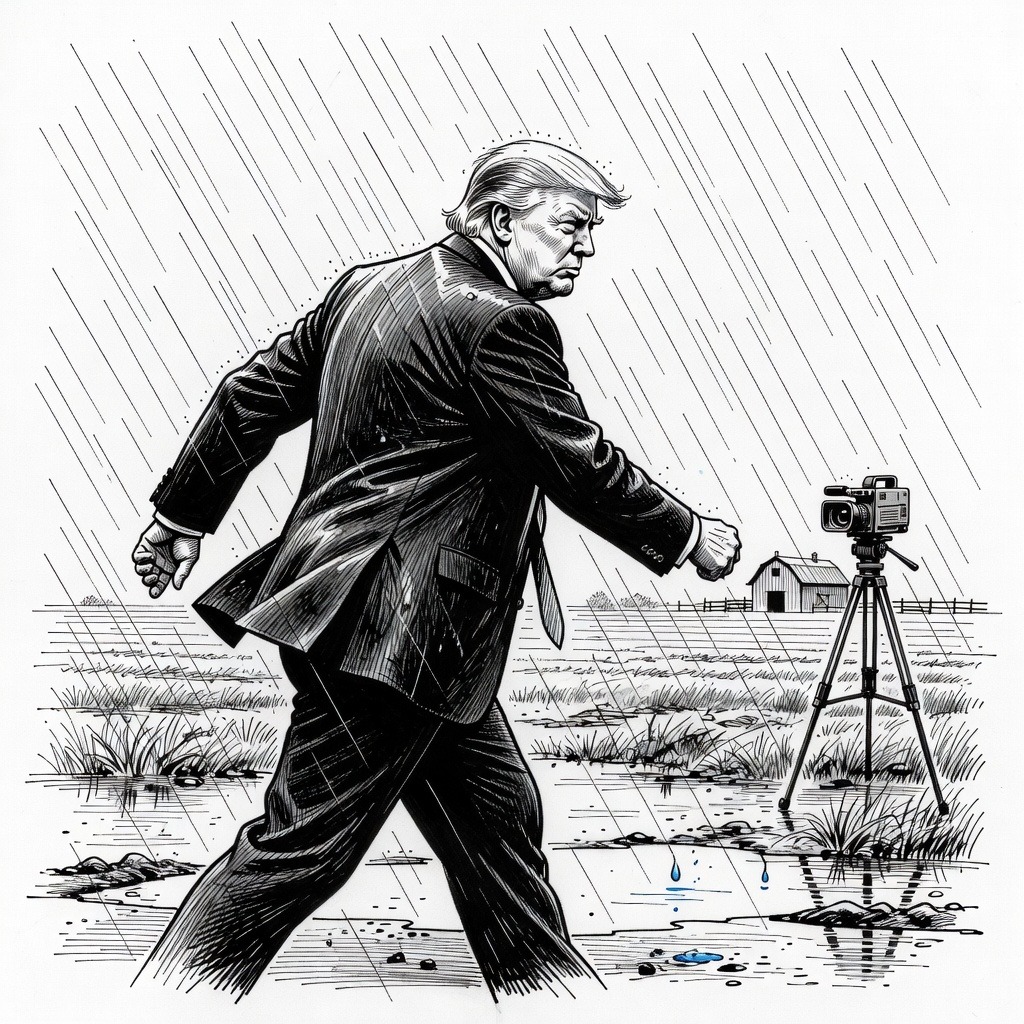
• Defending Objective Media Oversight A free, adversarial press is essential for maintaining government accountability and checking executive power. The interviewer’s pushback against the assertion that the FBI ushered rioters into the Capitol is viewed as a necessary defense of empirical reality against political gaslighting. Trump’s abrupt departure from the Wisconsin farm and the physical crushing of his microphone underscore a perceived authoritarian impulse to delegitimize the Fourth Estate whenever it refuses to broadcast unchecked fabrications.
How it may affect me
As a U.S. reader:
• The immediate and long-term financial consequence of the acting Attorney General permanently halting the proposed 1.8 billion dollar fund is that federal settlement money will not be distributed to individuals convicted of January 6 offenses or those claiming they were targeted by federal agencies.
• Ongoing disputes over administrative procedures, such as California legally accepting mail-in ballots up to a week after Election Day, may shape long-term public trust and influence voter behavior as citizens navigate competing claims regarding electoral stability and civil enfranchisement.
• In the short term, the public will continue to face a highly polarized media landscape where active journalistic pushback during political interviews is framed either as a necessary defense of objective reality or as a biased obstruction, impacting how viewers consume and verify political information.