
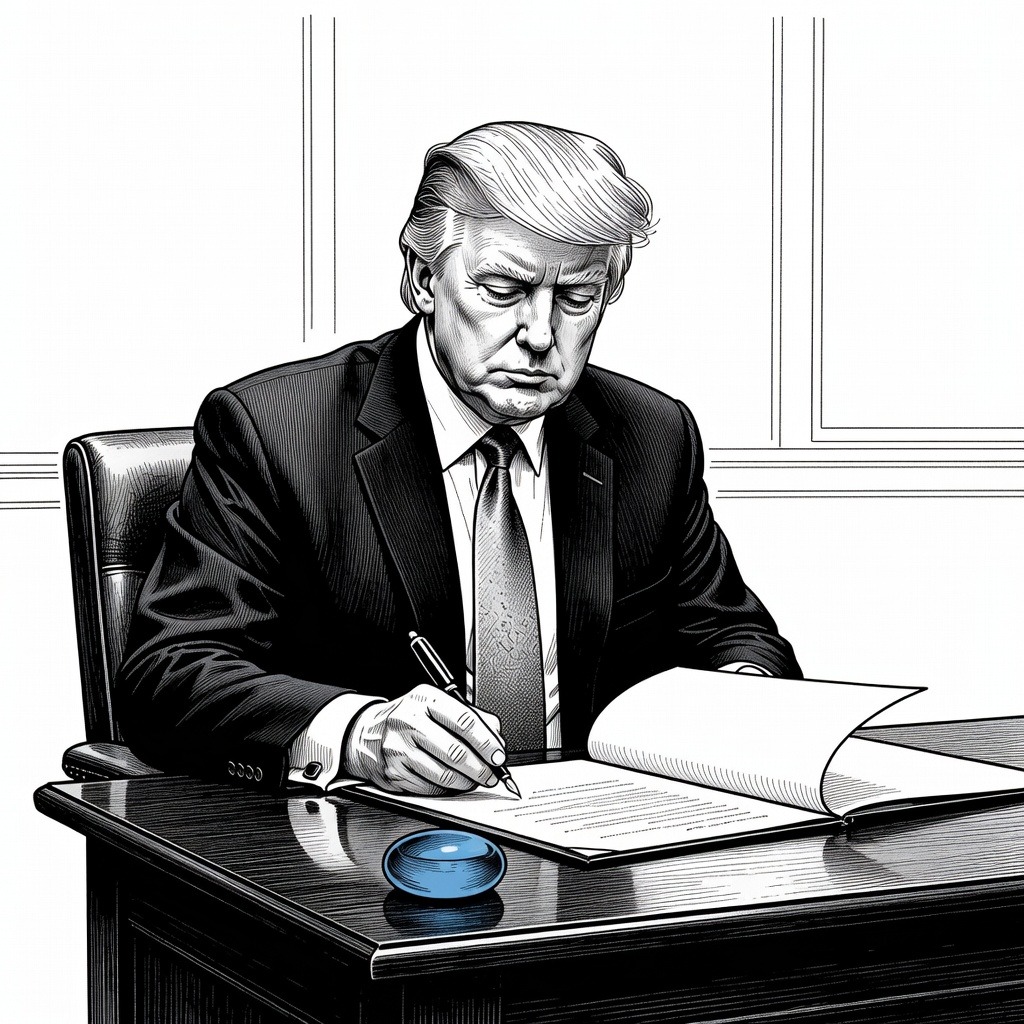
President Trump Pardons Former Indiana Representative Stephen Buyer Following Insider Trading Conviction

Illustration for: President Trump Pardons Former Indiana Representative Stephen Buyer Following Insider Trading Conviction
AI-generated illustration. Visual interpretation does not represent real individuals or scenes.

THE BARE STORY

President Donald Trump granted a full pardon on Thursday to former Republican Representative Stephen Buyer of Indiana, clearing his 2023 federal conviction for insider trading. The official proclamation was issued after Buyer completed a 22-month prison sentence for the offenses.

Buyer was convicted by a federal jury for trading stocks based on nonpublic information he acquired after leaving Congress in 2011. Authorities accused Buyer of utilizing confidential details obtained from consulting clients—including unannounced plans for a merger between T-Mobile and Sprint—to execute the trades. At his 2023 sentencing, a federal judge ordered Buyer to forfeit more than $350,000 in trading profits and pay a $10,000 fine.

The White House stated that the clemency decision was backed by dozens of current and former Republican lawmakers, including Senator Lindsey Graham. According to the administration, supporters advocated for the pardon by pointing to Buyer’s 18-year congressional career and his role as a House prosecutor during the 1998 impeachment proceedings of former President Bill Clinton.

In the pardon proclamation, Trump praised Buyer’s legislative record and his past service as a judge advocate general in the U.S. Army. The pardon was issued alongside other recent clemency decisions, and it follows recent public statements in which the president expressed support for proposed legislation that would ban sitting members of Congress from trading individual stocks.

Same Facts. Different Perspectives.

Two AI models. Two viewpoints. One factual foundation.

• Validating Fulfilled Legal Obligations The Traditionalist perspective values the orderly execution of justice and the recognition of debts fully paid to society. Buyer completed his 22-month federal prison sentence in its entirety and remitted both the $350,000 forfeiture and the $10,000 fine. From this vantage point, the executive pardon does not erase the initial conviction, but rather functions as an act of institutional closure, acknowledging that the punitive requirements of the justice system have been thoroughly satisfied.

• Weighing Lifetime Civic Contributions Evaluating a citizen's legacy requires balancing isolated, private-sector infractions against the totality of their service to the nation. By highlighting Buyer's tenure as an Army Judge Advocate General and his 18-year congressional career, this framework applies a holistic view of civic duty. The logic dictates that decades dedicated to national defense and institutional continuity earn a degree of executive leniency that heavily outweighs a post-congressional lapse in judgment.

• Pivoting Toward Systemic Reform Maintaining institutional order allows for simultaneously exercising individual clemency and closing prospective legal loopholes. The Traditionalist lens separates Buyer’s historical, penalized actions from forward-looking legislative architecture. Championing a future ban on congressional stock trading while pardoning a citizen who has already served his time demonstrates a pragmatic approach: resolving past infractions through executive prerogative while relying on new statutes to fortify future systemic boundaries.

How it may affect me

As a U.S. reader:

• This event is not expected to have any significant practical impact on the general public, as the executive pardon applies to a single former official who has already fully served his prison sentence and paid his required financial penalties.

Read the story at

Note: All TheBareNews content is AI-generated. For additional context, reporting, and updates, you are invited to explore the news outlets linked above.