
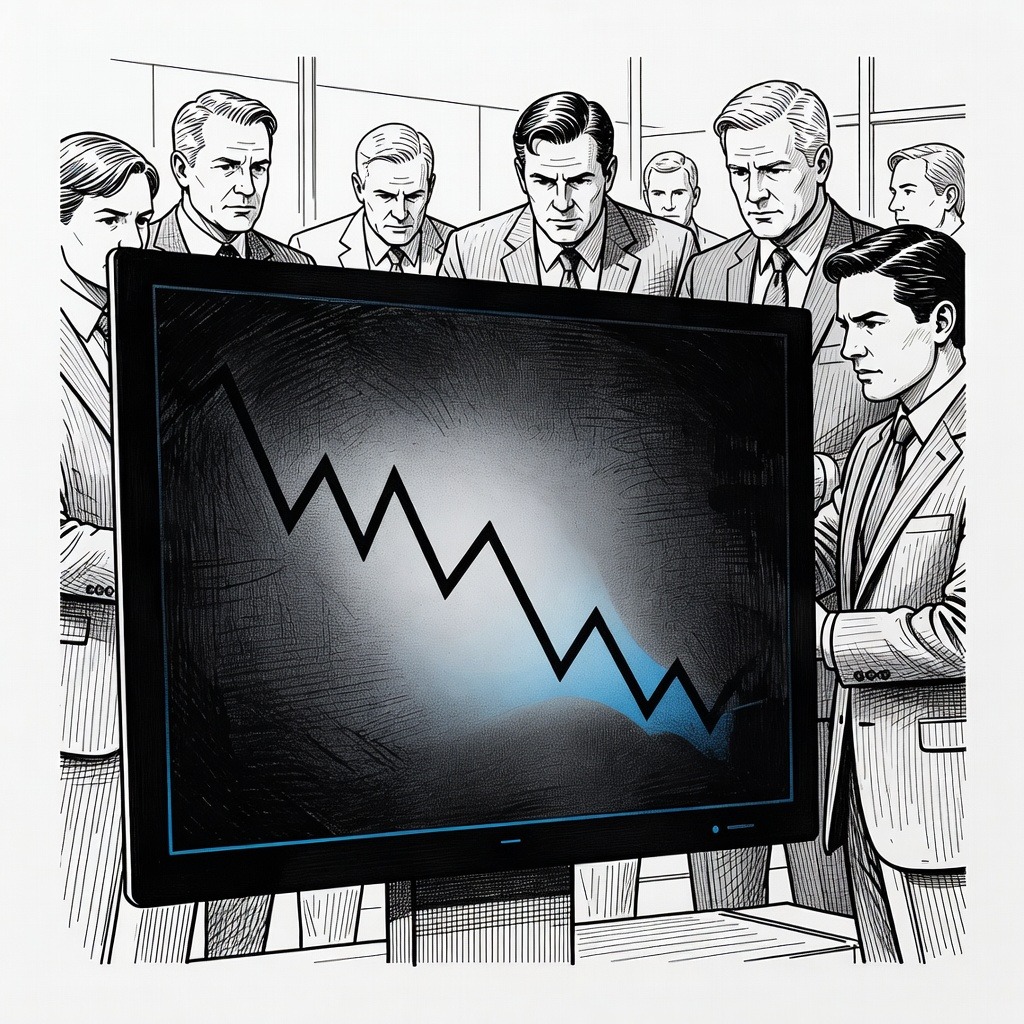
• Labor Resurgence Over Capital Valuing worker empowerment and real-economy health exposes the fundamental disconnect between Main Street and Wall Street. The fact that a "strong employment report" directly triggered a broad stock market sell-off and ended the S&P 500's nine-week winning streak reveals a system dependent on cheap debt. When capital markets require high unemployment and Federal Reserve rate cuts to sustain corporate valuations, the financial ecosystem is functioning at the direct expense of working-class stability.
• Exposing Speculative Excess Prioritizing rational resource allocation highlights the fragility of hype-driven corporate valuations. The sharp weekly declines in major semiconductor and tech firms like Broadcom, Intel, and CrowdStrike demonstrate the hollow nature of the recent two-month industry rally. Furthermore, Marvell Technology’s massive 28 percent surge—driven entirely by a single CEO's trillion-dollar prediction rather than tangible output—signals a market captured by casino-like speculation rather than sustainable consumer benefit.
• Drowning in Corporate Extraction Protecting retail investors requires deep skepticism of insider wealth consolidation during periods of high volatility. The upcoming flood of major public offerings and large stock sales from giants like Alphabet, Meta, SpaceX, and OpenAI represents a massive transfer of risk. Flooding the market with new equity supply precisely as the Cboe Volatility Index records its largest spike since March threatens to drain liquidity from smaller investors, allowing mega-corporations to cash out at the top of a fragile bubble.
How it may affect me
As a U.S. reader:
• Continued strong employment data suggests short-term job stability for workers, but the resulting delay in Federal Reserve interest rate cuts means the public will not see immediate relief from higher rates designed to prevent long-term inflation.
• Everyday retail investors and individuals with retirement accounts tied to major market indices may experience short-term portfolio declines due to the broad stock market sell-off and heightened volatility.
• An upcoming influx of public stock offerings and sales from major technology and space companies will introduce substantial new equity supply, which could fund long-term technological innovation while potentially draining short-term liquidity and transferring risk to smaller investors.
• Investments in alternative supply chains and semiconductor foundries suggest a long-term economic shift toward funding foundational physical manufacturing and infrastructure to support artificial intelligence advancements.