
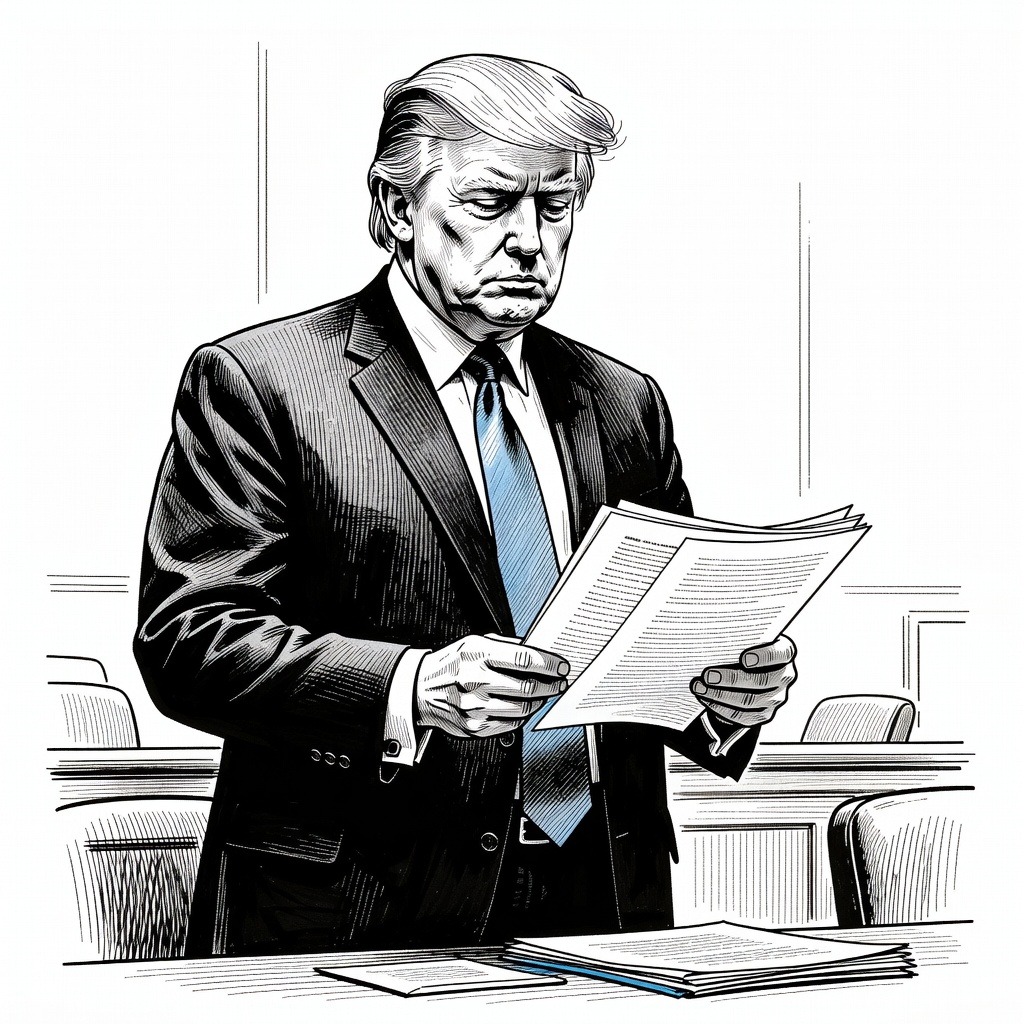
Justice Department Halts $1.8 Billion Compensation Fund Following Federal Injunction

Illustration for: Justice Department Halts $1.8 Billion Compensation Fund Following Federal Injunction
AI-generated illustration. Visual interpretation does not represent real individuals or scenes.

THE BARE STORY

The Justice Department announced Monday it will comply with a temporary injunction halting the administration's $1.8 billion Anti-Weaponization Fund. U.S. District Judge Leonie Brinkema in the Eastern District of Virginia issued the order Friday, blocking the agency from processing claims or distributing money pending a June 12 hearing. While the Justice Department stated it strongly disagrees with the ruling, the agency and President Donald Trump confirmed they will respect the court's mandate.

The fund was recently established as part of a settlement resolving a $10 billion civil lawsuit brought by the president against the Internal Revenue Service over leaked tax records. That settlement now faces additional legal scrutiny. On Friday, U.S. District Judge Kathleen Williams in Florida effectively reopened the original lawsuit to investigate allegations raised by thirty-five former federal judges, who claimed the settlement was a product of collusion designed to evade judicial oversight.

The administration has defended the compensation program as a necessary mechanism to provide justice for individuals unfairly targeted or persecuted by the government. Conversely, lawmakers have expressed concern that the taxpayer funds could be used to pay allies of the president, including individuals involved in the January 6, 2021, Capitol breach.

The controversy has generated bipartisan opposition on Capitol Hill, leading Republican leaders to stall an upcoming vote on an immigration enforcement bill. Senate Majority Leader John Thune stated that the immigration legislation will remain delayed until lawmakers receive assurances that the financial provision is resolved, suggesting the administration abandon the initiative entirely. Concurrently, Senate Minority Leader Chuck Schumer announced plans to introduce legislation that would permanently prohibit the fund.

Same Facts. Different Perspectives.

Two AI models. Two viewpoints. One factual foundation.

• Enforcing Institutional Leverage Republican leadership’s decision to stall an upcoming immigration enforcement bill demonstrates a steadfast commitment to the separation of powers and legislative authority. By tying unrelated policy goals to the resolution of the $1.8 billion fund, Senate Majority Leader John Thune is utilizing traditional congressional leverage to enforce the rule of law. This strategic pivot ensures the administration respects the fiscal boundaries set by Congress, prioritizing systemic stability over immediate executive objectives.

• Mandating Procedural Rigor While holding the IRS accountable for leaked tax records aligns with the conservative priority of protecting citizens from government overreach, traditionalists demand that such remedies follow strict legal protocols. The intervention by federal courts to investigate potential collusion ensures that the pursuit of institutional accountability does not itself violate established civic norms. The fact that the president and the Justice Department confirmed they will respect the court's mandate is seen as a necessary affirmation of institutional continuity.

• Protecting Fiscal Integrity The bipartisan opposition to the settlement reflects a fundamental necessity to safeguard the public purse from unvetted, unorthodox financial agreements. Bypassing standard congressional appropriation processes to distribute taxpayer funds threatens the core tenets of market realism and fiscal discipline. The ultimate risk feared by this camp is the normalization of executive fiat dictating massive financial payouts, which would fatally undermine the constitutional authority of the legislative branch.

How it may affect me

As a U.S. reader:

• In the short term, 1.8 billion dollars in taxpayer funds will remain frozen and unavailable to claimants, preventing the distribution of public money to individuals claiming government persecution or those involved in the January 6 Capitol breach.

• Legislative action on immigration enforcement will face immediate delays, as lawmakers have stalled an upcoming bill to force the administration to abandon the compensation fund.

• In the long term, the ongoing court investigations and proposed congressional bans will establish new precedents for how executive branch settlements are overseen and how public resources are managed.

Read the story at

Note: All TheBareNews content is AI-generated. For additional context, reporting, and updates, you are invited to explore the news outlets linked above.