
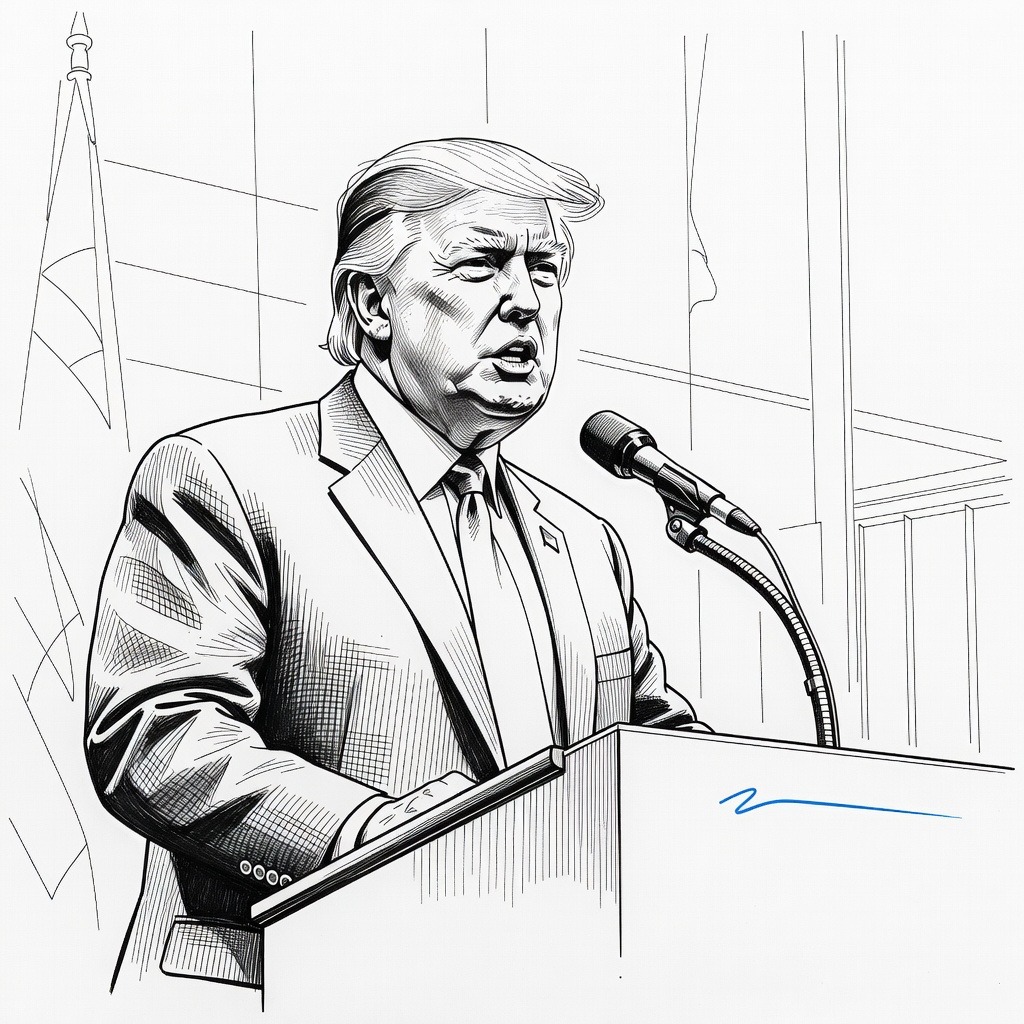
AI-generated illustration. Visual interpretation does not represent real individuals or scenes.
U.S. and Iran Exchange Airstrikes as Economic Impacts Ripple Across Markets
2026-06-01
The BareStory
As the international conflict between the United States and Iran enters its fourth month, the two nations exchanged military airstrikes near the Strait of Hormuz over the weekend. Following the engagement, global energy markets rose on Monday, with West Texas Intermediate and Brent crude prices both increasing by three percent to approximately $90 and $93 per barrel, respectively. President Donald Trump recently stated he is in no rush to finalize a peace agreement, asserting his administration seeks to ensure Iran cannot acquire a nuclear weapon and warning that military action may continue if negotiations collapse.
The ongoing geopolitical tensions have coincided with climbing domestic borrowing costs and inflation. The 10-year U.S. Treasury yield recently surpassed 4.4 percent, up from 3.95 percent before the conflict began. National Economic Council Director Kevin Hassett stated that citizens' financial situations remain positive and predicted that oil shipments could normalize in the coming months. Hassett also dismissed warnings from an Exxon Mobil executive regarding critically low oil inventories, asserting the nation maintains sufficient reserves. However, recent government data showed April inflation rates slightly outpacing wage growth.
Broader economic indicators present a mixed outlook. The U.S. retail sector reported strong first-quarter sales, which industry analysts largely attributed to temporary factors like tax refunds and alternative credit services. Despite this, major retailers issued conservative guidance for the upcoming quarter, anticipating that sustained inflation and higher fuel costs will increasingly strain consumer budgets. Concurrently, the Trump administration has proposed reducing the roughly $1.8 trillion annual budget deficit through measures including tariff revenues and a newly formed fraud task force. Independent economists have publicly disputed the administration's fiscal projections, attributing the rising national debt primarily to recent tax policies and federal borrowing.
Left Perspective
Squeeze on Working-Class Wallets
Masking Deep Financial Fragility
Deflecting Structural Fiscal Failures
Right Perspective
Absorbing Necessary Geopolitical Shocks
Validation of Market Fundamentals
Leveraging Tariffs for Solvency
Left Perspective
• Squeeze on Working-Class Wallets
Prioritizing social equity reveals the immediate domestic harm of foreign military escalation. With April inflation officially outpacing wage growth and global crude climbing above $90 a barrel following the Strait of Hormuz strikes, the economic cost of the conflict is passed directly to everyday households. This framework views National Economic Council Director Kevin Hassett's dismissal of Exxon Mobil's inventory warnings as a dangerous institutional disconnect from the reality of rising essential living costs.
• Masking Deep Financial Fragility
Analyzing wealth distribution exposes the temporary, debt-reliant nature of recent consumer spending. Strong first-quarter retail figures are interpreted not as genuine prosperity, but as a precarious byproduct of one-time tax refunds and an increasing reliance on alternative credit services. The Consumer Advocate warns that as higher fuel costs and sustained inflation set in, this debt-driven consumption will inevitably collapse, leaving vulnerable populations deeply over-leveraged.
• Deflecting Structural Fiscal Failures
Protecting against institutional wealth extraction frames the $1.8 trillion budget deficit as a deliberate policy failure rather than an unavoidable crisis. This perspective aligns with independent economists who attribute the rising national debt directly to recent tax policies that favored corporate capital over labor. Consequently, the administration's proposal to patch this deficit through tariff revenues is viewed as a regressive consumption tax that will further punish everyday buyers rather than holding wealthy beneficiaries accountable.
Right Perspective
• Absorbing Necessary Geopolitical Shocks
Prioritizing systemic stability dictates that short-term market fluctuations are an acceptable cost for achieving vital strategic and security objectives. While the Strait of Hormuz conflict pushed Brent crude to $93 and the 10-year Treasury yield to 4.4 percent, the Market Realist views these metrics as manageable friction in the broader effort to prevent a nuclear-armed Iran. This logic trusts market resilience, echoing Kevin Hassett’s confidence that domestic reserves are sufficient and oil supply chains will organically normalize.
• Validation of Market Fundamentals
Emphasizing market efficiency points to the strong first-quarter retail sales as evidence of foundational economic durability. Despite geopolitical noise and rising borrowing costs, consumers have continued to drive demand, efficiently utilizing tax refunds and modern credit instruments to maintain their purchasing power. The conservative guidance issued by major retailers is interpreted as prudent, standard corporate forecasting in response to temporary fuel pressures, rather than a symptom of systemic weakness.
• Leveraging Tariffs for Solvency
Valuing fiscal discipline through growth supports using external revenue mechanisms to manage the $1.8 trillion deficit without reversing pro-business tax structures. By deploying tariffs and a new fraud task force, the administration is leveraging strategic economic tools to generate federal income while protecting the domestic tax policies intended to incentivize capital investment. This framework rejects independent critiques of federal borrowing, viewing the current fiscal strategy as necessary maneuvering to sustain long-term macroeconomic dominance.
How it may affect me
As a U.S. reader:
• You may experience higher prices for fuel in the short term due to global crude oil prices rising to roughly 90 dollars per barrel following the recent military airstrikes.
• Your overall purchasing power could decline, as recent government data indicates that domestic inflation is currently outpacing wage growth, which increases the cost of daily essentials.
• Taking out loans, securing mortgages, or carrying personal debt may become more expensive, driven by domestic borrowing costs climbing and the 10-year Treasury yield rising to 4.4 percent.
• You could face higher prices on general retail purchases in the long term if the administration implements proposed tariffs to reduce the national deficit, potentially passing additional costs onto everyday consumers.
• Your personal household budgets may face heavier strain in the coming months, as major retailers forecast that sustained inflation, rising fuel costs, and reliance on alternative credit services will begin to outpace the temporary benefits of recent tax refunds.