
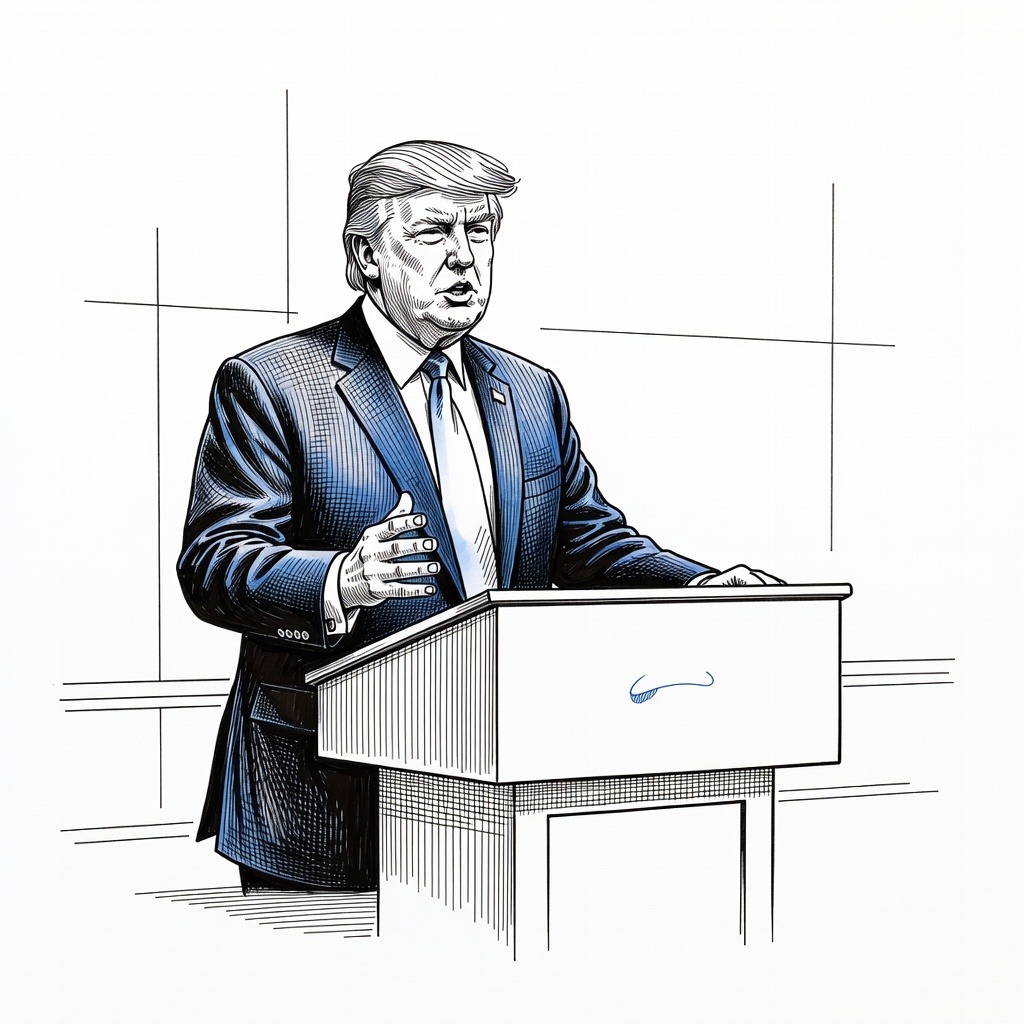
AI-generated illustration. Visual interpretation does not represent real individuals or scenes.
U.S. Outlines Conditions for Iran Peace Deal Amid Strait of Hormuz Disruptions
2026-05-27
The BareStory
The United States and Iran are signaling progress toward a potential short-term agreement to conclude their ongoing conflict. While U.S. President Donald Trump stated that an agreement has been largely negotiated, the White House denied claims by Iranian state media that a draft framework already exists. U.S. Secretary of State Marco Rubio indicated the administration intends to give diplomatic efforts a full opportunity to succeed.
Trump outlined strict conditions for any finalized deal, stating he opposes allowing Iran to transfer highly enriched uranium to Russia or China, demanding the material be destroyed instead. He further asserted that the U.S. will not ease sanctions or release frozen Iranian funds as part of an agreement. Trump also insisted the Strait of Hormuz must remain open and under U.S. monitoring.
Commercial traffic through the vital shipping channel has fallen to near zero after the U.S. military reported conducting strikes on Iranian missile launch sites and mine-laying vessels. Market analysts and prediction platforms have expressed skepticism about a swift reopening, forecasting that shipping disruptions could extend into the summer and drive up global oil prices. Following Rubio's remarks on ongoing diplomatic efforts, oil prices experienced a decline.
In response to U.S. requests for European allies to help protect international shipping routes, the Czech Republic pledged specialized passive surveillance capabilities to help secure the waterway. Announcing the contribution at the United Nations, Czech Foreign Minister Petr Macinka accused Iran of posing a global threat through nuclear proliferation, international terrorism, and risks to the Strait of Hormuz.
Left Perspective
Engine of Diplomatic De-escalation
Gamble of Maximalist Deadlocks
Collateral Cost of Coercion
Right Perspective
Leverage Through Unyielding Deterrence
Shield Against Authoritarian Loopholes
Anchor for Global Burden-Sharing
Left Perspective
• Engine of Diplomatic De-escalation
Prioritizing negotiation over kinetic action is viewed as the only viable mechanism to resolve international flashpoints and prevent catastrophic conflict. Secretary of State Marco Rubio’s commitment to giving diplomacy a "full opportunity" directly triggered a decline in global oil prices, proving that rhetorical de-escalation immediately stabilizes volatile systems. Pursuing a short-term agreement represents a necessary pivot away from brinkmanship, prioritizing peaceful conflict resolution over endless military engagement.
• Gamble of Maximalist Deadlocks
Imposing absolute conditions on a negotiated settlement risks cornering an adversary and collapsing fragile progress. By demanding the complete destruction of enriched uranium while flatly refusing to ease sanctions or release frozen funds, the administration removes traditional diplomatic off-ramps. This rigid approach endangers the very peace deal being touted, as durable agreements require mutual concessions rather than unilateral capitulation.
• Collateral Cost of Coercion
Relying on military force to dictate terms generates severe secondary consequences that ripple through the civilian world. U.S. strikes on Iranian missile and mine-laying sites effectively halted commercial traffic in the Strait of Hormuz, with disruptions expected to last into the summer. This kinetic strategy inadvertently punishes international consumers by driving up global oil prices, demonstrating how localized military force cascades into widespread economic and humanitarian harm.
Right Perspective
• Leverage Through Unyielding Deterrence
Establishing unshakeable boundaries and demonstrating military resolve are essential to forcing adversaries to the negotiating table. The U.S. military strikes on Iranian missile launch sites and mine-laying vessels systematically dismantled enemy capabilities, creating the asymmetric leverage required to dictate the terms of peace. Refusing to release frozen funds or ease sanctions ensures the U.S. maintains maximum economic pressure until permanent, verifiable security guarantees are enacted.
• Shield Against Authoritarian Loopholes
Neutralizing a nuclear threat requires absolute verification, not simply relocating the risk to rival powers. The administration’s refusal to allow enriched uranium transfers to Russia or China recognizes the strategic danger of permitting adversarial states to manage dangerous materials. Mandating the complete destruction of the uranium, alongside strict U.S. monitoring of the Strait of Hormuz, closes diplomatic loopholes that rogue actors historically exploit to rebuild their capabilities.
• Anchor for Global Burden-Sharing
Decisive unilateral strength acts as a catalyst for international cooperation and shared security responsibilities. By projecting power and requesting allied participation, the U.S. successfully mobilized the Czech Republic to contribute specialized passive surveillance capabilities to protect international shipping. The resulting UN condemnation of Iran’s nuclear and terrorist threats by Czech leadership validates the strategy of using American assertiveness to forge a unified coalition against global threats.
How it may affect me
As a U.S. reader:
• In the short term, you may face widespread economic impacts as commercial shipping disruptions in the Strait of Hormuz are expected to extend into the summer, which is forecast to drive up global oil prices and punish consumers.
• You might also experience rapid shifts in these energy costs tied to the peace process, demonstrated by global oil prices declining immediately after U.S. officials signaled a commitment to ongoing diplomatic negotiations.
• In the long term, the strict U.S. demands to destroy Iranian uranium and maintain economic sanctions could either secure a verifiable peace deal that removes a global threat, or cause negotiations to collapse and indefinitely prolong military and economic disruptions.
• You could see a shift in how international waterways are secured, with European allies beginning to supply specialized surveillance capabilities to protect shipping routes, potentially reducing the overall burden on U.S. military forces.