
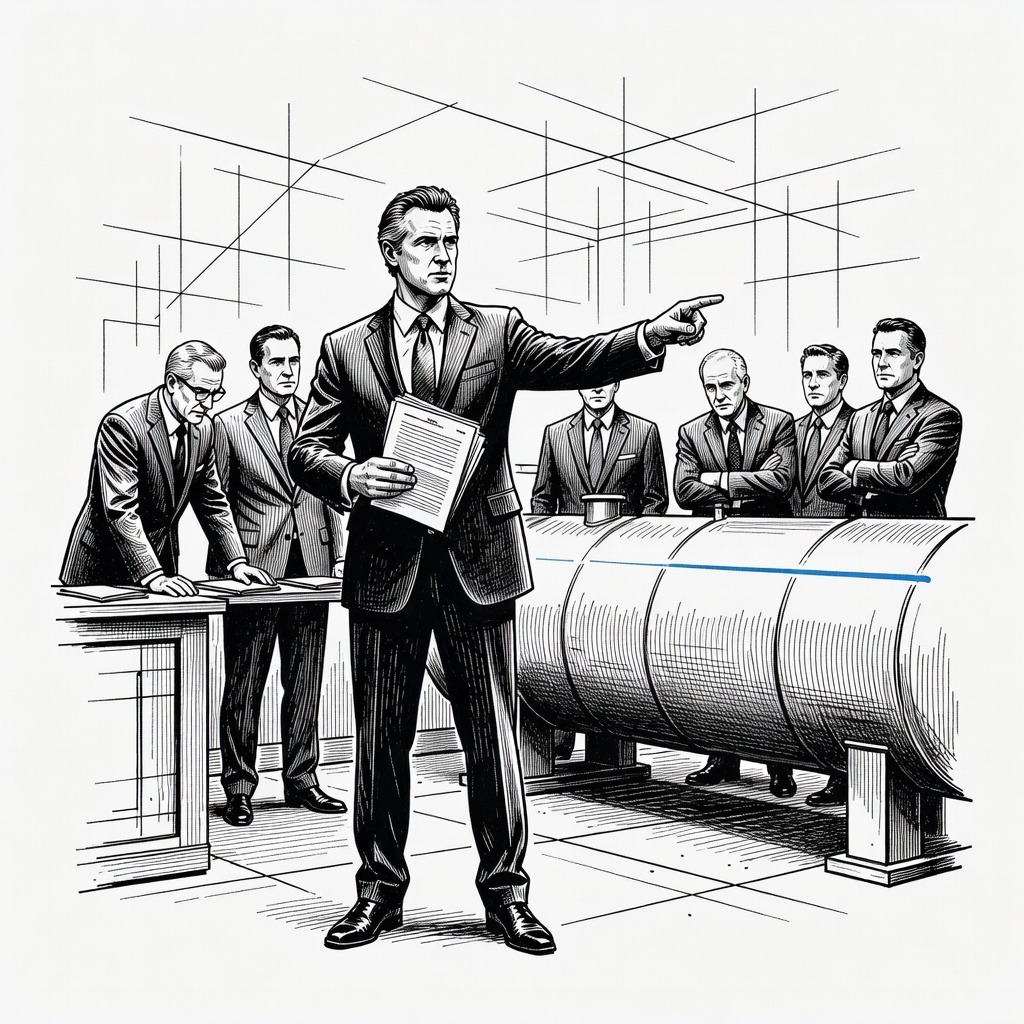
• Shield Against Corporate Externalities Prioritizing the welfare of the 50,000 displaced residents, this framework views the 10-square-mile evacuation zone as an unacceptable shifting of risk from private enterprise to the public. Governor Gavin Newsom's state of emergency declaration underscores how corporate operational failures directly extract a heavy social toll from local communities. Protecting the vulnerable requires treating these massive disruptions—including closed schools and displaced neighborhoods—as systemic economic injustices rather than mere industrial accidents.
• Target Institutional Risk Normalization Evaluating the manufacturer's history reveals a dangerous normalization of environmental and public risk. The revelation that GKN Aerospace paid a nearly $1 million settlement for environmental violations in 2021 suggests that financial penalties are absorbed as a standard cost of doing business. Without stricter regulatory enforcement, the near-miss of a catastrophic methyl methacrylate explosion proves that corporate self-regulation consistently fails to prioritize public safety over operational output.
• Leverage Criminal Legal Accountability Securing structural change necessitates escalating past civil fines into existential legal consequences. The immediate launch of a criminal investigation by District Attorney Todd Spitzer, alongside multiple class-action lawsuits, serves as a vital mechanism to hold decision-makers directly accountable. Criminalizing these severe operational failures is viewed as the only effective deterrent to prevent future manufacturers from gambling with public lives and local infrastructure.
How it may affect me
As a U.S. reader:
• Tens of thousands of California residents face immediate, ongoing displacement, school closures, and infrastructure disruptions with no clear timeline for returning to their communities.
• General health and safety in the affected area are protected from a worst-case toxic disaster in the short term, though residents remain at risk of a smaller explosion or chemical leak until cooling efforts are complete.
• Long-term legal actions, including class-action lawsuits and a district attorney's criminal investigation, could establish strict new regulatory precedents for how industrial corporations are penalized and held accountable for public safety threats.
• A long-term economic shift in the aerospace industry could occur if aggressive litigation and criminal probes drive manufacturing infrastructure, jobs, and associated economic prosperity out of California.