
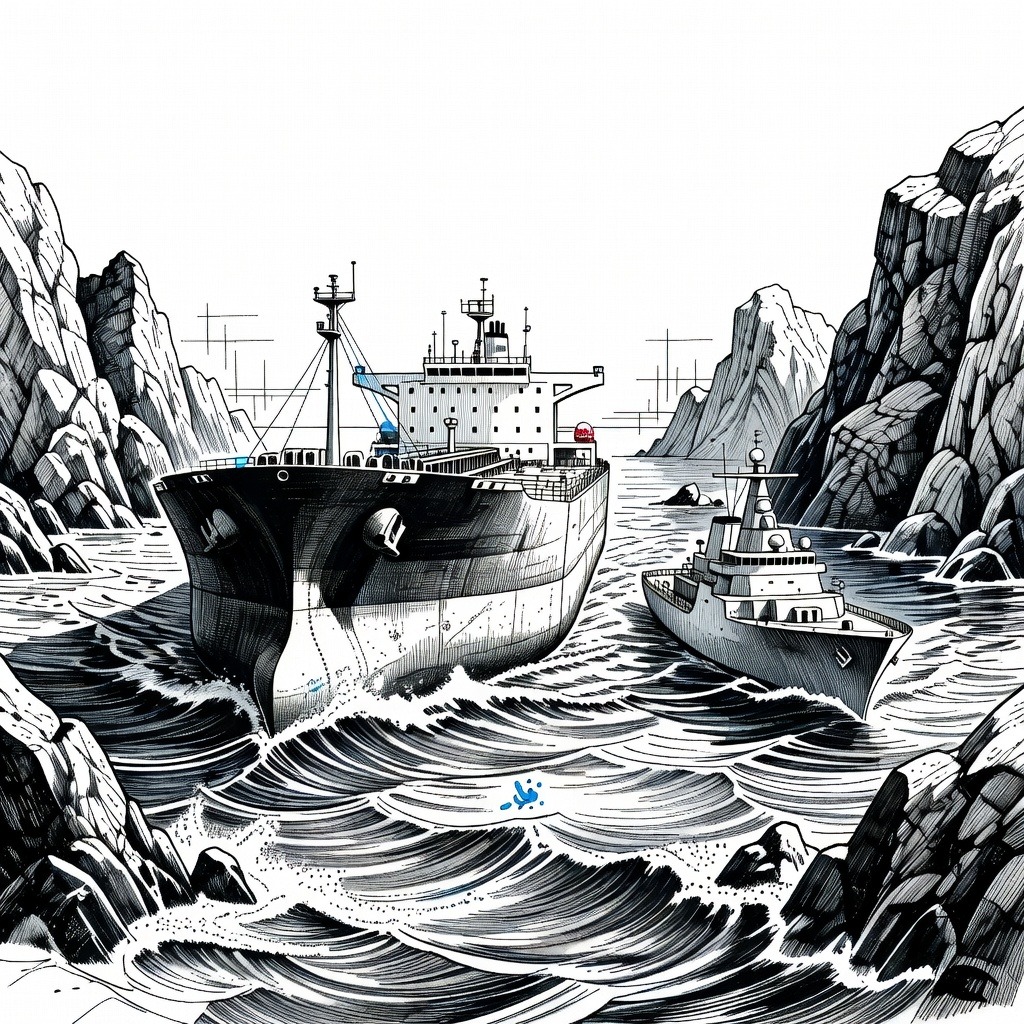
AI-generated illustration. Visual interpretation does not represent real individuals or scenes.
U.S. and Iran Advance Ceasefire Negotiations Amid Ongoing Military Readiness
2026-05-23
The BareStory
United States and Iranian negotiators are nearing an agreement to extend an early-April ceasefire and establish a framework for nuclear discussions. Mediators from Pakistan and Qatar are facilitating the indirect talks aimed at ending a military conflict that began in late February. The proposed agreement involves a gradual reopening of the Strait of Hormuz, the management of Iran's enriched uranium, and the phased release of frozen Iranian assets.
President Donald Trump indicated the U.S. is getting closer to a finalized deal and scheduled a Saturday conference call with Arab leaders to review the draft. Saudi Arabia, Qatar, and the United Arab Emirates have reportedly urged the U.S. to halt military operations to avoid further damage to global energy markets. The closure of the Strait of Hormuz has severely disrupted global shipping, leading to surging international fuel prices. According to U.S. officials, including Secretary of State Marco Rubio, Iran is attempting to establish an illegal toll system for commercial vessels navigating the waterway, a move they warned could derail ongoing diplomacy.
Despite diplomatic progress, both nations are maintaining military readiness. While Trump recently paused planned strikes against Iran at the request of Gulf allies, he ordered U.S. forces to remain prepared for a potential assault if negotiations fail, warning of severe retaliation. Meanwhile, Iranian military officials stated their armed forces have rebuilt their capabilities and are prepared to act, warning that any further American or Israeli attacks would expand the conflict beyond the Middle East.
Left Perspective
Engine of Multilateral Diplomacy
Shield Against Economic Fallout
Gamble of Escalatory Posturing
Right Perspective
Leverage of Credible Deterrence
Defending Navigational Rule of Law
Anchor of Overwhelming Force
Left Perspective
• Engine of Multilateral Diplomacy
Valuing diplomatic de-escalation over kinetic force validates the reliance on mediators from Pakistan and Qatar to extend the early-April ceasefire. By negotiating a framework that phases in the release of frozen assets in exchange for uranium management, this approach directly addresses the root causes of the late-February conflict. Resolving these tensions through structured dialogue is viewed as the only sustainable method to ensure long-term regional stability and prevent a nuclear crisis.
• Shield Against Economic Fallout
Protecting global civilian populations from the collateral damage of war underscores the absolute necessity of heeding Saudi, Qatari, and Emirati pleas to halt military operations. The closure of the Strait of Hormuz and the subsequent surge in international fuel prices demonstrate that armed conflict inflicts profound economic harm on everyday consumers. Prioritizing a negotiated reopening of the waterway prevents localized military friction from plunging global energy markets into a deeper, destabilizing crisis.
• Gamble of Escalatory Posturing
Maintaining aggressive military readiness while negotiating introduces a severe risk of accidental confrontation that could easily shatter fragile diplomatic gains. Trump’s threats of severe retaliation and the resulting Iranian warnings of expanding the conflict beyond the Middle East highlight the inherent danger of brinkmanship. Relying on military ultimatums empowers hardliners on both sides, risking a localized dispute spiraling into the exact global humanitarian disaster the talks aim to prevent.
Right Perspective
• Leverage of Credible Deterrence
Projecting overwhelming national strength is viewed as the definitive catalyst that forced Iranian negotiators to the table for a nuclear framework and ceasefire extension. Trump’s willingness to prepare a military assault—pausing only as a tactical accommodation to Gulf allies—demonstrates that vital concessions regarding enriched uranium are won through power, not appeasement. The phased release of frozen assets is treated strictly as conditional leverage to ensure absolute compliance rather than a diplomatic gift.
• Defending Navigational Rule of Law
Safeguarding global commerce requires zero tolerance for state-sponsored extortion, completely justifying Secretary of State Marco Rubio's warning that diplomacy could be derailed. Iran’s attempt to enforce an illegal toll system in the Strait of Hormuz is recognized as a direct assault on the freedom of navigation and international sovereignty. Surging global fuel prices confirm that neutralizing rogue chokeholds on vital shipping waterways is a paramount, non-negotiable security imperative.
• Anchor of Overwhelming Force
Preserving strategic deterrence necessitates keeping U.S. forces fully prepared to strike if the ongoing indirect talks fail to yield concrete results. Iranian declarations regarding rebuilt military capabilities and overt threats to expand the conflict validate the premise that hostile adversaries only respect hard power. Maintaining a constant, credible threat of severe retaliation serves as the essential insurance policy against a regime attempting to exploit a ceasefire for military reconstitution.
How it may affect me
As a U.S. reader:
• In the short term, you may continue to experience the economic impact of surging international fuel prices caused by the closure of the Strait of Hormuz and disrupted global shipping.
• A successful agreement that reopens the waterway and manages Iranian enriched uranium could stabilize these energy markets and avert a long-term nuclear crisis.
• If Iran successfully establishes an illegal toll system for commercial vessels, it could lead to further disruptions in global commerce and increased costs for international goods.
• Should the ceasefire negotiations fail, U.S. military personnel are currently under orders to remain prepared for a potential assault, increasing the likelihood of American troops entering active combat.
• In the long term, a collapse of the diplomatic talks and subsequent military action could escalate into a broader global conflict, as Iranian officials have warned of expanding military retaliation beyond the Middle East.